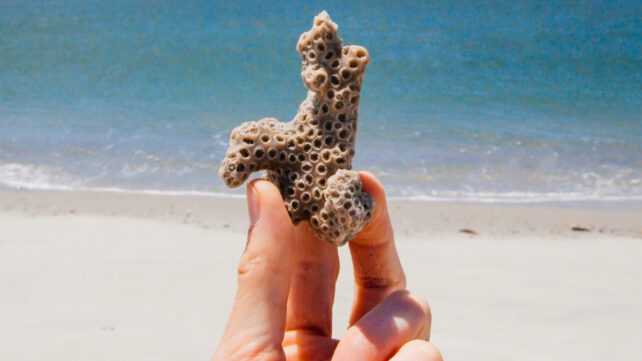
Tropical coral reefs cover less than 1% of the seafloor, yet support 25% of all marine species. They are also incredibly vulnerable. Over the past few decades, an estimated 30%-50% have already been lost.
Yet we are approaching a terrifying threshold. After record-breaking ocean heatwaves of 2023-24, which saw coral "bleaching" in at least 83 countries, scientists are looking towards 2026 with growing dread.
The question is whether this will be the year a global tipping point is reached for warm-water coral – a point beyond which their fate is sealed, and even the most resilient species can no longer recover.
Related: Mass Coral Die-Offs Confirm First Breach of a Major Climate Tipping Point
The fate of these ecosystems may hinge on events in the Pacific Ocean, in particular a natural climate cycle called the El Niño–Southern Oscillation (ENSO). We have only just emerged from a devastating El Niño (the warm phase) that helped push 84% of the world's coral reefs into "bleaching-level" heat stress.
Usually, reefs have a few years to "breathe" during the cooler La Niña phase. However, as the planet warms, El Niños are becoming stronger and more frequent, and the transition periods are becoming shorter and less cool.
With another El Niño expected in 2026, only a short time after the last one, many reefs will not have had sufficient time to recover. This next phase could trigger widespread coral reef collapse.
The story for November sea surface temperatures continued with the ongoing weak La Niña in the east-central tropical Pacific, as well as the persistent anomalous warmth spreading across the midlatitude regions in both hemispheres.
Data from NOAA OISSTv2.1 (www.ncei.noaa.gov/products/opt…) 🌊
— Zack Labe (@zacklabe.com) Jan 1, 2026 at 12:57 AM
A point of no return?
The fear is that 2026 could mark a "tipping point". These are moments when an ecosystem changes really suddenly, often in a way that can't easily be undone.
However, these thresholds can be notoriously hard to spot as they happen.
Every reef is different, and it can be hard to spot these permanent shifts amid short‑term shocks like heatwaves and extreme weather, all while global temperatures are still climbing. This makes it harder to see the bigger picture of how the reef is actually doing over the long term.
Reaching a simultaneous global tipping point for all corals in 2026 is an unlikely worst-case scenario. But at a local level, many warm-water coral reefs are clearly set to fare badly.
Some reefs have already passed the point of no return, and if extreme heatwaves occur across the tropics again so soon, the extent of loss over the next 12 months could be catastrophic.
What coral collapse looks like
When a reef passes that tipping point, the transformation can be stark.
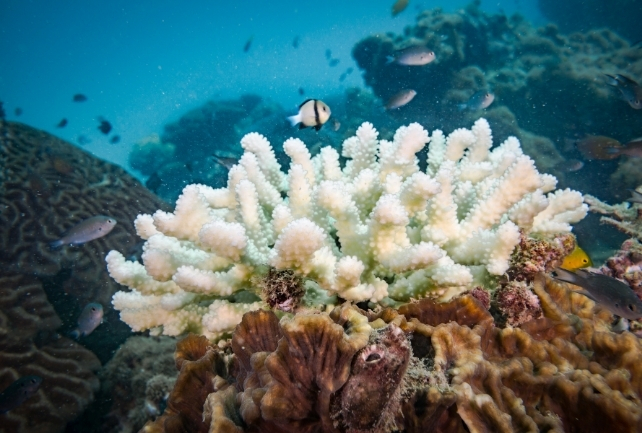
It begins with bleaching, which happens when the surrounding sea becomes too hot. The stress causes the coral to expel the tiny, colorful algae living inside its tissues, turning it white.
The coral isn't dead yet, but if high temperatures last too long, it can die.
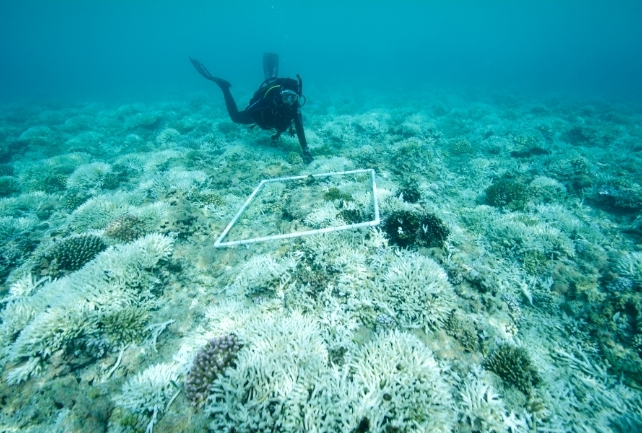
Heat-sensitive species are the most likely to disappear. And when corals die, they are quickly replaced by algae. Once that happens, it's really hard for new coral larvae to settle and grow.

The damage can last for a very long time, and the reef might never return to how it was before.
Another El Niño-induced mass bleaching isn't a death sentence for all corals, of course, as how well they cope with heat stress varies across different ecoregions. Some species struggle when temperatures rise, while others have shown they can tolerate or adapt to warmer conditions.
Coral in the Gulf of Aqaba (between Egypt's Sinai Peninsula and Saudi Arabia) and Madagascar handled the record-breaking temperatures of 2023–24 surprisingly well, suggesting that some coral communities have some natural resistance to heat stress.
Reefs in deeper waters offshore might also be able to act as a "seed bank" for the future.
These reefs, called mesophotic reefs and found about 30 to 50 meters underwater, get extra protection during heatwaves as they're shielded by layers of cooler, heavier water. Because of this, deeper reefs might act as important "safe zones" where warm-water coral species have a better chance of surviving, at least into the near future.
Beyond the heat
Even though temperatures are expected to rise in 2026, corals are already more likely to bleach because of things like pollution, overfishing, and coastal development.
The good news is that reducing these pressures can help reefs recover. Take the Mesoamerican Reef, for example, which extends nearly 700 miles along the coast of Mexico and Central America. Even though bleaching affected 40% of the reef in 2024, some parts improved because fish populations bounced back after better fisheries management.
Related: Mosquitoes Are Feeding on Us More Often – And Scientists Say We're to Blame
Ocean acidification, caused by the sea absorbing more CO₂ from the atmosphere, makes it harder for corals to build their hard skeletons, which weakens them and slows their growth. This threatens even the deep, cold-water corals that don't suffer from bleaching.
To help these biodiversity powerhouses survive the 21st century, we must do three things: aggressively cut carbon emissions to cool the water, reduce local stressors like pollution or overfishing, and incorporate selective breeding of heat-tolerant corals into restoration plans to improve resilience to heatwaves.
Samantha Garrard, Senior Marine Ecosystem Services Researcher, Plymouth Marine Laboratory
This article is republished from The Conversation under a Creative Commons license. Read the original article.