
Detailed measurements collected in metropolitan Tel Aviv, Israel, have revealed how the ebb and flow of traffic throughout the week affects the electric field generated by Earth's atmosphere.
Led by researchers from The Hebrew University of Jerusalem in Israel, the study used an electric field mill deployed in the city of Holon in 2024, matching its results with air quality data over a period of seven months. Only measurements from fair weather days were included to filter out interference from rain and storms.
A number of specific pollutants were tracked, including gases and particles from car exhaust and tire wear, and additional compounds formed in chemical reactions with gases in the atmosphere.
Related: Your Hairstyle Could Generate Pollution on Par With Busy Traffic
"Through coordinated analysis with local air quality and meteorological data, we examined how fine particulate matter (PM2.5) and nitrogen oxides (NOx), two major urban pollutants, influence the Potential Gradient (PG), a proxy for the atmospheric electric field near the ground," write the researchers in their published paper.
The atmospheric electric field is the result of natural differences in charge between the surface and upper atmosphere, powered largely by the swirl of currents that form in thunderstorms.
A number of factors influence this planetary circuit, including fluctuations in local weather and air pollution. While this had been measured in some areas of the world, others, such as the western Mediterranean, had yet to be analyzed in detail.
The data showed that traffic pollution in Tel Aviv has an immediate impact on the atmospheric electric field in the region, with both NOx gases and vehicle congestion peaking at the same times (the rush hours at the start and end of the working day).
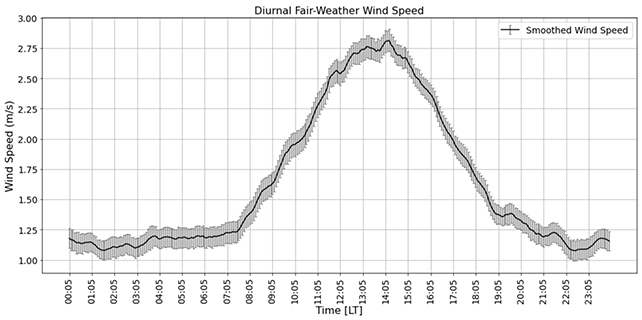
There was also an association between PM2.5 particles and the electric field, though this was delayed by around two-and-a-half hours. The researchers put this down to different particle size, chemical composition, and lifetime in the atmosphere.
The team reports a noticeable weekend effect as well, with significant drops in traffic pollution corresponding with a weakening of the electrical field. That's further confirmation that the two are indeed linked.
"What we observe is a direct physical link between emission peaks and electrical variability," says geoscientist Roy Yaniv, from The Hebrew University of Jerusalem.
"Nitrogen oxides reduce atmospheric conductivity very quickly, so the electric field responds almost instantaneously during traffic rush hours."
Previous studies have shown how urban smoke can interfere with the electric field around us, and now we have some solid evidence about the impact that air pollution caused by traffic can make as well.
The reason behind the effect is ions: the charged particles in the air. Pollutants can capture these ions, reducing the conductivity of the atmospheric electric field, which then triggers a compensatory effect where the electric field gets stronger.

These changes aren't dangerous, and nor is the electric field itself – the shifts in levels are relatively slight, and wouldn't be enough to throw weather systems out of order or interfere with any gadgetry, or anything like that.
Perhaps the biggest takeaway here is how useful electric field measurements could be for tracking air pollution across cities, giving us more data about the level of threat of traffic fumes to health.
"These results enhance our understanding of the interplay between urban air pollution and the local electric field, and emphasize the importance of integrating air quality data into atmospheric electricity studies, particularly in densely populated regions where anthropogenic influences are pronounced, with implications for public health," write the researchers.
The research has been published in Atmospheric Research.