Four mice went to space as astronauts. One came back and became a mother. And that simple fact might matter more than you'd think for humanity's future beyond Earth.
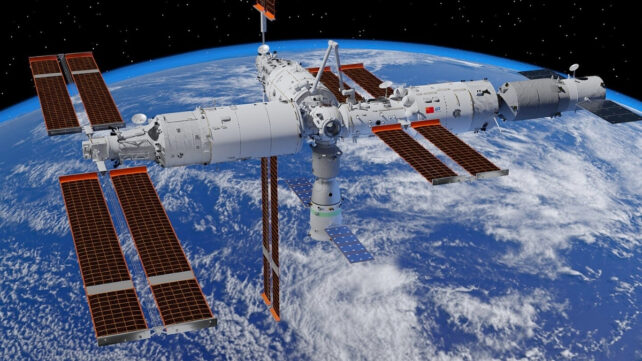
On 31 October, China launched four mice numbered 6, 98, 154, and 186, aboard the Shenzhou-21 spacecraft to the country's space station, roughly 400 kilometers (250 miles) above Earth.
For two weeks, the rodents lived in microgravity, exposed to space radiation and the peculiar conditions of orbital life. They returned safely on 14 November. Then, on 10 December, one of the females gave birth to nine healthy pups.
Related: Moss Survived 9 Months in The Vacuum of Space
In a previous study, sperm from mice that had been in space had been used to fertilize female mice back on Earth.
In this new experiment, six of the offspring survived, which researchers consider a normal survival rate. The mother is nursing properly, and the pups are active and developing well.
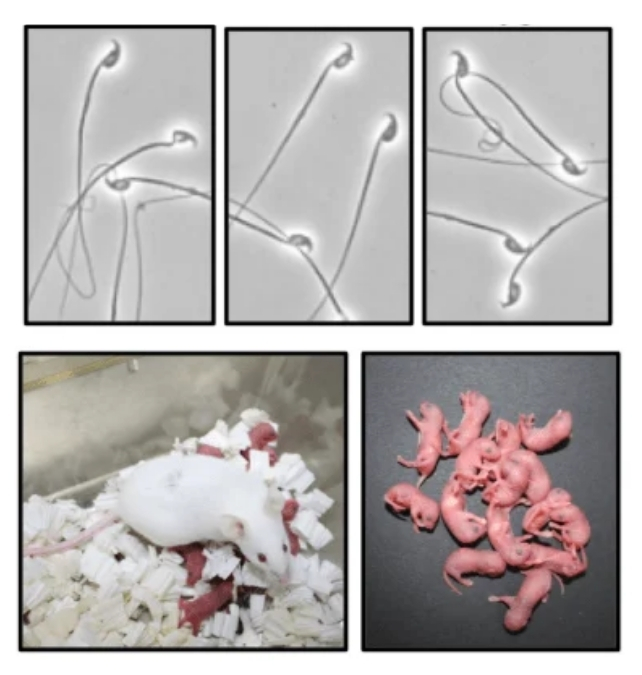
Wang Hongmei, a researcher at the Chinese Academy of Sciences' Institute of Zoology, emphasised the significance of their discovery that short-term spaceflight didn't damage the mouse's ability to reproduce.
This wasn't just about sending mice to space for the sake of it. Mice share high genetic similarity with humans, reproduce quickly, and respond to physiological stresses in ways that often mirror human biology. If space breaks something fundamental about mammalian reproduction, it would show in mice first.
The mission wasn't smooth sailing, though. When the return schedule for Shenzhou-20 changed unexpectedly, the mice faced an extended stay and potential food shortage.
The ground team scrambled, testing emergency rations from the astronauts' own supplies, compressed biscuits, corn, hazelnuts, and soy milk.

After verification tests on Earth, soy milk won out as the safest emergency food. Water was pumped into the habitat through an external port while an AI monitoring system tracked the mice's movements, eating patterns, and sleep cycles in real time, helping predict when supplies would run out.
Throughout their orbital stay, the mice lived under carefully controlled conditions. Lights turned on at 7 am and off at 7 pm to maintain an Earth-based circadian rhythm.
Their food was nutritionally balanced but intentionally hard, satisfying their need to grind their teeth. Directional airflow kept the habitat clean by blowing hair and waste into collection containers.
Now researchers will monitor these "space pups" closely, tracking their growth curves and checking for physiological changes that might hint at hidden effects from their mother's space exposure. They'll also test whether these offspring can reproduce normally themselves, searching for multi-generational impacts.

The ultimate goal extends beyond mice. Before humans attempt years-long missions to Mars or establish permanent settlements on the Moon, scientists need to know whether reproduction works normally in space or after space exposure.
Can mammals conceive, gestate, and give birth in reduced gravity? Do cosmic rays damage eggs or sperm in ways that only appear in the next generation? One mouse giving birth doesn't answer all those questions. But it's a promising start.
This article was originally published by Universe Today. Read the original article.