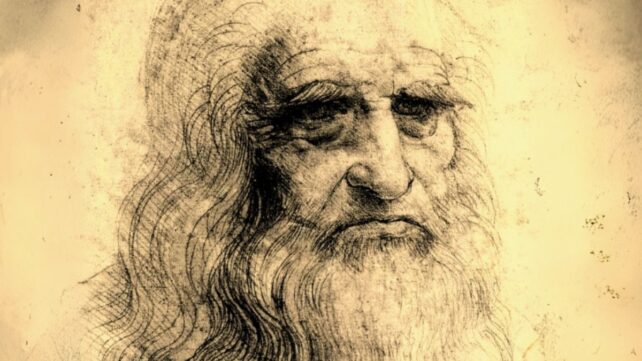
Scientists with the ambitious Leonardo da Vinci DNA Project think they have potentially snagged a sample of DNA from the famed artist/inventor himself.
The findings are presented in a preprint, and further tests are needed to confirm whether this is truly da Vinci's genetic information from more than 500 years ago.
The paper offers "clues not conclusions", the research team says, but it does show that it may be possible to extract informative biological material from precious and fragile historical works.
The groundbreaking technique devised by scientists can pull the DNA of humans, plants, bacteria, fungi, animals, viruses, and parasites from the wax seals of ancient letters and from the absorbent nature of paper itself.
Related: Da Vinci's Genetic Secrets May Soon Be Revealed by Ambitious DNA Project
"In effect, objects once assumed to be biologically silent were found to function as living fingerprints of their environments," reads a press release from the Leonardo DNA Project.
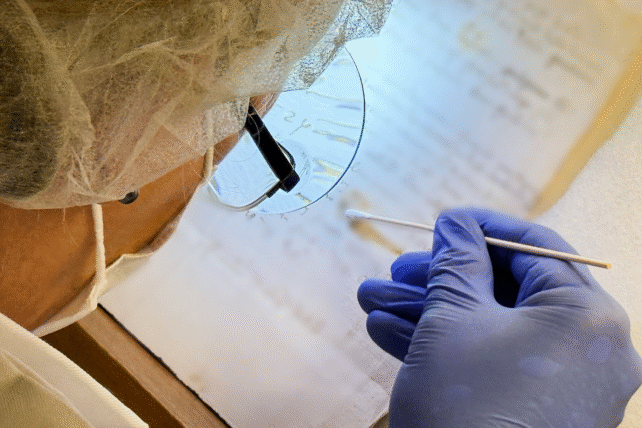
In the new preprint study, the researchers explain how they gently swabbed a suspected da Vinci chalk drawing, called the Holy Child.
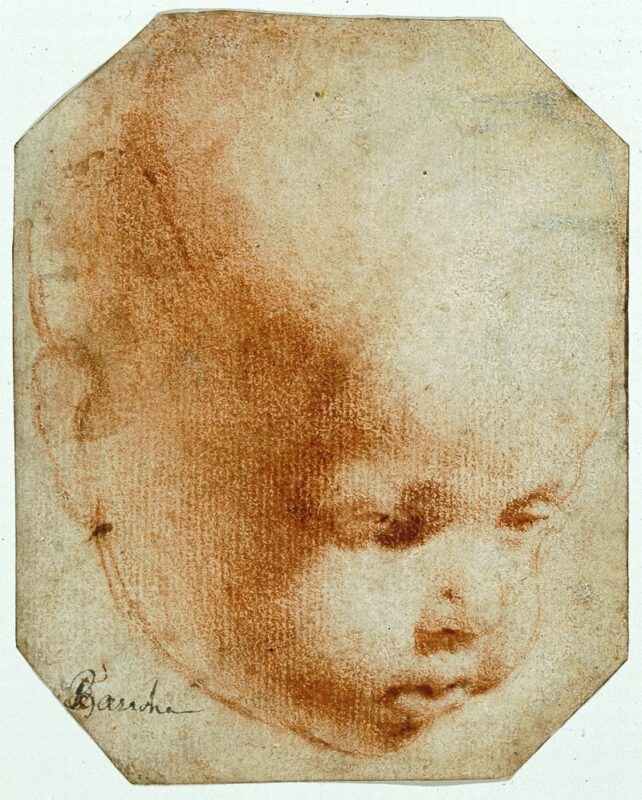
Then, using advances in next-generation sequencing, they managed to extract biological information, including that of orange trees cultivated in the Medici gardens in Tuscany and low-quality human DNA.
Who this DNA came from is unknown. It may be from the Renaissance artist himself, or from those who later handled the drawing.
What is clear is that some of the DNA held Y chromosome markers, indicating the genetic information came from a male. This individual seems to have been part of a clade common in the Mediterranean region, especially in central and southern Italy. That includes Tuscany, where Leonardo is from.
Swabbing other artifacts associated with da Vinci, like a 500-year-old letter from a relative, researchers found "a shared Y-chromosomal signal". This same signal was not apparent in paintings from other famous European masters of the time.
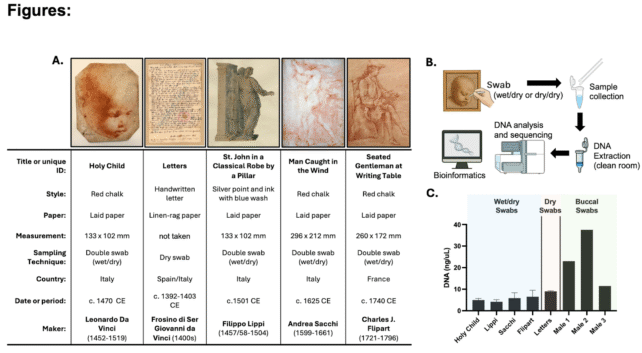
The findings hint at a shared lineage across da Vinci-associated objects, which deserves further investigation. The team now wants to swab other works and objects known to have belonged to da Vinci for comparison.
These findings will then need to be matched to confirmed living descendants of the Renaissance artist.

The DNA project's ultimate goal is to confirm da Vinci's final resting place, and to reconstruct his centuries-old genome.
According to the project's chair, Jesse Ausubel of The Rockefeller University, "even if confirmed DNA matches with Leonardo are still ahead, success is now inevitable in the sense that a threshold has been crossed."
For nearly 10 years, project researchers have worked to trace da Vinci's bloodline into earlier and later generations. They have recently found a handful of living descendants and a familial lineage that goes all the way back to 1331.
Da Vinci's own remains are said to be buried in a small chapel in the Loire Valley in France, but not all historians are convinced that that is his final resting place. Researchers are currently excavating a da Vinci family tomb in Italy to obtain genetic information from his relatives.
Evolutionary biologist S. Blair Hedges, who was not involved in the study, told Science reporter Richard Stone that the Leonardo DNA Project has "about as hard a target there is" in ancient DNA research, but that the steps the researchers are taking are impressive.
"The project has established a solid 'scaffold,' a reference framework for detecting 'signatures' on ancient artworks or documents using DNA or microbiomes," says Ausubel.
"The knowledge and landmark techniques pioneered by the project can and surely will be applied to gain insights into other major historical figures."
The preprint is available on bioRxiv.