Climate change is shifting the weather patterns of Earth in ways that are far-reaching and long-lasting, and a new study details a noticeable rise in extreme weather events in the Arctic, prompted by rising global temperatures.
The study, from an international team of researchers who analyzed decades of data, declares that a "new era" of extreme weather events is now underway in the northernmost region of the planet.
It's a major move into unprecedented climate conditions, the researchers say, likely to have a significant impact on Arctic plants and wildlife, and on the people who call the region home. There will also be wider implications, as the Arctic's carbon balance is disrupted, with its sea ice shrinking and tundra thawing.
Related: 'Impossible' Life Found Beneath Arctic Ice Could Alter Climate Models
"Our research shows that the frequency of extreme weather events has increased sharply in the Arctic," says ecologist Gareth Phoenix, from the University of Sheffield in the UK.
"Across one-third of the Arctic domain these events have only recently begun to occur and therefore show that the Arctic is entering a novel era of weather extremes with likely severe consequences for ecosystems there."
The period of data the researchers looked at covers more than 70 years, with particular focus given to short-term extremes that wouldn't necessarily show up in monthly averages. The data included information on heatwaves, drought, and snow cover.
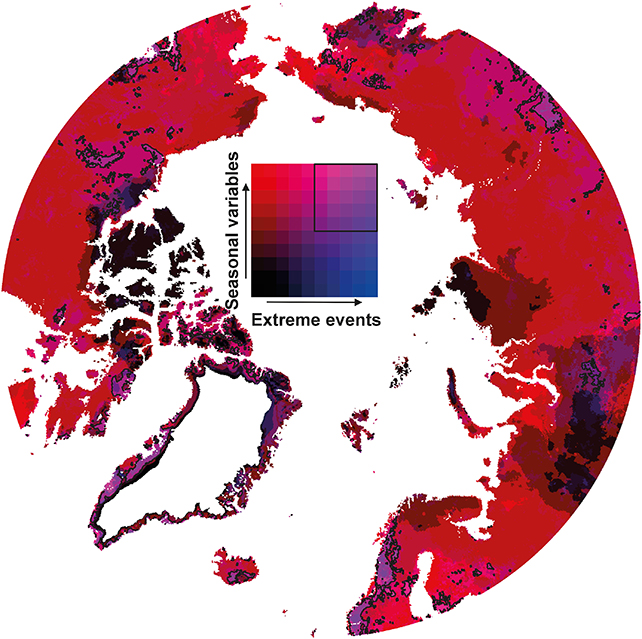
Extreme weather events are becoming more frequent and widespread, the researchers found, especially over the last three decades, in which many new areas have begun to experience extremes. There are also hotspots, such as Central Siberia, Western Scandinavia and coastal Greenland, that are being affected more than other regions.
These increasingly frequent events include incidents of rain-on-snow, caused by a warming climate. When this happens, the surface ices over, trapping food sources, which then has consequences for Arctic animals, including reindeer that rely on lichen.
While the researchers didn't study any ecological consequences directly, there's strong evidence that the knock-on effects are going to be drastic and damaging. These are weather patterns that Arctic flora and fauna aren't used to or ready for.
"Seasonality, such as the growing season and snow conditions, is known to be crucial for ecosystem functioning and the success of northern species," says climate scientist Juha Aalto, from the Finnish Meteorological Institute.
As ever, the researchers are keen to acquire more detailed data, which should help further investigations of the Arctic's extreme weather age. This study used some calculated estimates and approximations in certain areas where field data were sparse.

Earlier research has shown that the Arctic is warming significantly faster than the rest of the planet, leading to reductions in ice cover as well as the weather changes mentioned here.
Experts use the term 'Arctic browning' to describe the loss of plant life across the region, and the extreme weather events described in this study are thought to be among the key drivers of that browning.
As well as affecting food availability, this shift can alter the balance of carbon capture and release across the Arctic. It's another sobering reminder that global warming is causing irreversible changes for the planet's ecosystems.
"This finding suggests that as the climate changes, Arctic ecosystems will be increasingly exposed to climate conditions they have never experienced before," says geoscientist Miska Luoto, from the University of Helsinki in Finland.
"This may have significant long-term consequences for Arctic nature."
The research has been published in Science Advances.