A new kind of cellular immunotherapy shows promise in preventing Alzheimer's-associated plaques from forming in the brain – and even removing some when given in advanced cases.
Working with mice, scientists at Washington University developed a specially engineered virus that genetically alters cells into "super cleaners" that remove harmful proteins in the brain.
The study's authors have shown that a single injection of their new gene therapy seemed to prevent amyloid plaque development when administered before plaques had begun to form.
Even in mice with existing amyloid plaques, one injection of the gene therapy was associated with a roughly 50 percent reduction in plaques, the researchers report.
The new method borrows from a type of cancer treatment known as chimeric antigen receptor (CAR) T cell therapy, in which scientists can genetically modify the immune system's T cells to attack cancer cells.
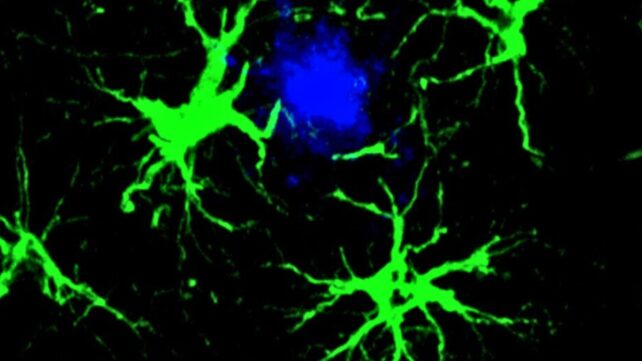
In the new study, researchers focused on star-shaped brain cells called astrocytes, which they engineered to hunt down the amyloid beta proteins associated with cognitive decline in Alzheimer's.
"This study marks the first successful attempt at engineering astrocytes to specifically target and remove amyloid beta plaques in the brains of mice with Alzheimer's disease," says senior author Marco Colonna, pathologist at Washington University in the US.
"Although more work needs to be done to optimize the approach and address potential side effects, these results open up an exciting new opportunity to develop CAR-astrocytes into an immunotherapy for neurodegenerative diseases and even brain tumors."
There is still no cure for Alzheimer's disease, but there are ways to slow it down, especially in the early stages. A nutritious diet and regular exercise can help, for example, with potential benefits from as few as 5,000 steps a day.
Newer drugs can also slow the progression of Alzheimer's, namely a group known as monoclonal antibodies, including lecanemab and donanemab.
These target the amyloid beta proteins that accumulate in the brains of Alzheimer's patients, but despite promising capabilities, they also have some key limitations, such as the need for high doses, frequent infusions, and the risk of amyloid-related imaging abnormalities.
In the new study, however, researchers describe a new kind of cellular immunotherapy that could improve the efficacy and reduce the frequency of anti-amyloid treatments.
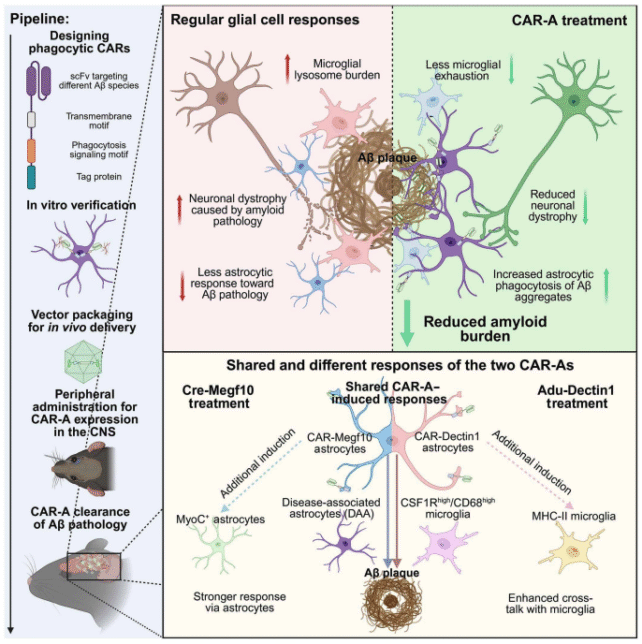
Colonna and his colleagues developed a way to recruit and equip astrocytes as amyloid-hunting specialists.
First author Yun Chen, a former graduate student in Colonna's lab, designed a gene therapy that specifically targets astrocytes. A gene that codes for CAR is loaded onto a harmless virus, which is then injected into mice. When this virus infects astrocytes, it transfers the gene and effectively reprograms them.
Astrocytes normally perform a variety of important duties in the brain, including housekeeping, but this technique harnesses their collective power and leverages it against amyloid beta proteins.
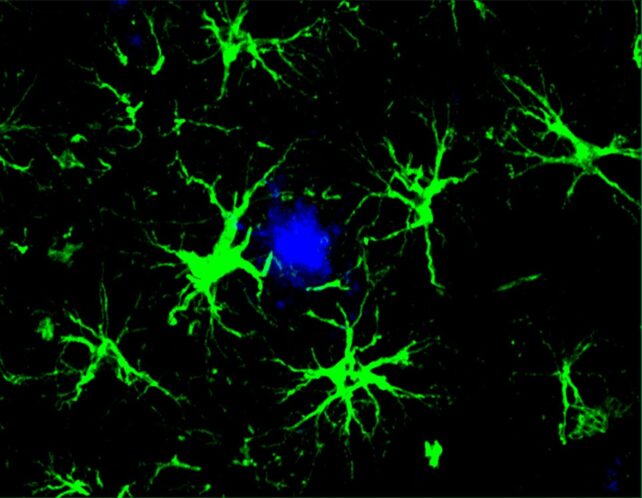
Upon receiving this new assignment, astrocytes became singularly focused on clearing out amyloid beta plaques, a task at which they proved adept.
Using mice genetically predisposed for amyloid beta buildup, the researchers formed two groups of test subjects: young mice in their pre-plaque years and older mice with existing amyloid plaques.
They injected both groups of mice with a virus carrying the gene for CAR expression, then checked back after three months.
By six months of age, mice predisposed to amyloid beta accumulations tend to have heavy concentrations of these plaques in their brains. Those given the new treatment in their youth, however, had no such plaques when they reached this age, the study found.

Even in older mice whose disease was already underway, the treatment was associated with improvement. Older mice who received the gene therapy at six months of age had about half as many plaques by nine months as those in an age-matched control group, which received a virus missing the CAR gene.
"Consistent with the antibody drug treatments, this new CAR-astrocyte immunotherapy is more effective when given in the earlier stages of the disease," says co-author David Holtzman, neuroscientist at Washington University.
"But where it differs, and where it could make a difference in clinical care, is in the single injection that successfully reduced the amount of harmful brain proteins in mice."
Related: New Alzheimer's Treatment Clears Plaques From Brains of Mice Within Hours
The authors note that more research will be needed to hone this approach and ensure its safety before any human tests go ahead, but it hints at a potent new weapon against Alzheimer's – and one that might also be adjusted to target other threats, such as brain tumors.
The study was published in Science.