
How often you empty your bowels may reveal more about what lives inside your gut than you realize.
According to a 2024 study, the frequency with which you poop could actively shape the microbiome that lines your colon. The paper joins a growing body of evidence suggesting your bowel habits play a surprisingly active role in your overall health.
"Our results show clear and lasting differences in the gut microbial profiles according to the defecation frequency," writes a team led by food scientist Hakdong Shin of Sejong University in the Republic of Korea.
"We have demonstrated that less frequent defecation is associated with a richer population of microbes in the gut … These results strongly indicate differences in either the microbial composition or abundance depending on the defecation frequency."

In recent years, scientists have begun to understand that the microbial community in the human digestive tract may be linked to a broader swath of health outcomes. These tiny organisms, along with their genes and functions, are collectively known as the gut microbiome.
The microbiome helps break down the contents of your gut, extracting nutrients before your body expels what it doesn't need. In the process, the microbes also release compounds and other byproducts of their activity.
In this study, the researchers analyzed the microbiomes of 20 individuals, who were grouped based on their poop schedules. Four of the people pooped just one to three times a week. Seven people went four to six times. The remaining nine people were daily poopers.
Using gene sequencing and mass spectrometry to analyze stool samples collected twice weekly over three weeks, the researchers found clear differences in microbiome profiles between these groups, and in the compounds produced by those microbial communities.
In particular, people who pooped less often had a much more diverse range of microbes in their guts than those with a more regular schedule.

The team also found differences in what those microbes were doing. Certain groups of bacteria, such as Ruminococcus, were more common in people who pooped less frequently, while Bacteroides were more abundant in those who went daily.
In animal studies, Bacteroides species have been linked to reduced weight gain, as they break down compounds thought to promote obesity.
The findings were consistent with a 2023 study that brought together data from other studies to assess the influence the length of time poop takes to travel through your body has in shaping the microbiome.
These differences, the researchers also found, were linked to changes in how the gut processes nutrients, including the production and breakdown of amino acids.
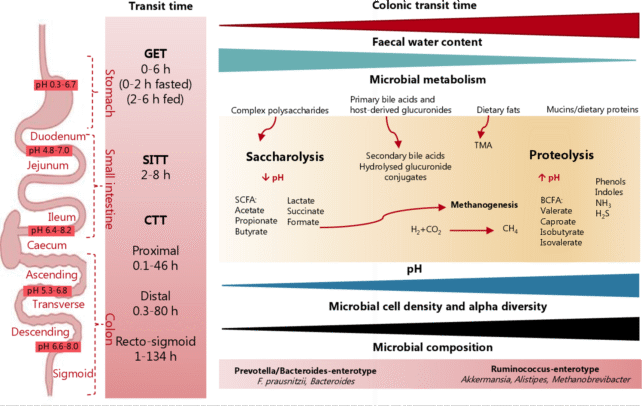
The results suggest that your poop schedule creates a feedback loop. The longer feces remain in the colon, the more time bacteria have to ferment the contents, regulate gut acidity, and produce metabolites that can impact overall health in multiple ways.
This is directly influenced by diet – protein takes longer to digest, which requires specific bacteria.
Over time, if your diet is protein-heavy, the microbiome will shift toward a greater proportion of protein-digestion specialists to match that dietary demand. These bacteria release metabolites that can alter the gut environment, potentially reinforcing existing patterns.

This relationship is likely a complicated one. There are multiple lifestyle factors that can influence poop frequency, including diet, hydration, exercise, and sleep.
However, since the human gut microbiome is intrinsically linked to health, the bidirectional relationship between poop schedule and the microbiome could have broader implications, though it's difficult to untangle. Slow transit times and constipation have been linked with metabolic and inflammatory disorders, as well as neurological disorders such as Parkinson's disease.
In addition, some of the microbiome products of protein digestion – namely the uremic toxins p-cresol and indole – can contribute to chronic kidney and cardiovascular diseases.
Another, separate 2024 study of 1,425 people indicates there's something to this. It didn't analyze the microbiome, but instead investigated the correlation between poop schedule and overall health. People with a regular schedule of one or two bowel movements a day tended to be healthier than either of the other two extremes.
Related: Your Poop Schedule Says a Lot About Your Overall Health, Study Shows
The work of Shin and colleagues was small and brief by comparison, but with so many studies revealing how poop frequency affects aspects of the body and potentially health, it's clear that this phenomenon warrants further investigation.
The gut microbiome is malleable and dynamic, making it hard to draw firm conclusions from short studies.
"To conduct a more comprehensive analysis of the relationship between defecation frequency and the microbiome profile, future studies should aim to assess defecation frequency using numerical values rather than categorical ones," the researchers write.
"To deepen our understanding of the comprehensive relationship between defecation frequency and the gut microbiome, further studies employing a comprehensive multi-omics approach with a larger participant cohort are necessary."
The findings were published in the International Journal of Molecular Sciences.