
Of the 2.9 million people thought to be living with multiple sclerosis worldwide, around three-quarters are women. Learning more about why that is could go a long way toward improving treatments or even curing the autoimmune disease.
In a new study, researchers from the University of Colorado Anschutz Medical Campus have found clues to the significant disparity between the sexes.
The findings are preliminary, based on only six participants, but they could help researchers better understand how MS progresses in females and where future treatments might be directed.
Specifically, they identified over 100 cerebrospinal fluid proteins that were at higher or lower levels in female MS patients than in age-matched women without MS.
By cross-referencing the roles these proteins perform, we can gain a better understanding of how MS operates.
"Many neurological and neurodegenerative diseases show sex differences," says endocrinologist Kimberley Bruce. "Some of them, like Alzheimer's disease and multiple sclerosis, are more common in women, whereas Parkinson's disease is more common in males."
"So, we can probably learn a lot about the underlying mechanisms driving these diseases, if we understand sex differences in more detail."
Cerebrospinal fluid (CSF) is the clear liquid that surrounds, cushions, and supports the brain and spinal cord. Because it bathes the central nervous system, changes in its protein mix can offer insights into what is happening in neurological disease.
MS is characterized by damage to myelin, the protective coating around nerve fibers in the nervous system.
To take a closer look at proteins in the CSF that nerve fibers float in, an analysis was carried out on samples from three women with MS and three women without MS, who had their CSF collected via lumbar puncture to investigate severe headaches.
The analysis identified 72 proteins that were noticeably more abundant in women with MS and 46 that were noticeably less abundant.

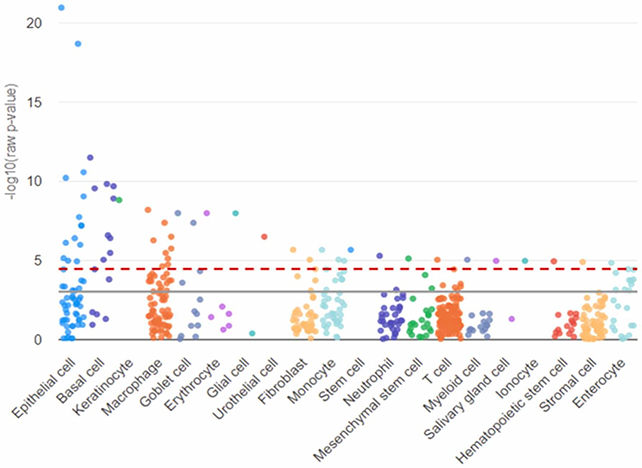
Among the proteins at higher levels in MS patients were those associated with immune cell activity, including microglia (for clearing cellular waste) and macrophages (for destroying harmful cells).
Several of the proteins that were dialed down with MS are associated with neurogenesis and neuron function, so the production of new neurons and the repair of existing ones. The implication is that these key processes are affected by MS.
"By identifying specific protein changes in the fluid around the brain and spinal cord, the study improves our understanding of how MS progresses – especially in females," says Bruce.
"It also highlights possible signals doctors or researchers could use to track disease activity or test new therapies."
The researchers suggest that hormones are playing a role too, especially for women in their 30s and 40s – an age group where women are diagnosed with MS at three times the rate of men, and when some women experience pregnancies and shifts in menstrual cycles.
One of the elevated CSF proteins identified in the study was sex hormone-binding globulin (SHBG), which binds to estrogen and testosterone. Excess SHBG 'soaking up' these hormones leaves less of them available to cells and tissues.
Sex hormones are thought to influence immune activity, including in the brain, so this could help explain why immune-related changes in MS may differ between women and men.
Related: Multiple Sclerosis May Have Two Distinct Subtypes, Scientists Discover
These are just hypotheses, but they can now be investigated further. It's a very small study, so it's really a preliminary set of findings that can now be tested on larger groups. These discoveries also need to be put into the context of what's already known about MS and how it gets started.
Eventually, it's possible that some of these proteins might be targeted with medications to help control or prevent MS, but we also know that it's a very complex disease with various contributors.
"There are lots of distinct factors that are playing into multiple sclerosis risk," says Bruce.
"Going forward, we need different therapies that target these varied factors for better and more personalized overall care."
The research has been published in IBRO Neuroscience Reports.