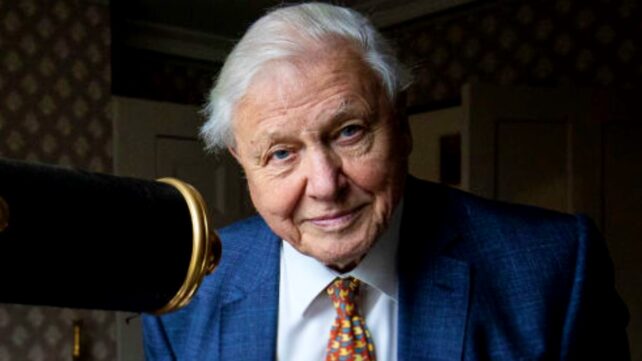
Sir David Attenborough is 100 years old today – a birthday fewer than 0.03 percent of people alive today have celebrated.
The beloved English broadcaster and natural historian has attributed his long and healthy life to one key factor: Sheer darn luck.
Speaking ahead of his 90th birthday in 2016, Attenborough told The Guardian that the reason he remains cognitively and physically able, when so many of his loved ones are suffering with age, "is not Christian virtue, just luck".
That's not just cynicism; increasingly, evidence suggests he might be right, at least to a certain extent.

A roll of the genetic dice leaves us all starting the game of life from different positions, which means that some people are simply more likely to live longer. That's the luck part, but it's only part of the story.
When Attenborough was born, life expectancy in the UK was around 58 years of age. Today, it's over 79.
Clearly, there are changes we can make that can improve our odds of living longer. In recent years, there's been a growing fascination with 'longevity' research to find out which of these healthy habits are most important.
Some scientists estimate that reaching age 90 can be explained by 30 percent genetics and 70 percent health behaviors, such as diet or physical activity.
Attenborough's own life broadly falls in line with what the science is uncovering. He is an active older man, socially and physically, who remains remarkably busy for someone his age.
In the past, he's rarely addressed the possibility of retirement, saying he 'dreads' the very idea. Just last year, on his 99th birthday, Attenborough released a new documentary.
"After living for nearly 100 years on this planet," Attenborough says in the trailer for the feature-length film, "I now understand the most important place on Earth is not on land but at sea. Through the course of my life, we have been on a course of ocean discovery."

It's possible that Attenborough's active life and persistent passion for the natural world may have contributed to his ongoing health and longevity.
While speculative, growing evidence supports that idea. Adults over 50, for instance, who have a strong sense of purpose in life, tend to have better physical and mental health outcomes. Some studies even indicate a lower risk of death from any cause.
The United States New England Centenarian Study is the largest and most comprehensive study of centenarians and their families in the world. Its researchers have found that exceptional longevity tends to run in families, indicating a strong genetic component.
But there may also be intergenerational parenting or personality factors at play. The study suggests, for instance, that the children of centenarians are more likely to have a strong sense of purpose than the general population, and this was linked to lower rates of disease, disability, and cognitive impairment.
"Aging well is not only escaping or delaying disease," said co-author and biostatistician Paola Sebastiani from Boston University.
"Feeling good about your life is important and should be considered an important aspect of healthy aging."
Still, making it past age 90 is not entirely due to healthy habits and a positive outlook on life; only individuals with the strongest genes seem to reach a certain point.
Some scientists estimate survival to 110, the age of a supercentenarian, may be roughly 70 percent genetic.
Take one of the world's oldest people as an example: a woman in Spain, named Maria Branyas, who lived to 117, and who possessed an exceptionally young genome.

According to recent research, Branyas was born with rare genetic variants linked to longevity, immune function, and cardiovascular and neurological health.
But Branyas also maintained a healthy social life, stayed physically active, and followed a Mediterranean diet, all of which are associated with slower aging, too.
Recent evidence suggests that some 'superagers' benefit from a mix of genes, lifestyle, and randomness. Disentangling these factors is tricky work. After all, genes don't exist in a vacuum, and their expression can be influenced by lifestyle and the surrounding environment.
In the UK and the US, the rate of centenarians like Attenborough has nearly doubled in the past twenty years. That's probably due to a mix of modifiable factors, like medical advances, lifestyle changes, and population growth.
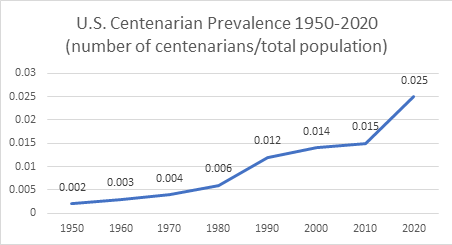
Interestingly, while women in the UK are more likely to reach their 100th birthday, the number of male centenarians is increasing at a faster rate, tripling in the last two decades alone.
Still, the chances are low. Only about 0.025 percent of the current population have made it to 100.
Related: Scientists 'Reset' The Age of Stem Cells From a Supercentenarian Who Lived to 114
"I've had the most extraordinary life," Attenborough said at age 93 in a trailer for a movie called A Life On Our Planet.
"It's only now that I appreciate how extraordinary."
While there is no single formula for a rich and healthy life, Attenborough's time on this planet is a lesson in more ways than one.