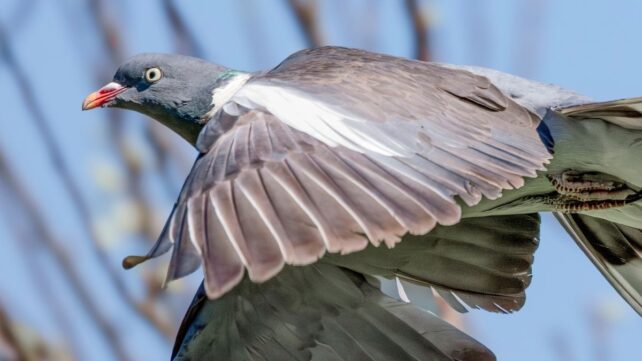
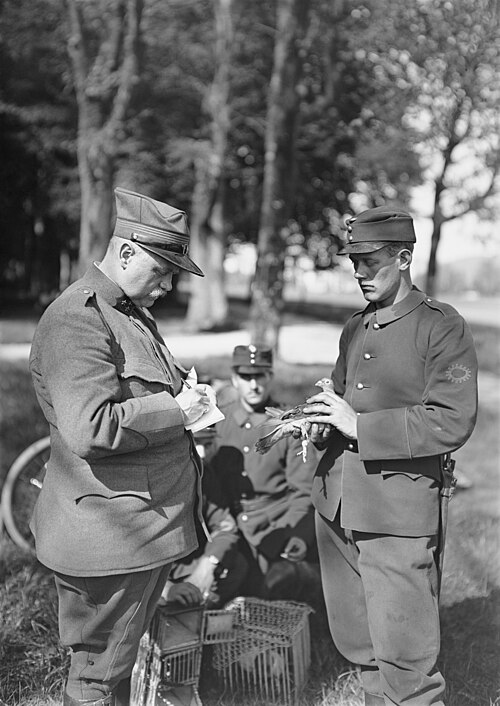
Long before the arrival of internet messengers, pigeons were prized and bred for their ability to find their way back home across vast distances, a message tied to their leg.
The importance of 'pigeon post' to human culture is evidenced as early as 1350 BCE, when they were depicted in ancient Egyptian art.
For centuries, these birds were our most reliable form of long-distance communication.
Until the telegram was invented, homing pigeons (Columba livia domestica) were tasked with carrying countless important business deals, love letters, and war reports that changed the course of human history.

But despite our long dependence on these brilliant birds, we actually don't know what makes their homing skills so darn accurate, or where in their body this powerful internal compass lies.
For decades, scientists have suspected pigeons, like other birds and animals, could be relying on the Earth's magnetic field to guide them.
Now, a team from the University of Bonn and the Max Planck Institute of Animal Behavior (MPIAB) in Germany have the evidence.
"What looks like a 'gut feeling' in bird navigation may actually have a physical basis," says biologist Martin Wikelski, director at MPI-AB and a senior author on the paper.
The homing pigeon's internal compass, it seems, may lie in their liver, with its high concentration of iron.
"We had some clues that the liver and spleen have magnetic properties, because they break down red blood cells and so store much iron in the body," says immunologist Clivia Lisowski from the University of Bonn.
Specifically, the team suspected it was the iron-laden macrophages – specialized white blood cells – in the liver playing a role in navigation.
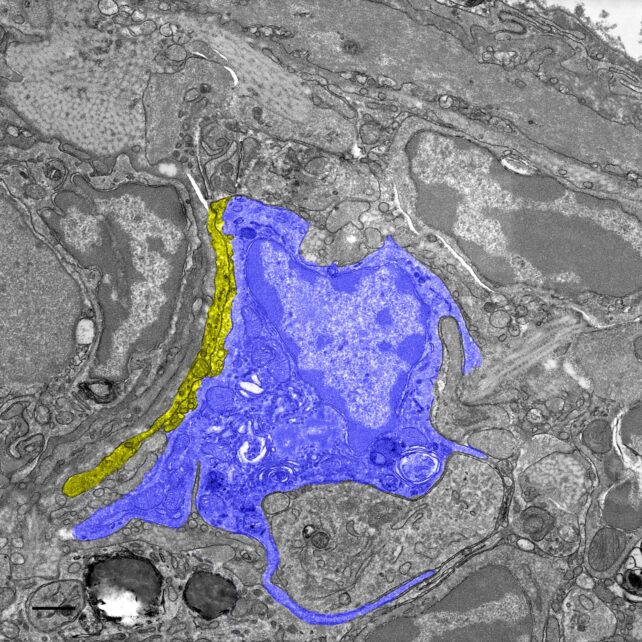
What's even weirder is that these macrophages possess a quantum property, called superparamagnetism, which may be acting as a compass 'needle' in a surprisingly literal sense.
The pigeons have all the machinery they'd need to 'read' this compass: By looking at pigeon liver tissue closely under a microscope, the researchers found nerve fibers capable of carrying signals from the macrophages all the way to the pigeon brain.
The Sun offers the pigeons a pretty clear navigational marker most of the time, but these internal, quantum liver compasses could be especially important on overcast days, the researchers thought.
To test that theory, the researchers took 34 homing pigeons on a test run, 19 kilometers (12 miles) from their home at MPIAB, to see how well they could find their way back under overcast conditions.
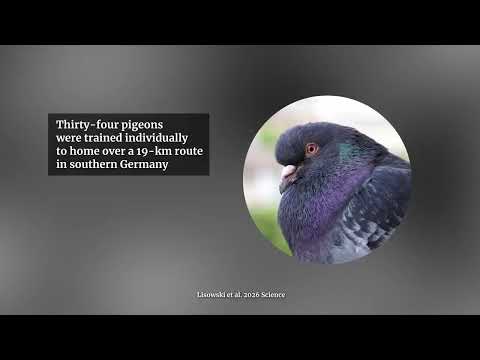
A day before taking flight, 18 pigeons were given a shot of clodronate, a drug that wipes out macrophages, thereby destroying the connection between these immune cells in the pigeons' livers, and the neurons that relay signals to the brain.
Pigeons that hadn't been given clodronate arrived home within 70 minutes of release.
But those who had been disconnected from their quantum liver compass?
They were totally lost.
"None of the clodronate-treated birds returned on the same day under persistent overcast conditions, instead displaying random spatial orientation," the authors report.
However, once the weather cleared and the Sun shone once again, the clodronate-treated pigeons homed normally, with their flight capability, motivation, and general health intact.

Repeating this experiment on a sunny day, the pigeons treated with clodronate had no trouble finding their way home, which suggests the 'internal compass' in their liver may indeed be most important when there's no Sun to guide the way.
Many animals manage to navigate immense distances without a map to guide them: sharks in the dark, deep ocean; migratory birds that traverse continents; nocturnal bats; and blind mole rats.
Further research could reveal whether they, too, are guided by quantum immune cells with a direct cable to the brain.
Related: Tiny Moth Seen Navigating by The Stars in Scientific First
"Animal navigation is one of the most fascinating phenomena in nature," says Wikelski.
"If immune cells are part of how birds sense direction, it would fundamentally change how we understand navigation."
The research is published in Science.