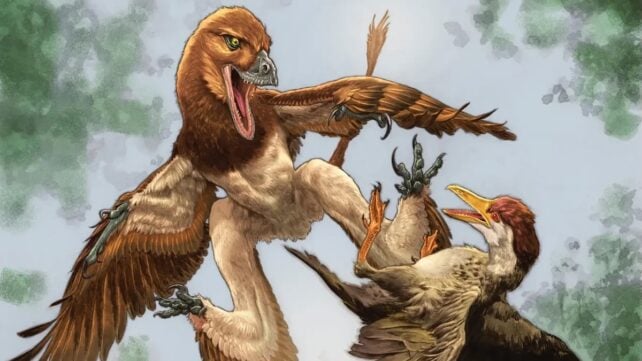
For years, a mysterious predator haunted the fossil beds of Changma Basin in northwest China.
The site is known for a stunning aviary of fossilized birds, including some of the earliest known specimens from the group that gave rise to modern birds.
But these specimens often turned up as broken fragments, including pellets that looked suspiciously like those coughed up by modern predatory birds, such as hawks and owls.
Something, it seemed, was hunting these early birds.
Now, paleontologists believe they may have identified the culprit: a new genus and species of carnivorous dinosaur.
"Scientists have found these weird, broken-up clusters of bird bones at this site, and we didn't know what made them. This new microraptor dinosaur, Jian changmaensis, is our best guess," says Jingmai O'Connor, a paleontologist at the Field Museum in Chicago and senior author of a paper describing the new species.
"It's the only dinosaur found at this site that wasn't a bird – it was a carnivore, and it was much bigger than everything else that we've found there."
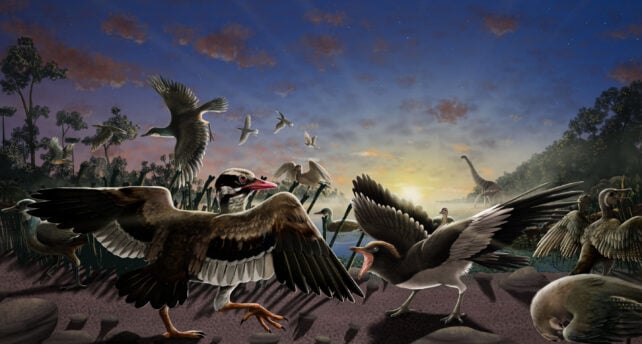
It may not have been a bird, but with its feathers and wing-like appendages, Jian sure looked like one.
But there were some major differences too: It sported a saurian snout in place of a beak, a long tail, and, unfortunately for the local bird population, curved claws on its toes.
If that weapon of choice sounds familiar, it's probably because some of Jian's cousins have been brandishing them on the big screen for more than 30 years. Jian was much smaller than Velociraptor though, even when you take Hollywood embellishments out of the equation.
The new species belongs to a separate clade called microraptors, and among its closer relatives, Jian was a monster.
"Jian is one of the biggest microraptor specimens that has ever been found," says O'Connor.
"The piece of its upper arm bone that we have is about 4 inches (10 centimeters) long, so the entire dinosaur probably had something like a four-foot (1.2-meter) wingspan, around the size of a barn owl."
In fact, this arm bone is the only piece of Jian we currently have, and that's reflected in its name.
The genus name is inspired by Jiān, a one-winged bird in Chinese mythology. The species epithet, changmaensis, is named after the Changma locality in China, where the remains were found.
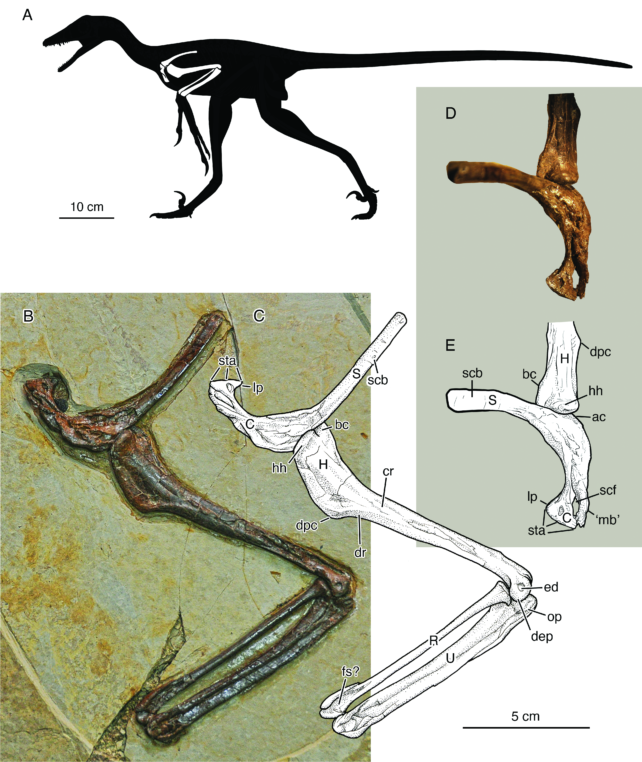
Despite the fragmented fossil, its discoverers used what is known about related species of microraptors to infer more about Jian.
They believe it probably had long feathers not just on its forelimbs but its legs too, giving it four 'wings' in a sense.
"Jian and the other microraptors probably weren't capable of true, powered flight, but they could probably glide like a flying squirrel," says O'Connor.

That, it seems, was enough to hunt down birds that were capable of flight. And judging by the fossils that dominate the site, Jian had a veritable buffet to dine on.
Related: New 'Megaraptor' Species Found With Shocking Last Meal Still in Its Mouth
"Our team has recovered more than a hundred bird fossils at Changma, but only this single non-avian dinosaur specimen," says Matt Lamanna, a paleontologist at the Carnegie Museum of Natural History.
"Jian provides critical new insight into the biological history of the Changma region and the ecological context of the ancestors of today's birds."
The research was published in the Annals of Carnegie Museum.