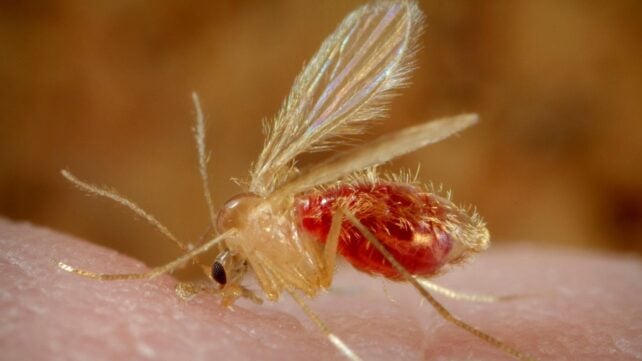
A woman in her 50s has had a rare congenital anomaly in her left buttock 'reawakened' by an invasion of parasites.
It may be the first case ever on record.
For roughly two years, the woman suffered from a painful sore on her left buttock that needed to be drained of fluid regularly.
Two decades before, she had experienced a similar lesion on the same buttock, just nearby, but it had resolved on its own, leaving a small scar.
This new sore was not healing.
When she sought medical advice, her doctors found the wound infected by parasites.
Leishmaniasis is a destructive parasitic infection transmitted to humans by the tiny bites of infected sand flies. The wounds that it causes can be disfiguring.

While most immune systems can handle and clear the infection, the patient in this case had a vulnerable spot within her skin.
In her exceptional case study, her physicians report Leishmania parasites had turned a congenital tract, "clinically silent for decades, into a draining lesion in adulthood."
A congenital tract like this one results from a developmental issue during pregnancy. When a fetus is forming, the overlying skin and the neural tube, which becomes the brain and spinal cord, may not separate and close completely.
This outcome is rare, but it can leave a small cavity beneath the skin that may resemble a scaly dimple.
Because these hidden channels are at greater risk of infection, they are often surgically removed after birth.

But they can be easy to miss.
These congenital dermal sinuses typically occur near the spine. A dermal sinus on the lateral buttock has been reported before, but it's rare.
According to the recent case report, this may be the very first report of leishmaniasis within a dermal sinus of the buttock.
The parasites behind the infection are great at finding our most vulnerable spots. They thrive in burns, chronic wounds, and other compromised parts of the skin.
They can even persist in scars and healed lesions.
An infection in the skin usually resolves spontaneously, between two months and more than a year after symptoms begin. A more severe form, called visceral Leishmaniasis, can lead to fever, weight loss, and organ issues. It can even be fatal.
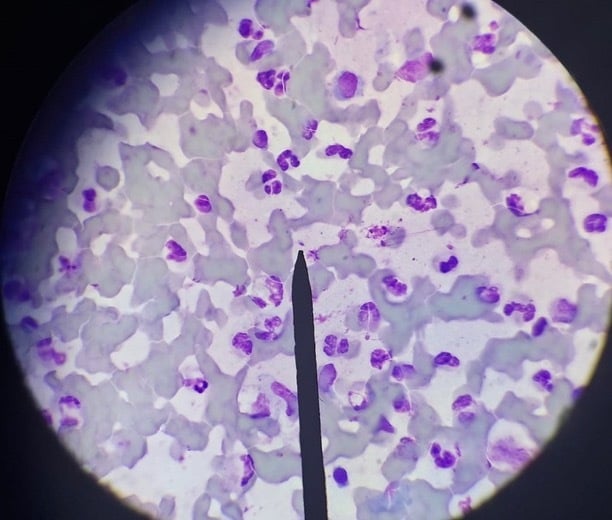
The infection is on the World Health Organization's (WHO) list of neglected tropical diseases.
Globally, more than a million people are infected by Leishmania parasites each year, and not just in developing nations, where HIV can leave large numbers especially vulnerable.
Fortunately, the middle-aged woman featured in the current case study had only a cutaneous (skin) infection, and she had access to medical care.
After being treated with medication for the infection, the patient underwent surgery. Upon closer examination, her physicians found that her dermal sinus was not connected to her spinal cord or to other important body parts.
It was thus removed.
Related: A Brain Parasite Infecting Millions Is Far Less Sleepy Than We Thought
The medical professionals involved in the woman's case have published her story, with her consent, to raise "awareness of such rare presentations", especially in areas where Leishmania parasites are endemic.
The case study is published in BMJ Case Reports.