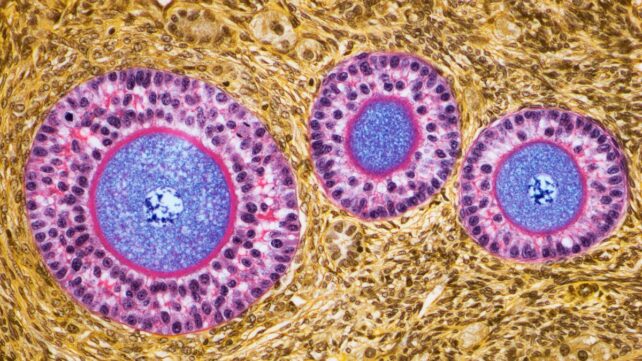
We've all heard of menopause: a supposedly terminal moment for the female reproductive system, in which the ovaries stop releasing eggs and presumably call it a day.
But reproductive biologist Francesca Duncan is not content with this simplified image of ovarian retirement.
She has been trying to understand what ovaries get up to once they stop pumping out eggs. It turns out it's much less like retirement, and more like a career change.
Life expectancies are generally stretching further than ever before, which means there's now far more post-menopausal people wandering around, whose bodies we still don't fully understand.
A new study of mice, published in Molecular Human Reproduction by Duncan at Northwestern University in Illinois and a team of researchers across the US, suggests that the post-menopausal ovary is far from inert.
This new research reflects what Duncan found in another study of post-menopausal women, which is yet to be peer-reviewed. It showed that the proteins produced by ovarian tissue in 28 post-menopausal women differed across age groups.
If ovaries were 'inert' after their reproductive years, that shouldn't be the case.
Mouse studies obviously can't tell us exactly what is going on in the human body, but because we share a similar evolutionary history, they can offer hints.
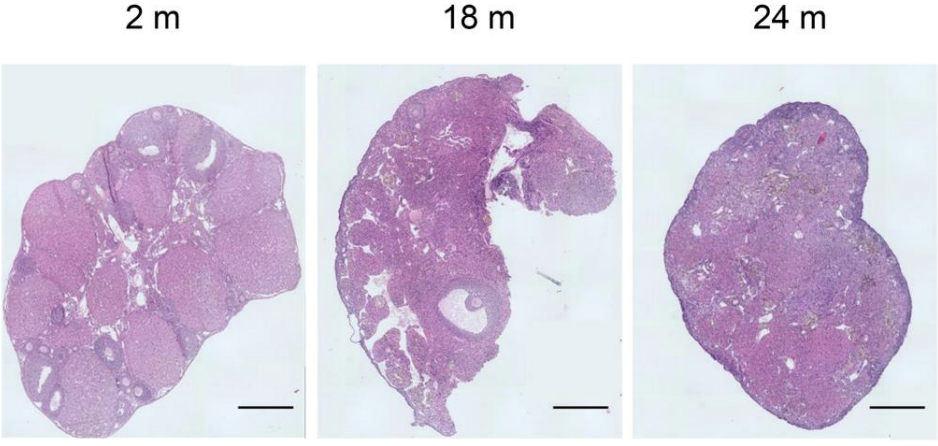
In the animal study, Duncan and team removed the ovaries of 2-month, 18-month, and 24-month mice for close study. Each of these ages was chosen to represent a different phase of the mouse reproductive cycle.
Mouse ovaries typically shut down around two years into the animal's short lifespan. Their menopause is not accompanied by the sharp estrogen drop humans experience, but it bears other similarities.
Tissue from one ovary of each mouse was closely examined under the microscope to better understand the anatomy of the ovarian tissues at each of these phases of life.
With the second ovary, the researchers conducted bulk RNA sequencing, which tells us not only what genes are present within certain tissues, but which genes are actively involved in protein production.
Unsurprisingly, these samples showed that the machinery of reproductive function slowed down with age. Older mice had fewer follicles and changes in the way cell tissue and collagen were arranged.
But that doesn't mean the entire 'factory' was shut down. In fact, ovaries seem to step into a new role.

"Transcriptomic analyses revealed a shift from reproductive functionality to an immune-dominant signature with age," the team reports.
"Correspondingly, post-reproductive ovaries exhibited increased infiltration of T cells, macrophages, and multinucleated giant cells."
Though old and post-reproductive ovaries looked and functioned very differently from those of young mice, they also had distinct transcriptome profiles, much like what Duncan saw in postmenopausal women.
Related: Having Both Ovaries Removed Could Come at a Serious Cost to The Brain
It suggests that ovaries continue to undergo molecular changes, even after their reproductive role has wound down. They appear to take on the role of an immune-like inflammatory organ, the team says.
"These findings challenge the assumption that the post-reproductive ovary is inert, instead indicating that it acquires an immune identity with potential endocrine and paracrine influence on whole-body aging," Duncan and team conclude.
This could have important implications for healthcare in post-reproductive years, and especially for people who have their ovaries removed.
The research is published in Molecular Human Reproduction.
This article was fact-checked by Rachel Garner and edited by Clare Watson. While we pride ourselves on our process, we are only human. If you spot a mistake, please let us know.