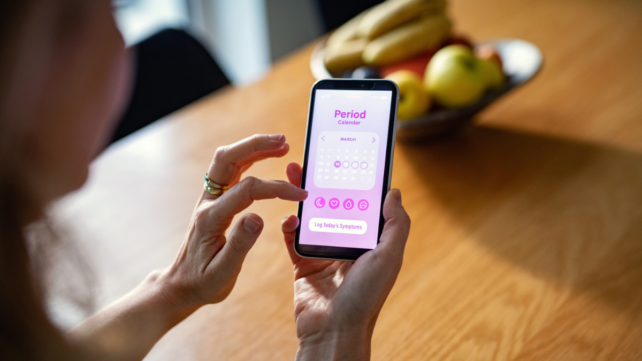
Did you (or someone you know) have a period come late, twice, or not at all in June?
If so, you are not alone. Across social media, thousands of women and people who menstruate reported having weird periods in June.
Some said it was the first time in their life that they'd experienced having a double or delayed period.
"My period is late for the first time ever," one woman posted to Reddit. "Usually I'm super regular and can pinpoint the hour I'm going to get it."
As the period posting picked up pace online, several videos started to link the strange phenomenon to solar flares, the shutdown of the Large Hadron Collider, astrology or feminist mysticism.
Some people described the trend as an energy shift, the emergence of a "collective womb" or evidence of "matriarchical consciousness … becoming the dominant force driving the decisions on this planet".
Other people speculated that the heat waves across Europe and North America – which led to thousands of deaths and heat-related illnesses – were affecting menstrual cycles.
"Of course, the internet loves conspiracy theories," said one TikTok user. "But I'll be the one to burst ya'll's bubble. This isn't a Dr Who episode. It's climate change."
So was this actually a trend?
Social media platforms amplify ideas that people are already engaging with, so without population-level data, we can't know whether an online trend reflects a real-world phenomenon or if it's a product of the algorithm.
"Social media reports are not data," Gideon Meyerowitz-Katz, an epidemiologist at the University of Wollongong, told ScienceAlert.
"There are women having irregular periods every month, but if it's going viral then suddenly we all see more of the posts even though nothing has really changed."
It's also possible that period-tracking apps could have intentionally driven the trend as a marketing exercise for their products.
Several social media accounts affiliated with period-tracking app Musa created videos of people raising their hands if they had a weird period in June.
Beverley Vollenhoven, a reproductive endocrinologist and infertility specialist at Monash Health in Melbourne, Australia, initially thought this period trend was just "some sort of viral TikTok thing".
"But when I sat and thought about it, it really may depend on how much stress someone is under," Vollenhoven told ScienceAlert.
The recent heatwaves could be a stressor for people who are not used to them and cause abnormal periods, she said.
"It's feasible," said Vollenhoven. "Do we have any evidence for it? No."
Periods can become irregular or stop temporarily when people experience severe stress such as high-school exams, a divorce, seasonal depression, an unmanaged chronic illness, psychological injury at work, anorexia or intense exercise, she said.
The body tends to conserve energy when it's under stress, and one way to do that is to lower the chance of becoming pregnant by disrupting or stopping periods, said Vollenhoven.
"The body has amazing defenses," she said.

The environment "plays a surprisingly powerful role in menstrual health," Nighat Arif, a general practitioner based in the United Kingdom and the author of a book about menstruation, told ScienceAlert.
Emerging research suggests that long-term exposure to air pollution can disrupt the endocrine system and is linked to irregular, longer periods.
"Environmental toxins, including endocrine-disrupting chemicals from plastics, pesticides and industrial pollutants, can mimic or block hormones, altering cycle timing and even shifting the age of menarche," Arif said.
Climate change is characterized by heat waves and extreme weather.
These conditions can stress people out, raising cortisol levels and dysregulating the hypothalamic–pituitary–ovarian axis, which can lead to missed periods, heavier bleeding and a worsening of conditions like PCOS (now termed PMOS) and endometriosis, she said.
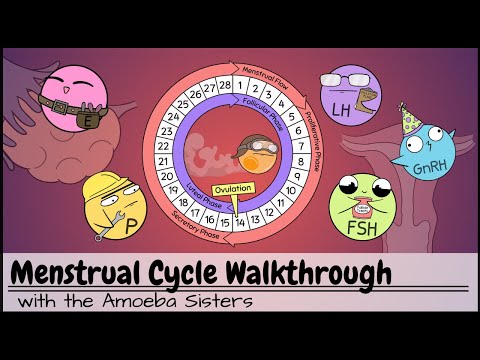
But what about the period tracking apps – did they notice any changes in June?
Investigating whether there was a population-level shift in menstruation in June requires "careful statistical analysis," but it is "absolutely possible" to study, Amanda Shea, the chief science officer at period-tracking app Clue, told ScienceAlert.
Social media can create illusory patterns because people are more likely to report unexpected changes to cycles than normal periods.
But it's also "entirely possible that people are noticing a real phenomenon," said Shea.
"When thousands of people independently report similar experiences, it's worth paying attention."
Climate change and extreme heat are already recognized as a threat to reproductive health, with substantial evidence linking heat exposure to adverse pregnancy outcomes, particularly preterm birth and other maternal and neonatal complications.
Related: 25 Year Study Reveals Disturbing Effect Heat Waves Are Having on Births
"Animal studies also suggest that heat stress can impair ovarian function, follicle development and egg quality," Shea said.
"Social media doesn't replace scientific evidence, but it can provide the initial signal and momentum needed to prioritize new research."
This article was fact-checked by Rebecca Dyer and edited by Rebecca Dyer. While we pride ourselves on our process, we are only human. If you spot a mistake, please let us know.