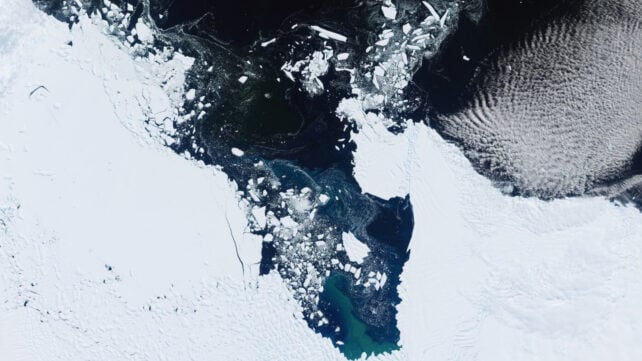
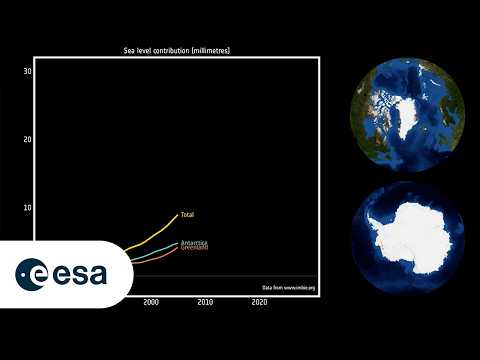
Two of Earth's largest ice sheets have lost more than 12 trillion US tons of ice in just 47 years, according to a major report authored by 58 scientists from institutions around the world.
The data suggest that ice lost from the Greenland and Antarctic ice sheets combined has raised the global sea level by around 31.4 millimeters since 1979.
The team has brought together 42 separate surveys of ice sheets, drawing on data from 27 satellite missions.
The result may be the most reliable long-term record so far, detailing the changes that have occurred in our two major ice sheets across nearly five decades.
Satellite records for the Greenland ice sheet go back to 1972; for the Antarctic ice sheet, they go back to 1979.
"Our assessment only accounts for ice sheet mass change that contributes to sea level and does not address the ice loss from ice shelf thinning, ice shelf retreat, or ice retreat for ice grounded below sea level," the team notes.
The researchers estimate 84 percent of the ice loss is due to an imbalance in the dynamics of glaciers, especially at the points where they meet the ocean.
"More than four-fifths of the ice lost was discharged into the ocean by faster-flowing glaciers, rather than melted at the surface – which tells us the long-term trend is being driven by the dynamic response of the ice sheets to a warming ocean," explains the study's lead author Inès Otosaka, a glaciologist from Northumbria University in the UK.
The remaining 16 percent of ice loss relates to the atmosphere: things like surface melt and snowfall.
As we continue to release greenhouse gases into the atmosphere by burning fossil fuels, the ocean is absorbing most of the heat that is inevitably trapped in our biosphere.
And as more of that heat energy enters ocean systems, their waters are becoming warmer, and their currents more hyperactive.
In Greenland, this is driving what's known as 'Atlantification', with warmer waters from the Atlantic penetrating further north than they ever did before – and encroaching on the world's second-largest ice sheet.
In Antarctica, the world's largest ice sheet, circumpolar currents are also ramping up, driven by stronger winds and warmer waters.
As these currents carry warmer waters into contact with the ice sheets at both ends of our Earth, they also encroach further into and under their glaciers, applying heat from new angles.
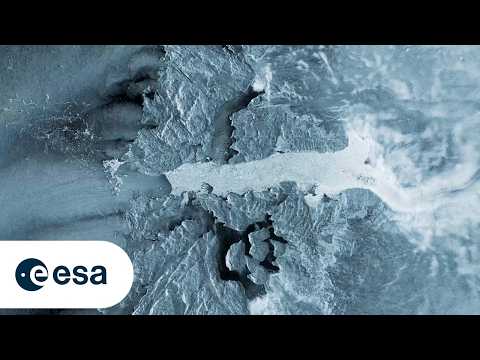
That loss has sped up dramatically since the 1990s, and shows no sign of reversing.
And yet, looking at the records from 2020-23, you'd think the Antarctic Peninsula had stabilized.
This is apparently only a reflection of short-term weather variations, as Otosaka told Seth Borenstein at Phys.Org – particularly record snowfall in East Antarctica. She said that unpublished measurements taken since 2023 suggest the accelerating ice-loss trend has resumed.
"These findings demonstrate the fundamental importance of international scientific collaboration in addressing the major environmental changes of our time," adds Diego Fernandez of the European Space Agency, who was not involved in the study.
Going forward, the findings will help scientists more accurately forecast future sea level rise – and perhaps prompt the rest of us to make some urgent decisions for our planet's future.
The research was published in Scientific Data.
This article was fact-checked by Rebecca Dyer and edited by Rebecca Dyer. While we pride ourselves on our process, we are only human. If you spot a mistake, please let us know.