
One of the most widely used drugs in the world could help reduce dementia risk when taken daily – but only for some.
An analysis of a large randomized controlled trial, including more than 13,500 older adults in Australia and the US, has now found that taking daily aspirin is associated with a lower relative risk of dementia among people with certain genes.
The study, published in Alzheimer's & Dementia, uses data from one of the largest placebo-controlled trials of aspirin use in healthy older adults.
It is the first study to identify a genetic subgroup of individuals who can potentially lower their dementia risk with low doses of aspirin.
The participants who seem to benefit the most are those with genetic scores associated with higher platelet counts in the blood.
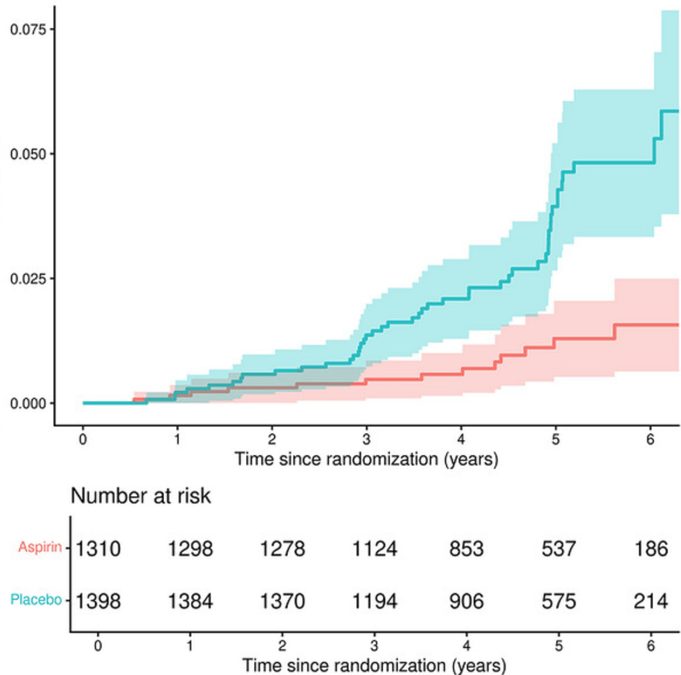
Among this subgroup, those taking aspirin showed a 70 percent lower risk of developing dementia over the course of the trial compared to those taking a placebo, with the difference emerging after roughly 2 to 3 years of follow-up.
But there were also risks. Serious bleeds during this time were also roughly twice as common among those taking aspirin.
"People shouldn't start taking aspirin to prevent dementia on the basis of this study without consulting with their doctor, particularly given the increased risk of serious bleeding," warns lead author and public health researcher Peter Fransquet from Monash University.
"We now need to confirm the finding in other studies and ultimately test it in a trial designed specifically for people with this genetic profile."
But if these results are verified, the possibilities are exciting.
"If it holds up, the fact that aspirin is already cheap and widely available could make personalized dementia prevention a real possibility," adds Fransquet.
Today, aspirin is not recommended for the prevention of cognitive decline.
Sufficient evidence does not yet exist to suggest that this drug can reduce dementia risk.
But perhaps that is because we have been lumping everyone together, regardless of their genetic profile.
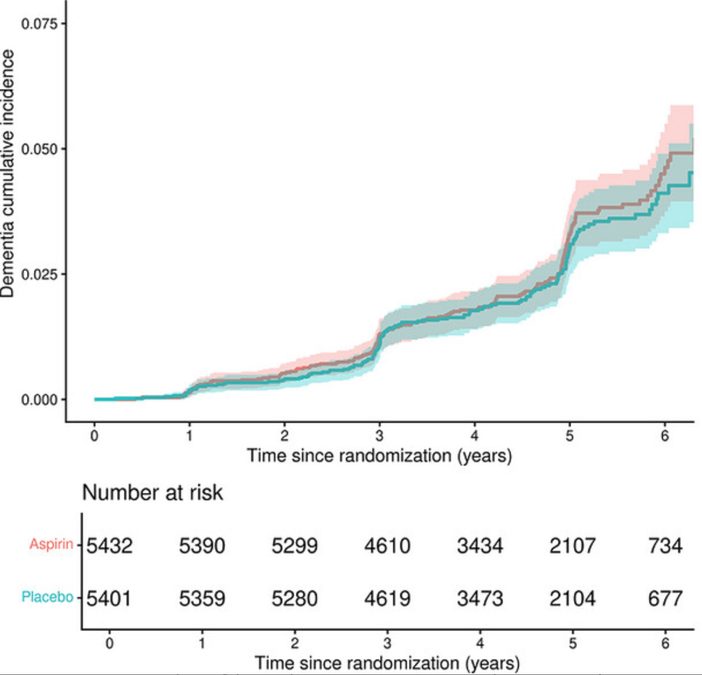
"Previous trials found aspirin didn't prevent dementia when everyone was considered together," explains Fransquet.
"Our findings suggest there may be more to the story."
For this new data analysis, Fransquet and colleagues at Monash ranked participants in the randomized controlled trial according to their platelet-related genetic score.
Among those who scored in the top 20 percent, roughly 3.3 percent of those given a placebo went on to develop dementia.
Yet only 1 percent of those taking aspirin developed dementia.
That's a 70 percent lower relative risk from aspirin use among this subgroup.
"What's particularly interesting is that the signal wasn't linked to the established genetic risk factors for Alzheimer's disease and dementia," says Fransquet.
"Instead, it's pointing us towards platelet biology and gives us a new avenue to investigate."
Aspirin is arguably one of the biggest pharmacological achievements of the 20th century, and its use now plays a key role in preventing cardiovascular and cerebrovascular diseases.
This nonsteroidal anti-inflammatory drug can reduce the chance of heart attack, ischemic stroke, and blood clots when taken frequently by some patients.
Aspirin thins the blood, and while that can lower the risk of clots, it can also increase the risk of bleeding, including internal bleeding.
The benefit of taking daily, low-dose aspirin therefore only outweighs the risk in some scenarios, and this balance of pros and cons is constantly teetering based on new research.
Far more evidence is needed to ensure the safety of taking low-dose aspirin for some people at risk of dementia.
The current analysis lumped all forms of dementia together, for instance, but some types are more linked to vascular issues than others.
What's more, the randomized trial only followed participants for a median of less than five years.
That means that the study may have captured cases of dementia that were more rapidly progressing or clinically apparent.
It is unknown how slower cases of cognitive decline would be impacted by daily, low-dose aspirin.
The study, however, raises the possibility that genetic profiles can be used to personalize dementia prevention.
The research has been published in Alzheimer’s & Dementia.
This article was fact-checked by Rebecca Dyer and edited by Rebecca Dyer. While we pride ourselves on our process, we are only human. If you spot a mistake, please let us know.