
Alexander disease is a rare genetic neurological disorder that affects less than one in a million people worldwide. It leads to a multitude of problems, including a loss of mobility, seizures, and issues with speech, and it's often fatal.
The disease is caused by a fault in the gene that makes glial fibrillary acidic protein (GFAP).
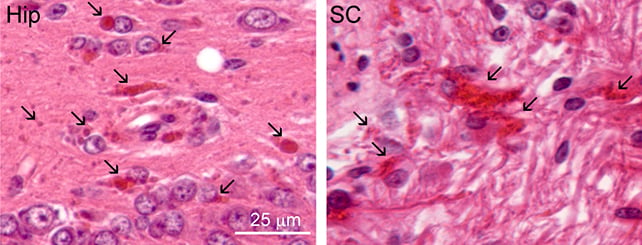
The fault creates abnormal versions of GFAP, causing the protein to clump into tangles called Rosenthal fibers. These fibers stress brain helper cells called astrocytes, which then become damaged along with the brain's myelin.
Current treatments focus on managing the symptoms of Alexander disease, but after decades of diligent research, the US Food and Drug Administration (FDA) has now approved the first-ever drug to attack the disease directly.
The drug is zilganersen (brand name Zanvastro), and it targets GFAP directly, reducing the amount that the body produces. In clinical trials, this has now been shown to have a positive effect on key characteristics of the disease.
"This is a wonderful and long-awaited day for the Alexander disease community," says neuropathologist Albee Messing, from the University of Wisconsin-Madison, who has been investigating the condition for more than 30 years.
FDA approval was partly secured through a clinical trial involving 54 pediatric and adult patients aged up to 53, across 13 sites in eight countries.
Motor skills were shown to either stabilize or improve for younger participants, while older participants' walking speed held steady compared with a decline in those who received no treatment.
In treatments lasting more than a year, the drug was shown to meet all the required safety standards to get the all-clear from the FDA. Some people experienced side effects, though most were mild or moderate, and serious ones were less common in treated patients than in the control group.
The most common side effects were vomiting, back pain, cough, headache, and pain after the spinal injection. The FDA also warns that some patients developed aseptic meningitis, an inflammation of the lining around the brain and spinal cord.
"[The] approval of Zanvastro begins a new chapter for people living with Alexander disease and their families, who have long faced this relentlessly progressive and often fatal disease with no treatment options," says medical scientist Brett Monia, CEO of Ionis Pharmaceuticals, the company responsible for developing the drug.
It's taken several stages of research to get to this point with Zanvastro. Messing, together with colleagues including neurobiologist Michael Brenner from the University of Alabama at Birmingham, originally worked with mice bred to produce too much GFAP.
When that led to protein clumps in astrocytes, it put researchers on the path to understanding how Alexander disease develops.
The mouse models were initially designed to overexpress the GFAP gene, and the researchers were surprised to find that they had unintentionally reproduced the classic lesions of Alexander disease.
"This provided an obvious and specific strategy for therapy – the GFAP protein," says Messing.
Having originally looked at existing FDA-approved drugs to see if any could have an impact on Alexander disease, the researchers eventually decided to design their own, custom drug to reduce GFAP production levels.
The drug works through antisense oligonucleotides (ASOs), small bits of DNA that suppress GFAP production. The treatment was tested in animals before a clinical trial in humans began in 2021.
An injection into the spinal canal once every three months, delivered by a healthcare professional, is required to administer Zanvastro. The approval covers patients of all ages, though signs of the disease most commonly appear before age 2.
As one mother of a child with Alexander disease puts it, describing her daughter's response to treatment: "The fog's being lifted on her brain, and her personality gets a chance to come out more and more."
It's still not a cure – it doesn't reverse the condition or make it disappear – but it can significantly slow the progression of the disease and improve symptoms by targeting the underlying causes directly.
"The whole program of research would not have been possible without the support and participation from the patient and family community, to whom we will always be grateful," says Messing.
This article was fact-checked by Rebecca Dyer and edited by Rebecca Dyer. While we pride ourselves on our process, we are only human. If you spot a mistake, please let us know.