It's been 20 years since Australian researchers created the world's first vaccine developed specifically to prevent cancer.
Thanks to the HPV vaccine, Australia is on track to become one of the first nations in the world to eliminate cervical cancer.
Now, research led by scientists Down Under has made another breakthrough – this time for skin cancer.
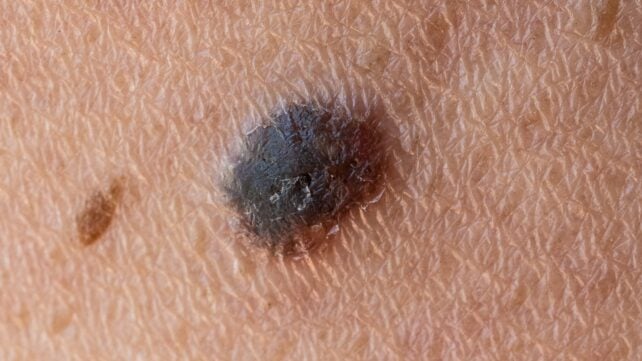
The first personalized mRNA cancer vaccine has now succeeded in a phase 3 clinical trial, reducing the risk of melanoma returning or causing death by 42 percent compared with standard immunotherapy alone.
The results are even better than scientists were expecting.
The global principal investigator, medical oncologist Georgina Long from Melanoma Institute Australia (MIA), presented the results at the European Society for Medical Oncology Congress 2026.
They are set to be published in the New England Journal of Medicine.
"These findings are a foundational shift in our approach to cancer: harnessing the immune system in a more personalized way to reduce the risk of melanoma recurrence or death," says Long.
"This has not been achieved before in the history of cancer drug development."
Medical oncologist Robert Vonderheide, president-elect of the American Association for Cancer Research, who was not involved in the trial, told The New York Times the trial's results are up there with "our biggest breakthroughs."
The mRNA vaccine was developed by Moderna and Merck, and it is designed to stop melanoma from coming back after surgery.
First, researchers sequence the tumor from each patient, and then they figure out what separates the 'fingerprint' of this tumor from other, healthy cells in the body.
A vaccine based on that information essentially creates a personalized 'wanted poster' of the cancer for the patient's own immune system.
"This is delivered as mRNA, so the body's own cells display the poster to the immune system, showing it exactly what to look out for and attack," says Long.
The medicine works in conjunction with an existing immunotherapy called Keytruda (pembrolizumab).
"Cancer can fool the immune system with a fake friendly handshake, so the immune system thinks the cancer cell is normal," explains Long.
"Pembrolizumab blocks the handshake, allowing immune cells to recognize the cancer and attack it, but it is the same drug for everyone."
Personalizing a treatment to use alongside pembrolizumab seems to improve the results.
The phase 3 clinical trial involved more than 1,100 patients from 157 sites around the world, and the results back up impressive findings from a phase 2 trial, published in 2024.
For patients who remained cancer-free six months after starting treatment, the risk reduction for melanoma recurrence or death was 58 percent compared with pembrolizumab alone.
The mRNA vaccine is not yet available to patients in Australia or the United States, but the results have entered a regulatory review process.
That could take several years, depending on the nation.
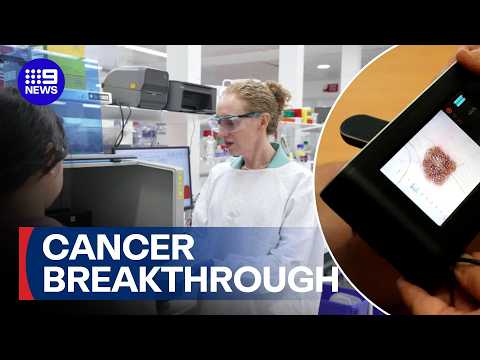
In Australia, which has one of the highest melanoma rates in the world, one person dies from this cancer every 6 hours.
A vaccine that could stop the cancer from recurring could save numerous lives.
And it's not just skin cancer that could benefit from mRNA technology.
"Having succeeded in melanoma, this proof of concept could mark the beginning of a foundational shift in how we treat cancer, helping patients remain cancer-free for longer," says Long.
Alex Menzies, a medical oncologist at MIA, agrees.
"The hope for the near future is that it may not only improve outcomes for melanoma patients with advanced disease, but also those with other types of cancer where current immunotherapies are poorly effective," Menzies explains.
That's an exciting idea, but there is still more work to be done.
Recently, several randomized trials testing mRNA vaccines for colorectal cancer and for head and neck cancer have failed to reduce recurrence.
That makes these newest results even more important.
"The INTerpath-001 trial shows that treatment built from the unique signature of a patient's own tumor, working alongside checkpoint inhibitor immunotherapy, can sharpen the immune system to find and destroy any remaining cancer cells," says Long.
"Just as email transformed how we communicate, individualized neoantigen therapy has the potential to transform how we treat cancer."
This article was fact-checked by Rebecca Dyer and edited by Rebecca Dyer. While we pride ourselves on our process, we are only human. If you spot a mistake, please let us know.