Many scientists are seriously worried about the potential threat of 'mirror life': hypothetical organisms built from molecules that are flipped from what we find in nature.
Many of life's basic building blocks, including DNA and amino acids, have a certain 'left- or right-handedness'.
If that were to be flipped, like a DNA double helix twisting to the left instead of the right, then these looking-glass versions of life could sneak past the biological defenses of animals, plants, and humans.
It's worth emphasizing that mirror life hasn't been discovered or developed yet.
However, researchers from the University of Strathclyde and Durham University in the UK have published a possible method of detecting the threat in Royal Society Open Science.
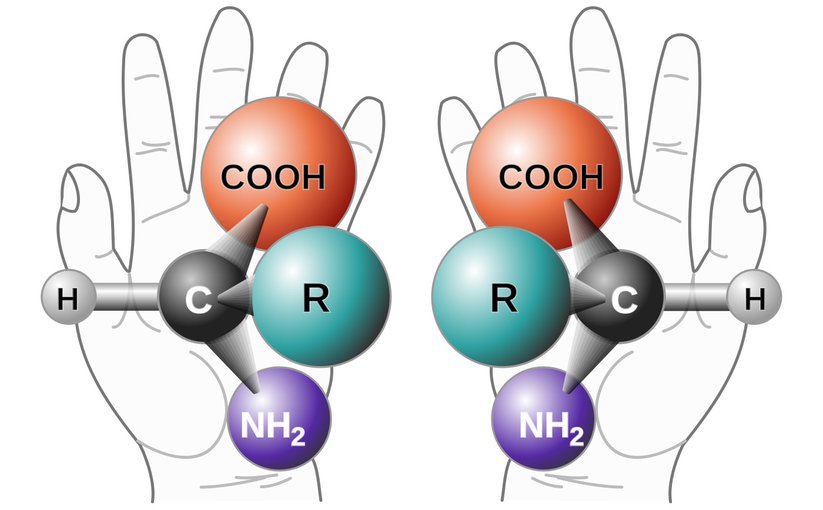
The method is based on circularly polarized luminescence (CPL), a special property of light that can reveal something's handedness (also called its chirality) by the way its waves twist like a corkscrew as they travel.
"Mirror life presents a low-likelihood but high-severity global biosecurity threat that has attracted the attention of bioscientists, governments and international security organizations," write the researchers in their published paper.
"In this perspective, we have set out the first known assay principle to discriminate against mirror life."
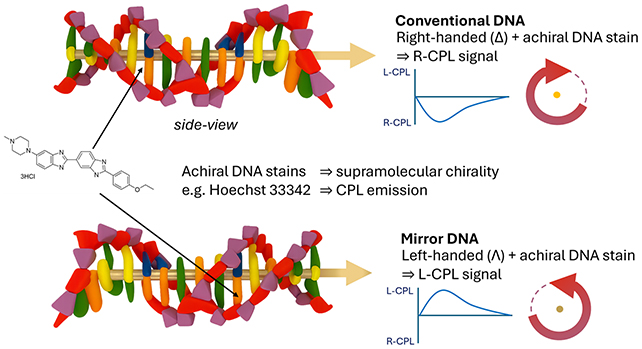
Circularly polarised light isn't new – it's used in some cinema 3D glasses, for example – but here the researchers suggest that by adding fluorescent probes to a sample, then measuring the way that light spirals from it, mirror life could be detected.
No tests were run for this study, but the authors describe how existing CPL detection technology could be adapted into cameras, microscopes, and other types of scanners looking for reversed molecular structures.
"Assuming that mirror life is chemically analogous to conventional terrestrial life, these CPL signals could, in principle, be used to assess chirality and thereby provide a method for screening against mirror life," write the researchers in their published paper.
One of the key benefits of CPL detection is that mirror-life organisms wouldn't need to be developed to test it, and the study team also suggests that several different probes could be used in tandem to reduce the chances of false positives.
Next, the researchers want to put some of these probes to the test on ordinary cells, which will tell us more about how their flipped versions could be detected. There's still plenty of work to do in fine-tuning the light detection and fluorescent staining parts of the process.
"We encourage other researchers who are experts in these techniques to consider how methods and equipment could be adapted and used for screening against mirror life, and where complementary analysis may be practicable," write the researchers.
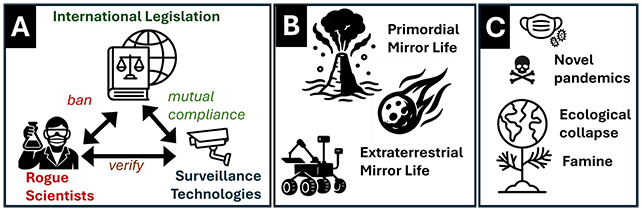
Part of the problem in preparing for any mirror life threat is that it doesn't exist yet – or at least we haven't found it. In addition to being developed in biological labs, the researchers suggest it might be present on other planets or even in isolated parts of Earth, though they see these as much less likely.
One of the biggest concerns is around mirror life bacteria, which might be able to render existing drugs useless – set up as they are for a certain molecular chirality – and lead to global pandemics that can't be controlled.
Several scientific and regulatory bodies have now recognized the potential danger of mirror life and are calling for tight restrictions on the development of mirror bacteria in the lab – though of course there might always be bad actors who ignore the rules.
Our best way of protecting ourselves is to build detectors and countermeasures before mirror life appears – and this study is a notable step towards that.
"The CPL method could provide a first-line assay for identifying extant mirror life biohazards, while also offering a foundation for bio-surveillance efforts that would likely be necessary for practical safeguarding against artificial mirror life," write the researchers.
The research has been published in Royal Society Open Science.
This article was fact-checked by Rebecca Dyer and edited by Rebecca Dyer. While we pride ourselves on our process, we are only human. If you spot a mistake, please let us know.