Scarlet fever was probably not introduced to the Americas by European colonists, after all.
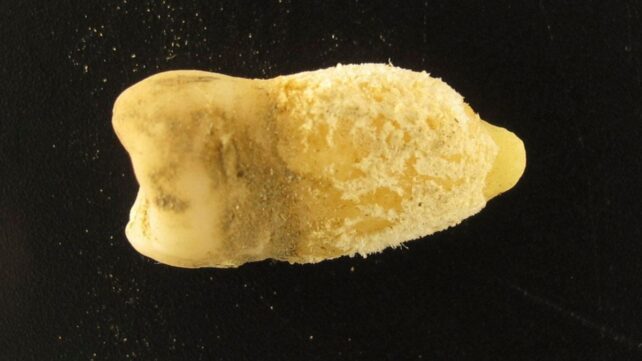
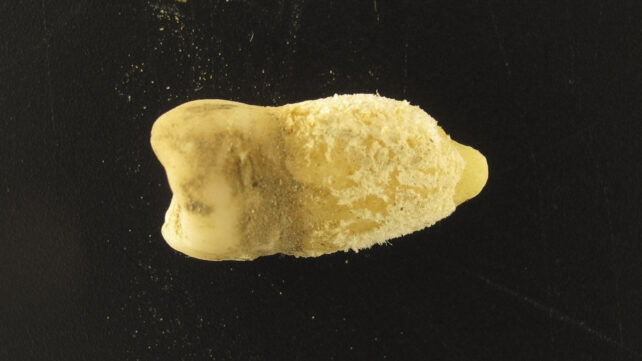
Scientists in Italy and the UK have now found evidence of the bacterial infection in the tooth of an ancient mummified skull.
The remains belonged to a male individual who lived on the high-altitude tablelands of what is now Bolivia between 1283 and 1383 CE.
Only in 1492 did the Italian explorer Christopher Columbus "sail the ocean blue".
That means, if the DNA analysis is right, scarlet fever was already circulating among Indigenous populations in the Americas centuries before European contact, in pre-Columbian times.
"The ancient strain carried many – though not all – of the pathogenic genes found in modern Streptococcus pyogenes strains," explains microbiologist Frank Maixner, director of Eurac's Institute for Mummy Studies, a private research center in Italy.
The long-lost strain of scarlet fever appears to be closely related to modern strains that cause throat infections, splitting from the rest roughly 10,000 years ago.
Most evidence suggests the first people to arrive in the Americas crossed the Bering Strait roughly 22,000 years ago, and other overlooked genomic evidence indicates that S. pyogenes was present in Europe and Africa as early as 4,000 years ago.
Humans may have been battling this infection for a while now, and Siberia might have been a gateway for its spread.
"The presence of S. pyogenes across geographic regions and time periods raises the possibility that it was carried over by human populations during their migrations, contributing to its global distribution," the study authors speculate.
Before the advent of modern antibiotics, scarlet fever was a leading cause of childhood death and disability, sometimes causing vision and hearing loss. Until scientists figured out that the infection was caused by a bacterium, its symptoms were often conflated with smallpox, measles, and diphtheria.
These illnesses are historically considered 'frontier' diseases – thought to have accompanied European colonists to the Americas, causing destruction amongst a population with naive immune systems.
That narrative, however, is likely oversimplified, and not just for scarlet fever.
Recent evidence from ancient DNA in Colombia, for instance, opens up the possibility that syphilis may have existed in both the Americas and in Europe for thousands of years. It may not have been first spread by the Columbian contact, after all.
The same goes for leprosy, and now, maybe even scarlet fever.
The ancient DNA evidence of S. pyogenes, retrieved from the tooth of the Bolivian mummy, is highly fragmented and degraded. Nevertheless, scientists claim they could still extract tiny bits of information to reconstruct a model of its genome.
"You can think of it like putting together a puzzle without knowing the picture on the box," explains microbiologist Mohamed Sarhan from Eurac.
That makes for challenging work, but Sarhan says it also means that he and his team are "not influenced by modern references – we work without preconceptions. This allows us to discover entirely new insights and also identify genetic variants that may no longer exist today."
Previously, scientists working with ancient DNA had discarded longer sequences, as it was assumed these chunks of information could not have survived for so long and must have resulted from modern contamination.
This new research claims to have overcome that hurdle, which Maixner says "challenges the foundations of ancient DNA research."

"We were able to clearly demonstrate, based on typical chemical damage patterns, that the longer sequences were just as ancient as the shorter ones – and they provided valuable information," says Sarhan.
One of the biggest finds was the presence of core virulence genes in the ancient bacterial strain. This supports its classification as a disease-causing bacterium that probably infected the throat rather than the skin.
Related: Mysterious Leprosy Pathogen Has Lurked in The Americas For 4,000 Years
Thanks to antibiotics, scarlet fever is no longer the death threat it once was, although modern strains are becoming more of a problem, especially due to antibiotic resistance.
Figuring out where the bacterium originated and how it has evolved over millennia could provide invaluable knowledge for future treatments.
The study was published in Nature Communications.