The regular consumption of eight energy drinks a day may have contributed to a mild stroke in a middle-aged man in the UK.
Eight years after the health event, he still suffers from chronic numbness on the left side of his body.
"I obviously wasn't aware of the dangers," reported the anonymous patient in a case study.
"(I) have been left with numbness (in my) left-hand side, hand and fingers, foot and toes."
While it's not yet clear whether the man's energy drink habit directly caused the blood clot in his brain, these highly caffeinated beverages are known to raise blood pressure in the short term, and some scientists are concerned they may have a cumulative, chronic impact on the body.
Related: Energy Drinks Seen Fuelling Cancer, But There's a Strange Catch
When the man first presented to the emergency department with stroke symptoms in his 50s, his systolic blood pressure was so high, it was in the hypertensive crisis range.
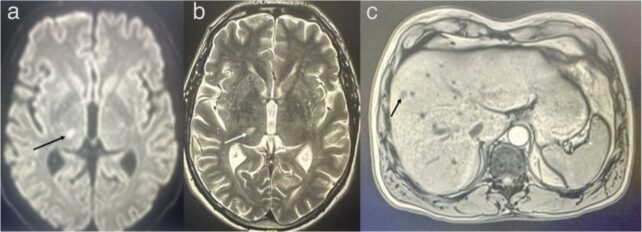
Hypertension is the most important risk factor for an ischemic stroke, and sure enough, a brain scan confirmed the presence of a blood clot in his brain.
Thankfully, medication lowered the man's blood pressure, and he was discharged after three days. But a few months later, his blood pressure rose again, despite doctors increasing his meds.
After further questioning, the patient revealed that he consumed an average of eight energy drinks a day.
That means he was ingesting up to 1.3 grams of caffeine daily. Health guidelines generally suggest a maximum intake of roughly 400 mg.
Once the patient stopped consuming energy drinks for good, his blood pressure balanced out, and doctors were able to wean him off his medications for hypertension.
Today, eight years after his initial stroke, the patient has almost fully recovered, although his sensory symptoms persist.
"As our case and discussion illustrate, it is possible that both acute and chronic intake of energy drinks may increase cardiovascular disease and stroke risk, and importantly, this may be reversible," the doctors behind the case study explain.

Energy drinks are said to contain 80 mg of caffeine in a single serving, but that's not always a true reflection of their actual caffeine content.
"This declared amount is the 'pure caffeine', but other energy drink ingredients contain 'hidden caffeine'– for example, guarana is thought to contain caffeine at twice the concentration of a coffee bean," explain the authors of the case study.
What this does to the body in the long run is unclear.
Related: 21-Year Study Links Gum Disease And Cavities to Higher Stroke Risk
"While the current evidence is not conclusive," the authors write, "we propose that increased regulation of energy drink sales and advertising campaigns (which are often targeted at younger ages) could be beneficial to the future cerebrovascular and cardiovascular health of our society."
The team also advises that healthcare professionals ask about energy drinks in cases of early-onset stroke or unexplained hypertension.
The study was published in BMJ Case Reports.