
A six-pack is no guarantee against back pain.
A surprising new study has found that those with bigger abdominal muscles on CT scans are just as likely to suffer from lower back pain.
The findings, published in PLOS Digital Health, suggest that weak abdominal muscles are not necessarily the cause of low back pain, and strengthening them may not be a sufficient solution on its own.
"We were surprised that our low back pain group did not have less overall muscle than the controls," says mechanical engineer Kathryn Marusich from Stanford University.
"This finding doesn't dismiss muscle as unimportant, but it does underscore the complexity of low back pain and how any differences in muscle size may be more localized."
Marusich and colleagues used a deep learning model to sift through more than 33,500 abdominal CT scans from 23,508 patients.
Using electronic health records, the authors found that 2,622 participants had been diagnosed with lower back pain.
This group was then compared with 2,577 participants of the same sex, age, and BMI who did not have lower back pain.
Most prior imaging studies on low back pain are roughly 25 times smaller in size.
"In the largest investigation of its kind, enabled by AI, we did not see differences in muscle quantity or distribution of abdominal fat between the low back pain and control groups," the study authors conclude.
These results are unexpected, as they run counter to a common hypothesis about what might cause lower back pain.
Marusich and their team expected that those with lower back pain would have weaker abdominal and back muscles.
This could strain the lower back muscles as they are more burdened with keeping the spine upright and stable.
Several prior studies have found that core strengthening exercises in patients with non-specific lower back pain may be a favorable treatment option.
But Marusich's team found something unexpected.
It appeared that patients with back pain were no more likely to have weaker abdominal muscles.
"However," the authors add, "on average, the low back pain group had a significantly lower ratio of muscle to abdominal fat."
This suggests that even though participants with back pain were matched to someone with a similar BMI, they may not have had the same muscle-to-fat ratio in their abdomen.
Perhaps body composition is more important for lower back pain than the sheer strength of the core.
Low back pain is a common and debilitating condition that can impact even the fittest athletes.
In fact, some studies estimate up to two-thirds of adults will suffer from low back pain at some point in their lives.
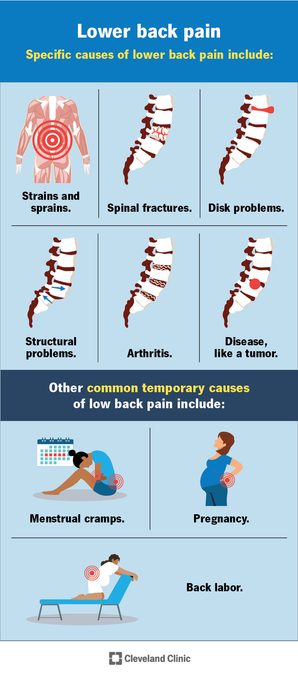
As many as 90 percent of cases are not tied to any specific cause, such as a strain, infection, or fracture.
That makes treating symptoms all the more difficult.
Weakness of the deep trunk muscles is commonly considered a possible cause, and as a result, healthcare providers often suggest core stabilization exercises.
But while some small studies have demonstrated clinical benefit to these exercises, the long-term effects are not yet understood.
CT scans can only reveal so much about abdominal strength, but the recent findings suggest that larger muscles don't necessarily help.
Strengthening this muscle group as a whole may only do so much.
"Our findings suggest that on average, overall muscle size is not smaller in those with low back pain, aligning with physical therapy studies that highlight the importance of motor control over strength in differentiating healthy and pain populations," the authors explain.
They argue that future research should focus on individual muscles and regional changes rather than bulk muscle quantity.
The research has been published in PLOS Digital Health.
This article was fact-checked by Rebecca Dyer and edited by Rebecca Dyer. While we pride ourselves on our process, we are only human. If you spot a mistake, please let us know.