
How often a person poops has a surprising link to one vitamin in particular.
A genetic investigation on the rate at which food passes through your digestive tract, known as gut motility, has found several gene variants associated with the metabolism of vitamin B1, aka thiamine.
The findings uncover a "previously unrecognized role" for the micronutrient as a plausible regulator of stool frequency.
Related: How Long Poop Stays in Your Body Could Impact Your Health, Study Finds
If that proves to be true, taking vitamin B1 supplements or eating foods rich in thiamine may theoretically improve gut issues such as constipation or diarrhea.
"Gut motility problems sit at the heart of irritable bowel syndrome, constipation, and other common gut-motility disorders," says geneticist Mauro D'Amato from the Basque Research & Technology Alliance in Spain.
"But the underlying biology is very hard to pin down. These genetic results highlight specific pathways, especially vitamin B1, as testable leads for the next stage of research, including lab experiments and carefully designed clinical studies."
Found in foods like whole grains, meat, fish, and legumes, Vitamin B1 is an essential nutrient that plays various roles in the human body that scientists are still learning about. One of its functions helps us convert food into energy.
The vitamin's role in the gut and the gut microbiome is only just now coming to light.
In fact, D'Amato and colleagues didn't even set out to study thiamine. They were looking for genes behind gut motility in a dataset of more than 260,000 people from populations in Europe and East Asia.
Geneticist Cristian Diaz-Muñoz from the Basque Research & Technology Alliance says the markers he and his team found were like road signs to unexpected locations.
"We used genetics to build a roadmap of biological pathways that set the gut's pace," he explains. "What stood out was how strongly the data pointed to vitamin B1 metabolism, alongside established mechanisms like bile acids and nerve signaling."
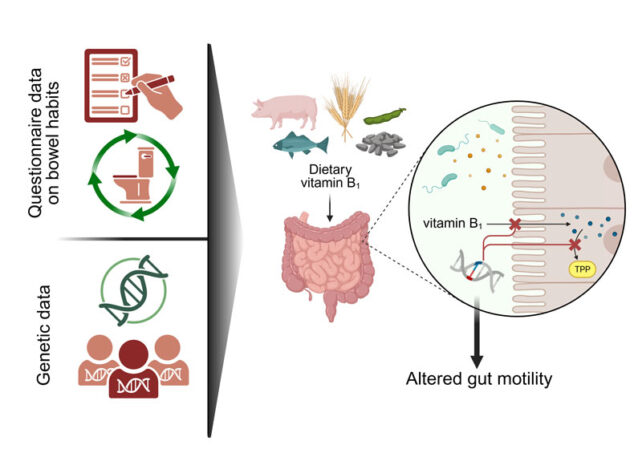
In particular, the research team identified two causative gene variants that impact gene expression involved in thiamine activation and transport.
In a follow-up analysis of 98,449 people who participated in the UK Biobank, the study team found a strong association between dietary intake of vitamin B1 and stool frequency.
Those with both gene variants, however, showed a significantly altered effect.
The findings suggest that the metabolism of vitamin B1 helps control stool frequency and gut motility.
Related: Your Poop Schedule Says a Lot About Your Overall Health, Study Shows
Other recent studies have found that vitamin B1 supplements can be effective at treating gut inflammation. In 2020, a randomized clinical trial found that taking high-dose vitamin B1 for 20 days improved symptoms of chronic fatigue in those with IBD.

"Future research may explore whether targeted nutritional interventions, such as thiamine supplementation, can alleviate disordered gut motility and IBS symptoms in genetically susceptible individuals," the authors of the recent study suggest, "thereby supporting a personalized approach to disease management."
The study was published in Neurogastroenterology.