Cats meow more at owners who are men than women, new research has found, possibly because men tend to be more aloof when it comes to giving their pets attention.
Led by a team from Ankara University in Türkiye, the research is based on video footage captured by 31 cat owners. Each participant recorded the reactions of their feline friends as they returned home, under instructions to act as normally as possible.
According to reporting from The New York Times, male owners got an average of 4.3 vocalizations (meows, purrs, or chirps) during the first 100 seconds of getting through the door, compared to an average of 1.8 vocalizations for female owners. That's a substantial difference – and it wasn't affected by the cat's age, sex, or breed.
Related: Celebrities Are Now Cloning Their Pets, But Experts Warn of Hidden Risks
"Our results showed that cats vocalized more frequently toward male caregivers, while no other demographic factor had a discernible effect on the frequency or duration of greetings," write the researchers in their published paper.
A total of 22 different behavior types were looked at by the researchers, including yawning (often a sign of cat stress) and food-related behaviors (including heading to their food bowl). The vocalizations were the only behaviors that changed based on the owners' sex.
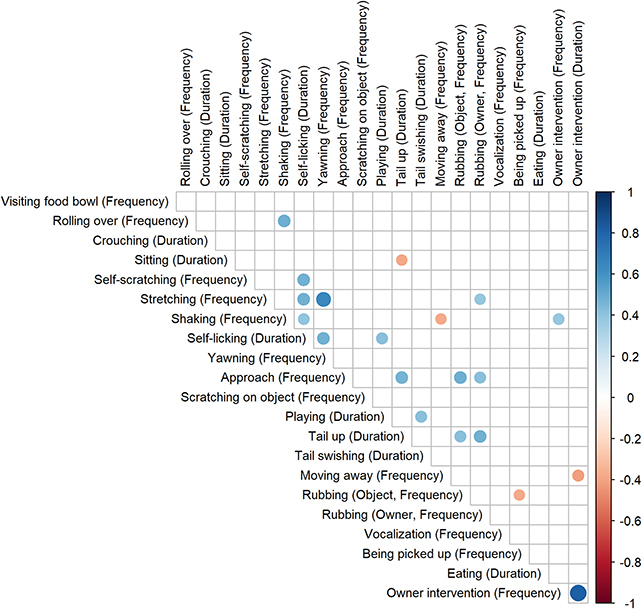
Two groups of behaviors usually happened together: social behaviors (including cats having their tails up and rubbing against owners), and displacement behaviors (cats shaking their bodies and scratching themselves). The researchers say it's evidence of the multiple signals cats can send out when greeting someone.
Vocalizations didn't correlate closely with either group of behaviors, suggesting it's something cats handle independently – and not necessarily related to anything else in this study, such as wanting food or having missed the owner.
While the researchers didn't dig deeply into the reasons for this behavior, they do have some ideas: women tended to give cats more attention, were usually better at assessing cat emotions, and were more likely to mimic cat vocalizations too.

"It is therefore possible that male caregivers require more explicit vocalizations to notice and respond to the needs of their cats, which in turn reinforces cats' tendency to use more directed and frequent vocal behavior to attract their attention," write the researchers.
While the study involved a relatively small number of cat owners, all from the same country, it does use recorded footage, giving it an advantage over many other pet studies that rely on owners reporting their animals' behavior.
It also adds to what experts already know about how cats can use their meows to grab our attention, show affection, and express displeasure. And suggests that cats are perhaps not as dismissive of our affections as they might sometimes appear to be.
Our feline friends have been domesticated for thousands of years now, and scientists are still making new discoveries about how they recognize humans, and how we, in turn, can communicate more effectively with cats.
"These findings suggest that cat greetings are multimodal, may reflect different motivational or emotional states, and can be modulated by external factors such as caregiver sex," write the researchers.
The research has been published in Ethology.