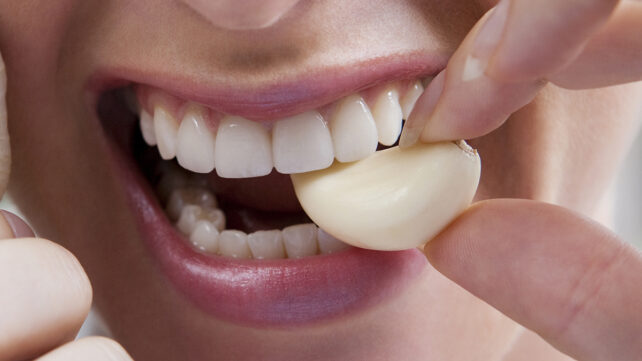
Garlic might not just keep vampires away – it could also work on harmful mouth microbes. New research suggests that garlic extract can be just as effective as chlorhexidine, the current gold standard for mouthwash ingredients, with reduced side effects.
The review, led by a team from the University of Sharjah in the United Arab Emirates, gathered data from five previous studies looking at the bacteria-killing capabilities of garlic, compared to chlorhexidine in humans.
Overall, the data showed that mouthwash based on garlic extract was indeed comparable to existing chlorhexidine-based mouthwash when it came to reducing bad bacteria in the mouth – in particular Mutans Streptococci (MS), the bug primarily responsible for tooth decay.
Related: Losing Your Teeth Could Be a Deadly Warning, Study Finds
"Chlorhexidine is widely used as a gold standard mouthwash but is associated with side effects and concerns over antimicrobial resistance," write the researchers in their published paper.
"Garlic extract can serve as a viable alternative to chlorhexidine, especially at higher concentrations."
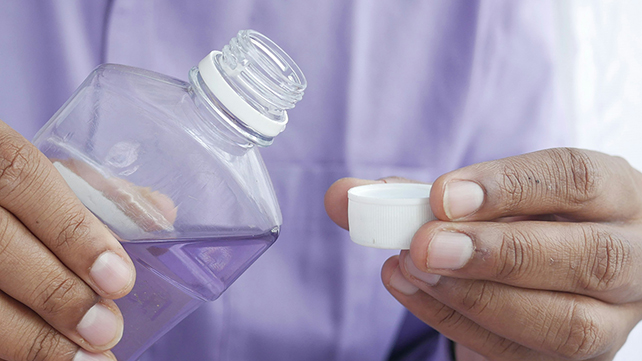
Concentration did matter, the researchers found: across the studies, a 0.2-percent chlorhexidine solution beat a 2.5-percent garlic solution in reducing MS in saliva, but when the garlic mouthwash was upped to a 3 percent concentration, it won.
It's not all good news, though. The studies showed that garlic mouthwash comes with several side effects attached, including the obvious: a strong taste and bad breath, as well as a greater sensation of spiciness and burning in the mouth.
While these are considered relatively mild compared to the side effects of chlorhexidine – which include teeth staining – they have to be considered in terms of how likely they are to put people off their mouthwash.

As for the concerns about chlorhexidine and antimicrobial resistance, they come from previous studies suggesting that as bacteria become more exposed to the chemical, they become better able to resist it and other treatments.
"Prolonged or low-level exposure [to chlorhexidine] can promote antimicrobial resistance and cross-resistance to antibiotics," write the researchers. "These limitations have raised growing concerns and highlighted the need for safer and comparably effective alternatives."
Garlic has of course long been used as a natural remedy for all kinds of ailments. Its benefits have been known about for several thousand years, and multiple ancient civilizations – including Rome, Egypt, and China – all independently discovered that it could fight off illness and promote good health.
The main benefits come from the compound allicin, which forms when garlic is chopped or crushed. Allicin disrupts bacteria growth, and reduces stress on cells – as well as giving garlic (and the breath of those who eat it) its distinctive smell.
Eventually it might form the basis of a bacteria-fighting mouthwash, reducing tooth decay and improving overall health. Before that happens, though, these findings need to be replicated on a larger scale: only five previous studies were reviewed, and each one only had a handful of participants.
"Further clinical studies with larger samples and longer follow-up are needed to confirm effectiveness and improve clinical applicability," write the researchers.
The research has been published in the Journal of Herbal Medicine.