From missing dinosaur feathers to fictitious pack-hunting behaviors, many details of the Jurassic Park movie franchise belong firmly in fantasy.
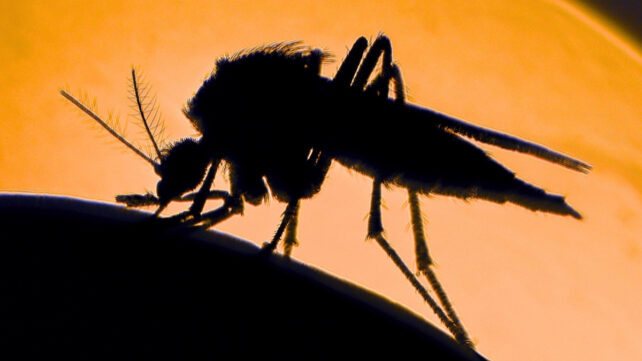
Yet, incredibly, the films' central premise may be more realistic than expected: Mosquito meals really can provide a thorough ecological snapshot of the area they buzz about, new research from the University of Florida finds.
"They say Jurassic Park inspired a new generation of paleontologists, but it inspired me to study mosquitoes," says entomologist Lawrence Reeves.
Reeves, fellow entomologist Hannah Atsma, and their colleagues caught more than 50,000 individual mosquitoes, representing 21 different species, across a 10,900-hectare protected reserve in central Florida over eight months.
Based on the blood contained in a few thousand females, the researchers found that mosquitoes' blood meals can reveal the presence of "the smallest frogs to the largest cows."

The team identified the DNA of 86 different animals, representing around 80 percent of the vertebrate species that the caught mosquitoes were known to feed upon.
This included animals with "very diverse life histories: arboreal, migratory, resident, amphibious, and those that are native, invasive, or endangered," explains Reeves.
Only the endangered Florida panther (Puma concolor couguar) was missing from the list of large mammals, and smaller subterranean dwellers, like the eastern mole (Scalopus aquaticus), were also absent from the results.
A second study from the same team, led by biologist Sebastian Botero-Cañola, showed that sampling mosquitoes during their most active period was just as good as researchers surveying animals directly. However, traditional surveying methods were more effective during dry seasons.
While it's unlikely any meaningful DNA sequences may ever be extracted from a fossilized mosquito, this sampling method could help us prevent more of today's species from heading the way of the dinosaurs.
"Biodiversity monitoring is essential to conservation, yet field surveys are expensive, labor-intensive, and require substantial taxonomic expertise," Atsma and colleagues write in one of their papers.
"Given these limitations, it is increasingly important to develop efficient and innovative ways to improve biodiversity survey and detection methods that leverage modern technologies in this critical era of biodiversity loss."

The technique still needs to be verified in different regions; however, it may provide a cost-effective monitoring tool in places and times when mosquitoes are abundant.
Analyzing DNA contained in mosquito blood meals captures a broad range of species, whereas most animal detection methods are sensitive to only a narrow range of animals.
"I am acutely aware of the disdain humans have for mosquitoes. It's pretty warranted. Mosquitoes don't do much to give the impression they're an important element of ecosystems," says Reeves.
"But in their ecosystems, they play important roles, and we show here they can help monitor other animals to help conserve them or to inform how we manage ecosystems."
Both papers were published in Scientific Reports.