
A few nights of binge drinking alcohol may have a surprisingly sudden and deleterious impact on the mammal gut, according to new research on mice.
In humans, alcohol use disorder is a leading global cause of liver-related disease worldwide, but what is less understood is how wine, beer, and spirits impact the liver's 'next-door neighbor': the gut.
Recent studies have directly linked chronic alcohol use to a disrupted gut microbiome, but this new evidence suggests even a few nights of binge drinking can take a toll on the intestines, making them 'leakier' than normal.
Related: Here's Why Every Sip of Alcohol Increases Your Risk of Cancer
"We know that excessive drinking can disrupt the gut and expose the liver to harmful bacterial products, but surprisingly little was known about how the upper intestine responds in the earliest stages," says Gyongyi Szabo, a gastroenterologist at Beth Israel Deaconess Medical Center (BIDMC).
"Our study shows that even short bouts of binge drinking can trigger inflammation and weaken the gut barrier, highlighting a potential early step in alcohol-related gut and liver injury."
The liver and the gut are closely connected, with a two-way communication pathway. The liver talks to the colon by secreting bile acids and immune molecules, while the gut influences liver function through microbial and dietary metabolites.
If alcohol impacts one of these organs, it is likely to impact the other.
In recent experiments, Szabo's team gave mice daily binges of alcohol for three days – equivalent to one bottle of vodka in humans.
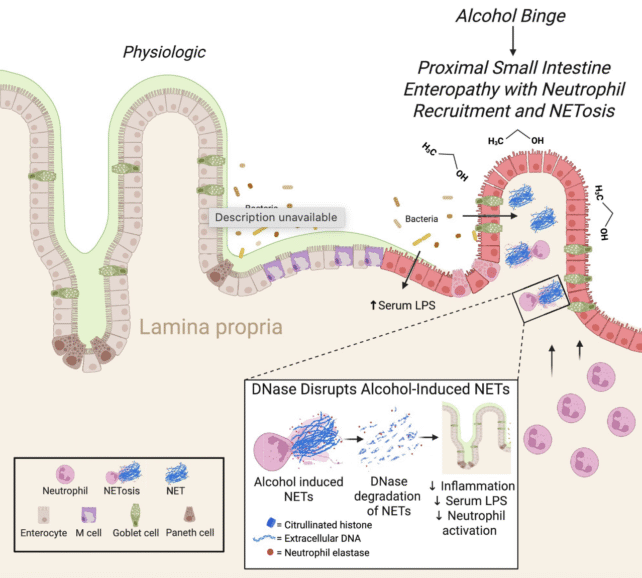
Unlike mouse models of chronic alcohol exposure, the binge-drinking models used in the new study did not show gut inflammation. However, the sudden influx of alcohol did have a "profound impact" on their proximal small intestine, the researchers report, causing injury and a prolonged immune response.
The team also observed signs of a leaky gut, in which the intestinal barrier allows bacterial products to infiltrate the bloodstream. This triggers inflammation and, as the team's experiments showed, damages the liver (which filters blood from the gut before it circulates to the rest of the body).
"The damage was observed as early as 3 hours post-alcohol exposure and remained evident 24 hours after the last binge," the team writes.
While mice's guts have some similarities to ours, it's unclear whether the same effect occurs in humans who binge drink. Chronic alcohol use has, however, been linked to a leaky gut.

"These findings advance our understanding of alcohol's effects on the GI [gastrointestinal] tract and provide a foundation for investigating strategies to… potentially limit downstream liver injury," the study authors conclude.
The study was published in Alcohol: Clinical and Experimental Research.