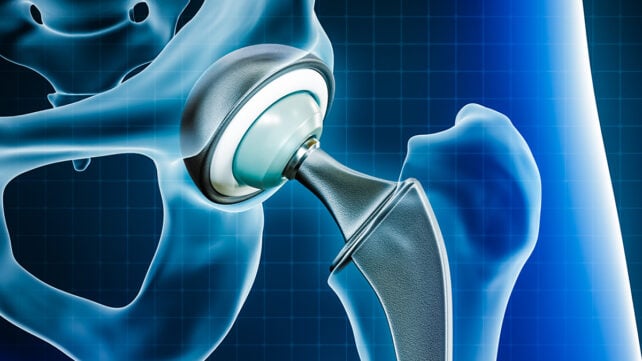
Chronic hip, knee, or shoulder pain often requires total joint replacement. That relieves the pain and restores mobility, but does it introduce other health risks?
Researchers led by a team from the Rush University Medical Center in the US wanted to follow up on previous studies reporting how particles from artificial joints could leach into the body, and in particular whether these particles could reach the brain – and potentially contribute to cognitive decline or even dementia.
The team's results, published in Acta Biomaterialia, suggest that these particles can indeed make their way to the brain, as a result of friction or corrosion in the joint.
That's a concern – but no evidence of associated cognitive problems was found.
"Total joint arthroplasty remains one of the most successful and life-changing interventions in modern medicine," says mechanical engineer Robin Pourzal, from the Rush University Medical Center.
"But it does suggest that wear particles from the implant, particularly in certain hip replacements involving accelerated wear, may travel beyond the joint and warrant further study."
The researchers looked at donated brains from 701 deceased participants, 229 of whom had undergone a total joint replacement.
"For years, we've known that particles can deposit in tissues surrounding the joint, but this is the first study to look at the particles deposited in the brain," explains Pourzal.
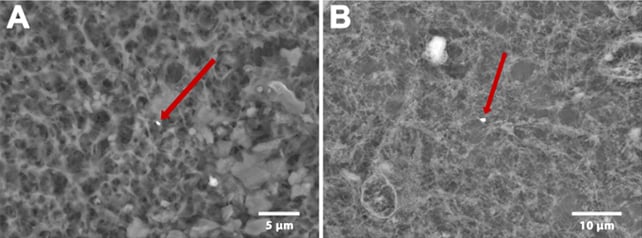
They quantified several metals in four brain regions, including cobalt and titanium, and used electron microscopy on a subset of samples to identify individual metal particles and their composition.
"Implants have a very specific combination of metals such as cobalt, and when they show up together in one particle in the brain in the exact same composition that the implant is, we know it can't come from any other source," says Pourzal.
At the same time the team scanned for the amyloid-beta and tau protein abnormalities that are the hallmarks of Alzheimer's disease. This data was added to the results from cognitive performance tests run before the participants died.
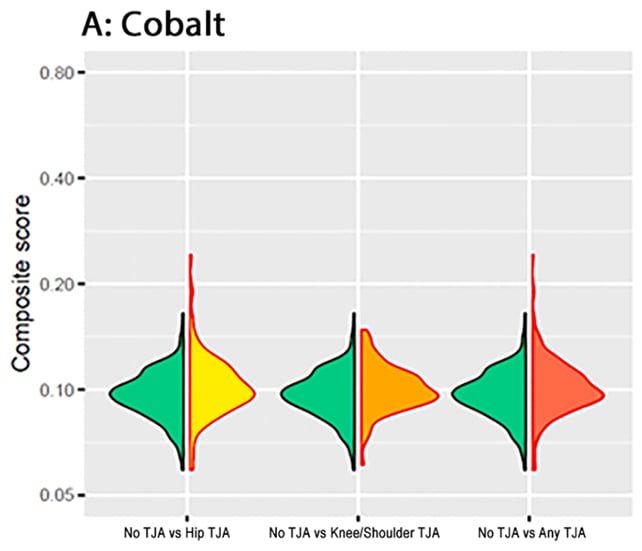
The clearest result was with hip replacements and cobalt, as those who had undergone the procedure had an 8.9 percent higher concentration of the metal in their brains on average, across the four regions studied.
The particle analysis suggests that at least some implant-derived wear debris can cross the blood-brain barrier, although the study did not directly observe how it got there.
One possibility is that old age or chronic inflammation is making the barrier leakier than it should be. Another is that the metal particles are being carried in by peripheral immune cells.

That's something the researchers say needs further investigation.
Having a joint replacement itself was not associated with greater Alzheimer's pathology, but brains with higher brain cobalt concentrations showed more signs of Alzheimer's disease in terms of protein build-up.
"Cobalt was associated with greater Alzheimer's disease pathology in the inferior-temporal cortex, even after correction for other known Alzheimer's disease risk factors," write the researchers in their published paper.
"However, there was no correlation with cognitive decline."
Another association found in the data was higher levels of titanium in the brains of people who had been given joint replacements.
Higher overall brain titanium was also associated with poorer cognition levels, though the team points out that titanium can come from other sources, including food and medicine, besides implants.
While the study gives us strong indications that particles from joint replacements can indeed make their way into the brain – but that's something that future research will need to look into further.
Although cognitive function had been tracked annually during the participants' lives, the metal and neuropathology analyses are only a single snapshot of brains after death. There's no proof of cause and effect, and a variety of other factors might be at play.
What's more, the findings have to be put into context. The researchers point out that joint replacements and pain reduction are known to improve mobility and enable more social interaction – two factors associated with reduced risk of dementia.
Related: Doctors Found Dozens of Needles Hidden in a Man's Body – Including One in His Heart
"These results warrant monitoring the potential impact of metal implant debris on brain health," write the researchers.
The research has been published in Acta Biomaterialia.
This article was fact-checked by Rebecca Dyer and edited by Rebecca Dyer. While we pride ourselves on our process, we are only human. If you spot a mistake, please let us know.