
People have been consuming tobacco for millennia, though it wasn't until the late 1820s that nicotine was first extracted from tobacco plants.
Now, 200 years later, scientists have finally discovered how the tobacco plant makes those nicotine molecules.
The discovery could potentially transform products made from or using tobacco species, a practice known as 'plant molecular farming'.
Scientists have been engineering tobacco plants to produce therapeutic compounds and even vaccines, but the nicotine is problematic: it's highly addictive.
Understanding how nicotine is made could mean researchers could devise ways to prevent its production in plants.
"It is a big moment in plant science and biochemistry that we now have the answer we have been chasing for more than 200 years," says biologist Benjamin Lichman, from the University of York.
Lichman and colleagues at the University of Copenhagen in Denmark identified in their new study the genes and enzymes that help produce nicotine.
"With this new knowledge we can remove or repurpose the nicotine that is produced naturally by the plant and create better biotechnology tools," says Lichman.
"There is also exciting potential for the future to adapt tobacco's nicotine forming system to make useful pharmaceutical compounds."
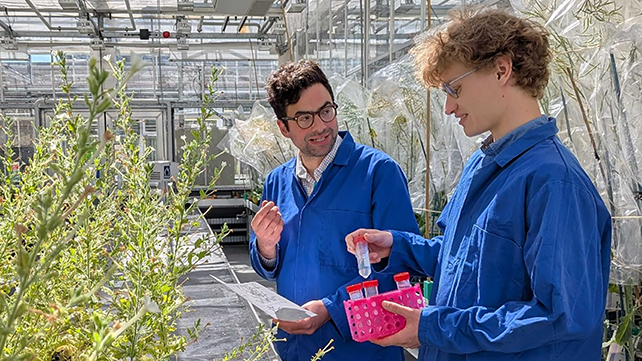
Through a genetic analysis of tobacco (Nicotiana tabacum), the researchers flagged genes that sit close together in tobacco DNA, and activate at the same time as genes already known to be involved in nicotine production.
They then isolated the enzymes produced by these genes.
In both test tubes and living plants, the researchers demonstrated that these enzymes combined to form nicotine.
It turns out the enzymes work through a clever process that goes some way to explaining why they've remained hidden for so long.
Initially, a glucose molecule is attached to the building blocks of nicotine, putting them in the reactive state that's needed for nicotine assembly. That same molecule then snaps off after the process has finished – so the sugar does its essential job, then disappears.
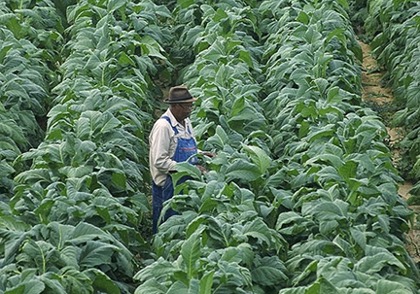

The researchers also identified the two enzymes, NaGR and NicGS, that help assemble the nicotine molecule from its raw materials. Those materials are an amino acid linked to protein building and a vitamin-like compound.
"It is exciting because it has real-world applications," says Lichman.
"A close relative of tobacco, Nicotiana benthamiana, is already used in 'molecular farming' to produce life-saving drugs and vaccines."
"It opens up new ways to use tobacco plants for good: not in cigarettes, but for medicines and other valuable products."

Another recently published study backs up the findings: nicotine is created by glucose, helped by a chain of enzymes, before the glucose disappears.
That complete vanishing act, together with the unusual way glucose is used here compared to other plant processes, is what made the nicotine production process so elusive for so long, the researchers say.
There are still some questions about nicotine production in tobacco, but we now have the main steps and key ingredients sorted.
The researchers suggest the process could be tweaked to produce different chemical substances and tobacco with low levels of nicotine; however, previous attempts have stunted plant growth.
Related: Plants Stopped Thriving When Earth Warmed 56 Million Years Ago
Ultimately, these researchers have not only solved a 200-year-old mystery but also laid the groundwork for more advanced and precise bioengineering.
"Tobacco plants can be used in biotechnology as platforms for producing vaccines or other pharmaceutical products, but it is plagued by the presence of nicotine, which contaminates the products and requires processing to remove it," says Lichman.
The research has been published in Nature Communications.