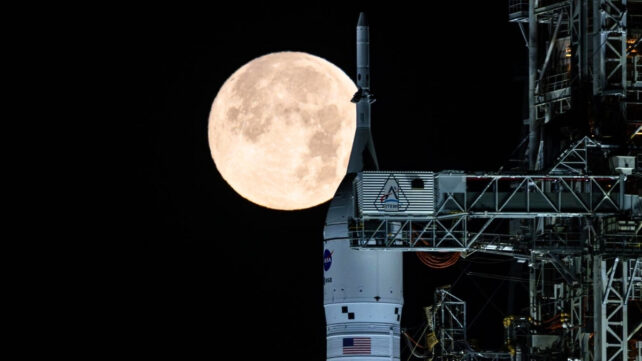
CAPE CANAVERAL, Fla. (AP) – NASA began a two-day practice countdown Saturday leading up to the fueling of its new moon rocket, a crucial test that will determine when four astronauts blast off on a lunar flyby.
Already in quarantine to avoid germs, Commander Reid Wiseman and his crew will be the first people to launch to the moon since 1972.
They will monitor the dress rehearsal from their Houston base before flying to Kennedy Space Center once the rocket is cleared for flight.
The 322-foot (98-meter) Space Launch System rocket moved out to the pad two weeks ago. If Monday's fueling test goes well, NASA could try to launch within a week.
Related: NASA's Giant New Moon Rocket Is Finally on The Launch Pad
Teams will fill the rocket's tank with more than 700,000 gallons of super-cold fuel, stopping a half-minute short of when the engines would light.
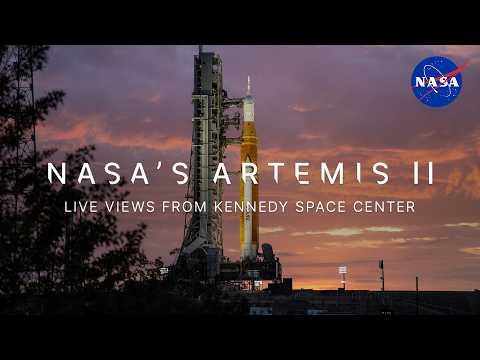
A 24/7 live stream of the rocket at the pad continues:
A bitter cold spell delayed the fueling demo and the launch by two days. February 8 is now the earliest the rocket could blast off.
Heaters are keeping the Orion capsule warm atop the rocket, officials said, and rocket-purging systems are also being adapted to the cold.
Riding in the Orion capsule on top of the rocket, the US and Canadian astronauts will hurtle around the moon and then straight back without stopping until splashdown in the Pacific.
The mission will last nearly 10 days.
NASA sent 24 astronauts to the moon during the Apollo program, from 1968 to 1972. Twelve of them walked on the surface.

NASA has only a handful of days any given month to launch its first lunar crew in more than half a century.
Complicating matters is the need to launch a fresh crew to the International Space Station as soon as possible, a mission accelerated because of the last crew's early return for medical reasons.
The moonshot will take priority if it can get off by February 11, the last possible launch date for the month, mission managers said Friday.
If that happens, the next station crew will have to wait until the Artemis astronauts return to Earth before launching later in the month.
"It couldn't be cooler that they're in quarantine and we're in quarantine, and we're trying to launch two rockets roughly around the same time," NASA astronaut Jack Hathaway, part of the next station crew, said Friday.
"It's a pretty exciting time to be part of NASA."