
Hitting a weight-loss target is something to celebrate.
But for many people, the biggest challenge begins afterward, keeping those pounds off in the long term.
Now, a new systematic review and meta-analysis of randomized controlled trials has identified a specific target for people trying to prevent weight from creeping back: getting in 8,500 steps a day during weight loss, and maintaining that level.
The research, from scientists in Italy and Lebanon, found that this approximate number of daily steps was associated with greater weight loss and with staying closer to this lower weight for several months afterward.
"The most important – and greatest – challenge when treating obesity is preventing weight regain," says biomedical scientist Marwan El Ghoch, from the University of Modena and Reggio Emilia in Italy.
"Around 80 percent of overweight or obese people who initially lose weight tend to put some or all of it back on again within three to five years. The identification of a strategy that would solve this problem and help people maintain their new weight would be of huge clinical value."
In total, the team reviewed 18 past randomized controlled trials (RCTs) involving people classified as overweight or obese, with data from 14 of those RCTs used in a further meta-analysis.
The meta-analysis synthesized data from 3,758 adults (average age 53) who were followed for an average of 18 months.
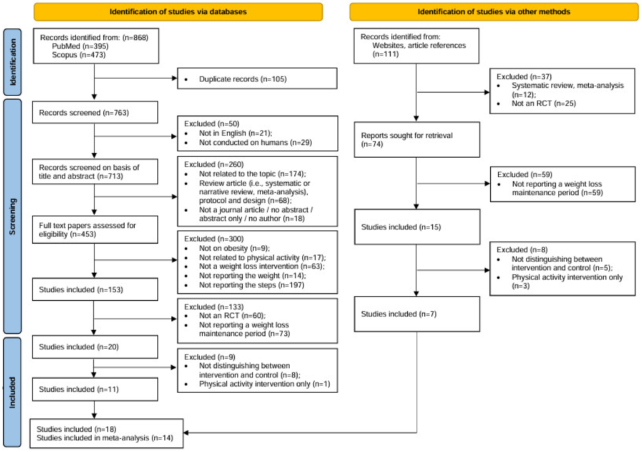
Each of the past RCTs included in the new study involved two groups of participants.
One group was put on a lifestyle modification program with weight-loss interventions (a healthier diet and increased physical activity), while the control group continued their usual lifestyle.
The researchers divided the data into two phases: a weight-loss phase (actively trying to lose weight) and a weight-maintenance phase (with fewer dietary restrictions, aimed at keeping weight off rather than losing more weight).
The data showed that those who underwent expert-guided lifestyle modification programs lost 4.4 percent of their total body weight during the weight-loss phase – significantly more than those in the control group.
What's more, the lifestyle-modification group kept about 3.3 percent of their total body weight off after the weight-maintenance phase, also significantly more than the control group.
So what caused the difference?
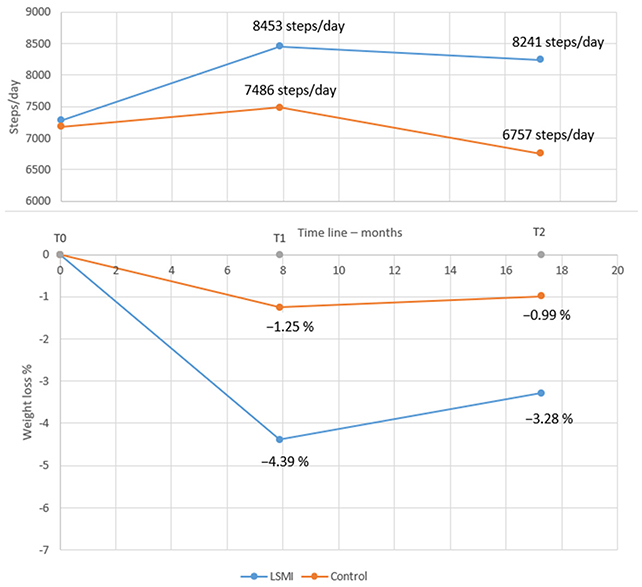
The steps data were notable.
All study participants had roughly the same baseline daily step count: averaging 7,280 for the lifestyle-modification group and 7,180 for the control group.
The lifestyle-modification participants reached up to 8,454 daily steps by the end of the weight-loss phase and still averaged 8,241 by the end of the weight-maintenance phase.
The control group, by contrast, did not significantly increase their step count, averaging 7,486 daily steps by the end of the weight-maintenance phase.
This group also did not show significant weight loss over the study period.

While the data doesn't definitively prove that the steps were what mattered, RCTs are considered the gold standard for evidence, so the numbers suggest that they made a difference – and that 8,500 daily steps is a reasonable target.
"Participants should be always encouraged to increase their step count to approximately 8,500 a day during the weight loss phase and sustain this level of physical activity during the maintenance phase to help prevent them from regaining weight," says El Ghoch.
"Increasing the number of steps walked to 8,500 each day is a simple and affordable strategy to prevent weight regain."
Where steps seemed to matter most was later.
The association between steps and weight loss was stronger during the weight-maintenance phase, suggesting that it was after the initial weight reduction that daily activity really made a difference.
The connection between daily steps and health benefits is well established.
This review adds a more specific message for people who have lost weight: Meeting those activity targets remains important after dieting – and keeping weight off might require fewer steps than is often assumed.
Related: Stopping GLP-1 Drugs Triggers Weight Regain 4x Faster Than Ending Exercise
"The proposed threshold (8,500 steps/day) should be considered as hypothesis-generating rather than prescriptive," write the researchers in their published paper.
"Further studies using predefined thresholds or dose–response analysis are needed to establish clinically meaningful step targets."
For now, the finding offers a practical takeaway.
The research has been published in the International Journal of Environmental Research and Public Health.