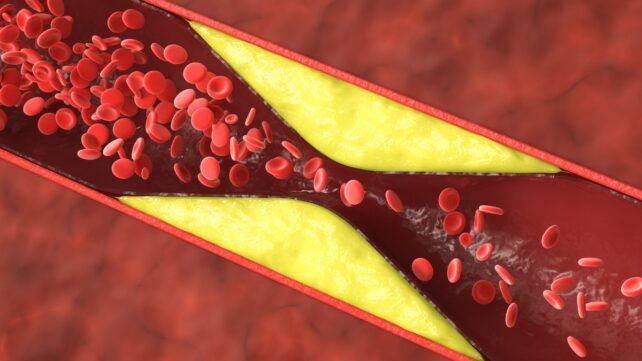
Traditionally, most heart attacks have been blamed on clogged arteries causing atherothrombosis – where blood clots block flow to the heart.
But research suggests we may be underestimating the role of other causes, particularly in younger adults.
Scientists from the Mayo Clinic in the US analyzed 1,474 heart attack events in people aged 65 or younger, recorded between 2003 and 2018 in Olmsted County, Minnesota. By carefully reviewing medical records and imaging, they identified a primary cause behind each case.
Related: Your Heart Is Vulnerable. These 4 Things Will Help You Protect It.
Strikingly, more than half of heart attacks in women were found to have non-atherothrombotic causes.
Watch the clip below for a summary of the findings:

Atherothrombosis accounted for 75 percent of heart attacks in men, which wasn't surprising. But in women, it was behind 47 percent – less than half. That has major implications for the prevention and treatment of heart attacks.
"This research shines a spotlight on heart attack causes that have historically been under-recognized, particularly in women," says cardiologist Claire Raphael.
"When the root cause of a heart attack is misunderstood, it can lead to treatments that are less effective – or even harmful."
In women, 34 percent of all heart attack events were attributed to supply/demand mismatch secondary myocardial infarctions (SSDMs) – defined as an imbalance of oxygen supply and demand caused by other stressors on the body, such as anemia or an infection.
Among the other factors significantly contributing to heart attacks were spontaneous coronary artery dissections (SCADs), where tears in artery walls collect blood, and embolisms (blood clots traveling from other areas of the body).
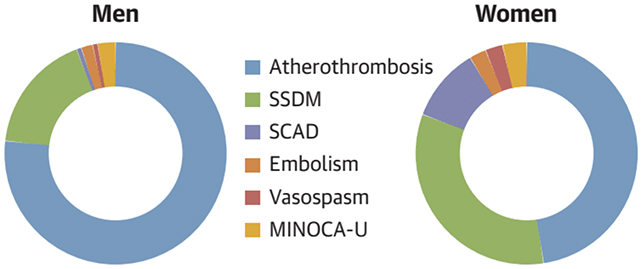
"In women aged 45 years or younger, SSDM was the most common cause," write the researchers in their published paper.
"And the acute non-atherothrombotic coronary causes (SCAD, embolism, spasm, and MINOCA-Undefined) were collectively as common as atherothrombosis."
People who experienced SSDMs had the highest rates of death from any cause in the following 5 years, which the authors suggest "likely relates to a sicker population who are more likely to die from their underlying non-cardiac diseases."
The team also found that many SCAD-related heart attacks were initially misattributed to atherothrombosis, especially in women, where SCAD was the cause nearly six times as frequently.
If heart attack causes are misdiagnosed, then doctors might take the wrong approach to trying to prevent the next one.
Related: Common Drug Better Than Aspirin For Repeat Heart Attacks, Study Finds
"Our research highlights the larger need to rethink how we approach heart attacks in this patient population, and for younger adult women, in particular," says cardiologist Rajiv Gulati.
"Clinicians must sharpen their awareness of conditions like SCAD, embolism, and stress-related triggers, and patients should advocate for answers when something doesn't feel right."
This study didn't explore the significant difference here between men and women, but it could be the result of heart attack risk factors affecting women differently, or women being less likely to seek medical help.
That's something that future research can look into, as well as using the same analysis techniques across larger and more diverse groups of people.

In the US, someone experiences a heart attack every 40 seconds, and work continues to try and understand as much as we can about the risk factors, which include city living, diet, and air pollution.
Related: Your Own Mouth Bacteria Could Give You a Heart Attack, New Study Suggests
The good news is, as the team notes, we are getting better at spotting, diagnosing, and preventing heart attacks from recurring. Significant progress has been made in heart imaging technology, for example, over the study period.
That said, new research from the US and Canada shows current medical screening techniques could still be failing to catch nearly half of those who experience a heart attack.
In the US, heart attack risk is typically assessed according to a set of criteria such as an atherosclerotic cardiovascular disease (ASCVD) score, which measures factors linked to the development of cardiovascular disease. Patients are then monitored or treated if their scores exceed a certain threshold.
An analysis of the health records of 465 people aged 65 years or younger who were treated for their first heart attack found that two days before the event, ASCVD scores would have categorized 45 percent of them as being at low or borderline risk levels.
Related: Huge Study Links 99% of Heart Attacks And Strokes With Four Risk Factors
Raphael, Gulati, and their colleagues now want to see more done to raise awareness of the alternative causes behind heart attacks, both with health professionals and the public, which could ultimately save lives.
"Understanding why a heart attack happened is just as important as treating it," says Raphael. "It can mean the difference between recovery and recurrence."
The research was published in the Journal of the American College of Cardiology.
An earlier version of this article was published in September 2025.