
Could the power of positive thinking be enough to boost your immune system? According to a recent study, the answer may be yes, offering fresh insight into how mental and physical approaches to health could be combined.
The idea is not as far-fetched as it might sound. Research shows that our minds and bodies are closely connected, and the placebo effect demonstrates that believing a treatment is working can sometimes produce measurable physical benefits.
In a new randomized controlled trial, researchers led by a team from Tel Aviv University in Israel found that people who successfully boosted activity in a reward-related brain region showed stronger antibody responses after receiving a routine vaccine.
Related: Psychologists Tap Into a Specific Mindset to Stay Positive, Study Finds
"These findings suggest that consciously generated positive expectations can engage reward circuitry to influence immune function, a process that may be leveraged for non-invasive immune modulation," write the researchers in their published paper.
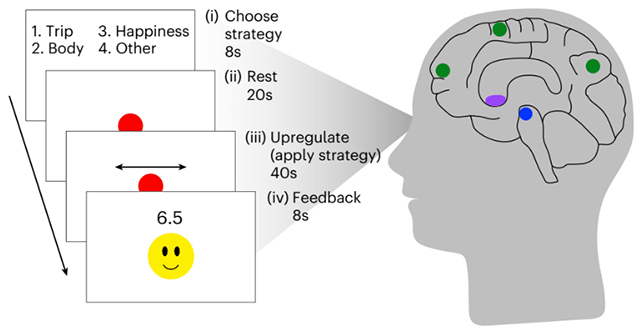
A total of 85 participants were divided into three groups for the study.
One group used a neurofeedback system that guided them through mental exercises designed to increase activity in the brain's mesolimbic pathway, known as the reward pathway.
Functional MRI (fMRI) neurofeedback allows a person to observe their own brain activity, enabling them to learn and practice mental strategies that activate the target regions. For the first group in this study, successfully increasing activity in the mesolimbic pathway caused a face displayed on a computer screen to gradually appear happier.
A second group underwent similar neurofeedback training, which required a comparable level of mental effort but focused on brain regions unrelated to reward processing. A third group received no neurofeedback training.
After the neurofeedback groups completed 3–4 training sessions, all participants received a hepatitis B virus (HBV) vaccine, which is commonly used in research to study immune responses. HBV-specific antibody levels were measured at 14 and 28 days after vaccination.

People who had successfully completed tasks activating a part of the mesolimbic pathway, the ventral tegmental area (VTA), were shown to produce significantly more HBV-specific antibodies, indicating a stronger immune response – though the actual effectiveness of the vaccine wasn't specifically measured.
Notably, VTA activation was associated with larger increases in HBV-specific antibody production when participants were looking forward to something positive, such as an upcoming holiday, suggesting a role for the placebo effect.
"Considering the lack of evidence for alternative interpretations, our findings suggest a top-down brain-immune regulation mechanism, similar to that previously described in rodents," write the researchers.
While we've seen similar results in animals, this study provides some direct evidence that consciously driven positive thinking can influence immune function in humans, though there is still much to explore.
"Although we present a potential neural intervention for boosting an immune response to vaccination in humans, the number of participants in our study is considered relatively small," the authors acknowledge.
The findings raise the possibility that interventions designed to encourage positive expectations could complement medical treatments. These might target immune-supporting chemical signals in the brain, including dopamine.
The team suggests their approach "may be used to investigate new ways to boost immune processes, with potential relevance for fields such as cancer immunotherapy and chronic inflammation."
"Thus, we may harness the natural capacities of our mind and brain to heal our bodies in times of need," conclude the researchers.
The research has been published in Nature Medicine.