Plastic-lined containers, like coffee cups, are convenient, cheap, and heat- and water-resistant, so they're everywhere.
This is appreciated when they keep our beloved early morning pick-me-up from transforming into a wet wad that crumples in our grip and embarrassingly stains our finest trousers.
But it's also a problem, because plastic-lined containers are harder to recycle and, as mentioned, they end up everywhere. They clog our waterways, spoil our nature, and pollute animals and ourselves with microplastics.
So material scientists from the University of Waterloo in Canada have offered a solution to the coffee cup conundrum: a plant-based alternative that simplifies recycling efforts and reduces our reliance on conventional plastics.
In a paper published earlier this year in the journal ACS Sustainable Chemistry & Engineering, the researchers conducted intensive experiments on their new material – made from the same stuff that forms the cell walls of plants – to demonstrate its potential as a plastic replacement.
Developing and adopting such an alternative could ameliorate some of the issues associated with plastics, including the polyethylene (PE) linings that keep beverage and food containers structurally dry and sturdy.
Unfortunately, these plastics persist in the environment for centuries. They don't simply disappear; they only fragment into microplastics.
This occurs in our coffee cups as we're sipping from them, shedding tiny plastic shards into our mochas and organs, especially at beverage-worthy temperatures approaching 60 degrees Celsius (140 degrees Fahrenheit).
"What surprised me most was how easily some plastic liners shed particles," the study's senior author, Shirley Tang, a materials chemist who leads the Tang Nanotechnology Lab at Waterloo, told ScienceAlert.
This newly developed bio-based coating, however, remains largely intact under the same abrasion tests the researchers used to look for signs of microplastic shedding.
"What encouraged me most is that the all-cellulose coating we developed held up against boiling water, food oils and a range of solvents, so we see potential well beyond coffee cups," Tang said.
"And it is good news for the world, as cellulose can be produced from many different biomass resources, so this technology can contribute to a renewable economy."
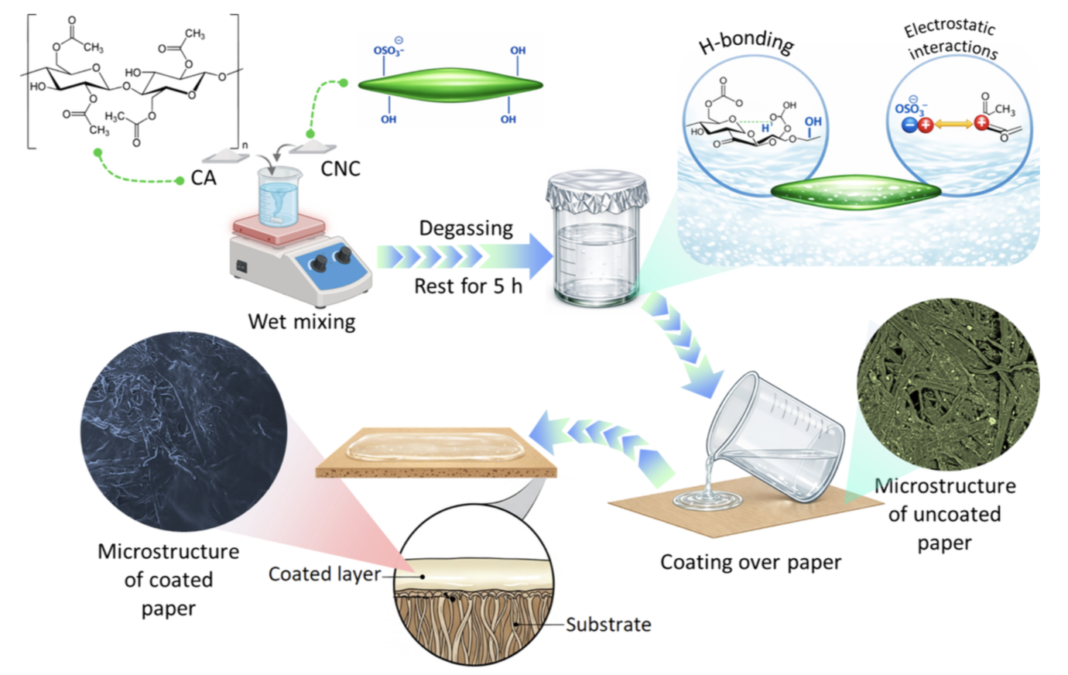
The researchers created their coating from two main components: cellulose acetate (CA), which forms the bulk of the material, and cellulose nanocrystals, which lend the strength needed to resist the steaming hot, darkly delicious liquid that lures us out of bed and (hopefully alertly) into traffic many mornings.
These cellulose components form hydrogen bonds with paper itself, so there's no need for chemical adhesives.
These bonds also facilitate a super-tight network, plugging paper's plentiful pores and creating a seal that greatly limits how much water or other substances can infiltrate the body of the container.
As a result, this coating can form an effective barrier against water, grease, and gas – some of the foundations of the modern food pyramid.
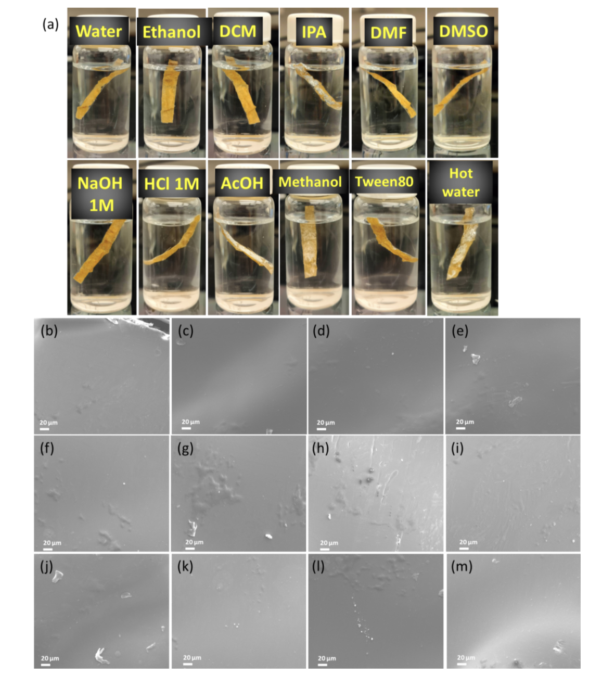
When the researchers subjected their coating to an intensive five-day immersion test, they found it performed well against many solvents, or things you wouldn't want anywhere near your coffee, including dichloromethane, caustic sodium hydroxide, and hydrochloric acid.
A tensile strength test revealed that cellulose-coated paper reaches its peak toughness when the CNCs comprise 3 percent of the coating's weight. This yields the perfect mix of rigidity and flexibility, so coated cups could survive the hydrothermal stresses exerted by a hot, vaporous cauldron of coffee.
Compared to uncoated paper, this material helps reduce oxygen transmission by more than an order of magnitude (over ten times), to stave off oxidation to keep its contents fresh.
The researchers developed and tested their coating on standard brown paper towels, which are thin and quickly soak up water. The coating turned them into durable water-repellers, demonstrating that this advance isn't limited to thicker, sturdier cups and containers.
As a result, it may one day help reduce both plastic and paper use and waste:
"The coating allowed us to use much thinner paper while still achieving the durability needed for beverage containers," says Sayan Ganguly, a materials scientist at the Tang Nanotechnology Lab and the paper's first author.
"That could reduce the amount of material required to manufacture cups while maintaining performance and lowering costs. These savings could ultimately be passed on to the consumer."
Although cellulose is a renewable and well-studied component for sustainable packaging, the researchers note that food-safety tests and regulatory evaluations must be completed before this coating, or others inspired by it, are approved for commercial use.
"This is still a research-stage result," Tang said, so "timing to commercialization" is uncertain.
The research has been published in ACS Sustainable Chemistry & Engineering.
This article was fact-checked by Rebecca Dyer and edited by Rebecca Dyer. While we pride ourselves on our process, we are only human. If you spot a mistake, please let us know.