Under the ocean, things aren't quite so bright.
Much of the Sun's rays bounce right off the ocean's surface, and the ones that do penetrate the water are absorbed and scattered over much shorter distances than they are in air.
That's why, the deeper you get, the darker it is.
As such, 32 feet (10 meters) underwater is a pretty unexpected place to put solar panels, of all things.
And yet, a team of scientists from Yunnan University in China has done just that.
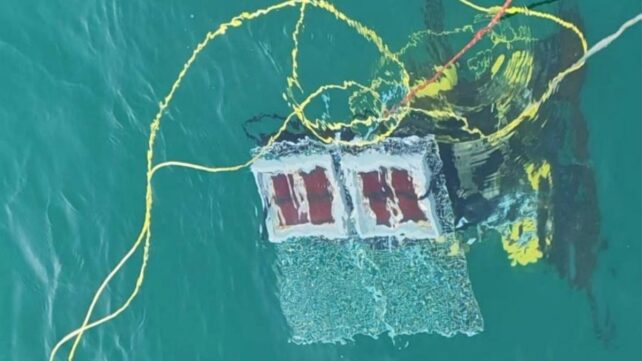
Their submarine solar cells, mounted 10 meters (32 feet) below the surface of the South China Sea, were able to collect enough energy to charge lithium-ion batteries in just two hours.
"Very few studies have been reported on underwater solar cells, and all of them are focused on very shallow water depths of only two meters or less, a scenario far from catering for requirements of practical application," says Wen-Hua Zhang, of Yunnan University.
"This work presents the first functional validation of submerged solar cells practically operating at a water depth of up to about 10 meters, greatly broadening their application scope."
They estimate the solar cells could operate for around five and a half years and could soon be a viable way to power underwater sensors, cameras, and communications systems.
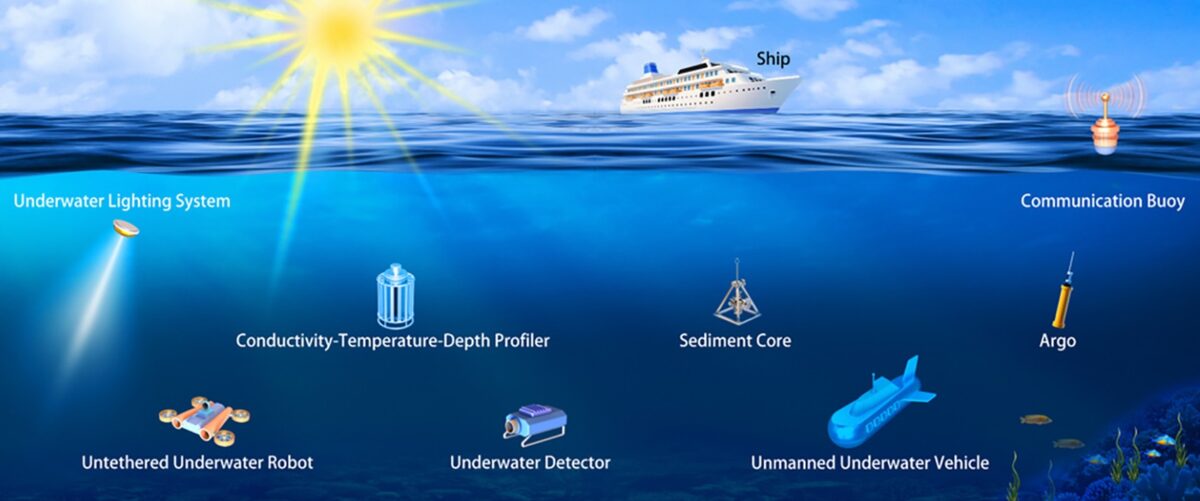
"Off-grid devices are deployed across varying water depths to support diverse underwater operations and scientific explorations," the authors note.
"Underwater photovoltaics, in conjunction with other power generation approaches, can supply electricity to equipment such as stationary underwater sensors and detectors."
To make the most of what little light does reach into the water, these solar cells are a little different from the photovoltaic cells that, as of 2025, account for around 9 percent of the world's electricity.
They're made of lead halide perovskite, a kind of semiconductor crystal. While creating the perovskite, the researchers mixed in a polymer called polyhexamethylene guanidine hydrochloride, which helps trap even more electrons in the cell.
The resulting material has a wide band gap. This is an important feature because the band gap of a photovoltaic cell determines which wavelengths in the spectrum of solar light the material can absorb.
These underwater cells were specifically designed to capture the spectrum of light that reaches through 5 to 10 meters of seawater: mostly shorter, blue-green wavelengths (400 to 600 nm), since most of the reds are lost in shallower waters.
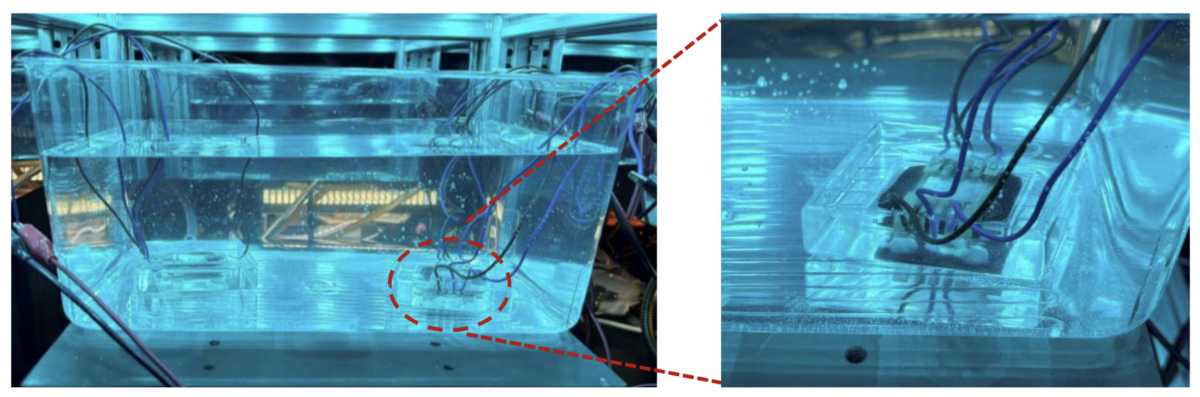
The team first honed their designs under simulated ocean conditions in a lab, reaching a power conversion efficiency of almost 35 percent, before taking them for a test run in the big blue.
"We have achieved scaling from small‑area laboratory cells to large‑size modules," Zhang says.

"The combination of the laboratory investigations and the in-field experiments provides strong evidence for the operation of underwater photovoltaics."
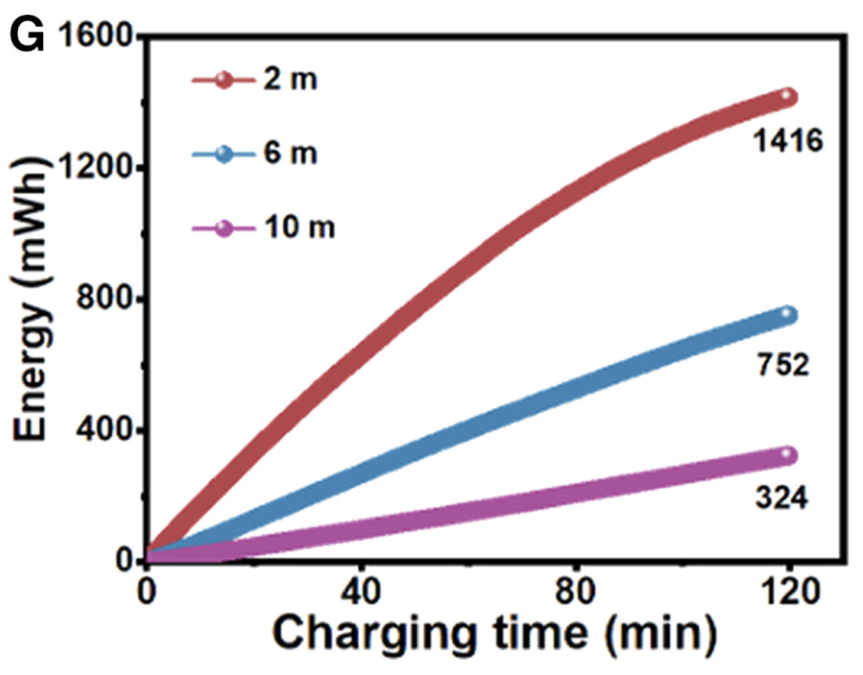
Remotely operated robots carried the 115 cm2 solar cells to depths of two meters, six meters, and ten meters, off the coast of Weizhou Island in the South China Sea.
At two meters, the cells harnessed 1,416 milliwatt-hours (mWh) of electricity; at six meters, they captured 752 mWh; and at ten meters, 324 mWh.
All of the lithium-ion batteries were loaded with enough power to light up an LED sign.
And if they can do that, maybe they could eventually power a reef livestream, or communications systems, or acoustic monitoring stations, or an underwater human habitat – all well-concealed below the waves.
Related: A Human Habitat at The Bottom of The Ocean Is Now Operational. Take a Look Inside
"This work paves the way for the practical deployment of perovskite photovoltaics in underwater environments, offering a promising route toward self-sustained marine energy systems and autonomous underwater devices," the authors conclude.
The research was published in Joule.