
A study led by researchers at the University of Camerino in Italy found that the fatty insulation protecting neurons can be harmed when we go without sleep, compromising our mental processing.
Through a variety of experiments and tests, the team identified chemical disruptions in oligodendrocyte cells as the underlying cause of damage. These cells handle the cholesterol that forms a key part of the protective coats known as myelin.
"This study identifies oligodendrocytes as key mediators by linking sleep deprivation to impaired myelin integrity, slowed nerve conduction, and behavioral deficits," write the researchers in their published paper.
Related: A Single Night's Sleep Could Predict Your Risk For More Than 100 Diseases
The researchers analyzed MRI scans of 185 healthy volunteers, confirming the results of previous studies that found the integrity of the brain's white matter structures declined with a self-reported drop in the quality of sleep habits.
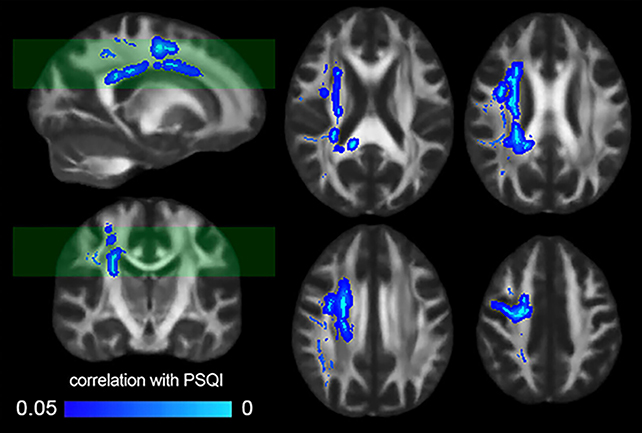
The team then ran tests on rats deprived of sleep for 10 days. While the size of the nerve fibers in the animals' brains remained unchanged, the myelin sheath around each neuron's trunk, or axon, was thinner compared to those on a set of controls.
Further experiments found that the signaling between specific brain regions slowed by around a third in the rats who had gone without sleep. Sleep deprivation also led to reduced synchronization across brain regions.

Axons are crucial in neural communication – a lack of sleep leads to a thinning of myelin, slowing neuron chatter and raising the risk of mental fatigue and fogginess, as demonstrated in memory and exercise tests carried out on the rats.
A genetic analysis carried out on the mice revealed that oligodendrocytes were no longer handling cholesterol as efficiently as usual.
"Our findings highlight a possible role of oligodendrocyte cholesterol dysregulation in behavioral deficits associated with sleep loss and unveil a novel target for intervention," write the researchers.
The researchers didn't stop there either. They gave the sleep-reduced rats the drug cyclodextrin to restore cholesterol transfer, which then led to motor and memory improvements – confirming what was happening.
It's worth bearing in mind that the bulk of this research used animal models, so this will need to be confirmed in human beings in future studies. Even with that caveat, though, it's evidence of an intriguing pathway through which a lack of sleep makes us sluggish.
Further down the line, the findings here could help inform treatments to limit some of the effects of sleep loss for those for whom it's a chronic condition, which has also been linked to a range of subsequent health problems.
"The increasing prevalence of sleep deprivation poses a public health challenge in modern society," write the researchers.
"Manifestations of reduced alertness, such as slowed reaction times and increased errors, are well-documented behavioral indicators of sleep loss."
The research has been published in PNAS.