The rapid climate change we are experiencing today is mainly driven by the greenhouse gases we humans keep releasing into the air.
But new evidence from ancient Antarctic ice cores suggests this wasn't always the case for the past three million years of Earth's changing climate.
According to the findings of two new papers published in Nature, at certain transition points ocean temperatures could have had a greater influence over Earth's climate than greenhouse gases.
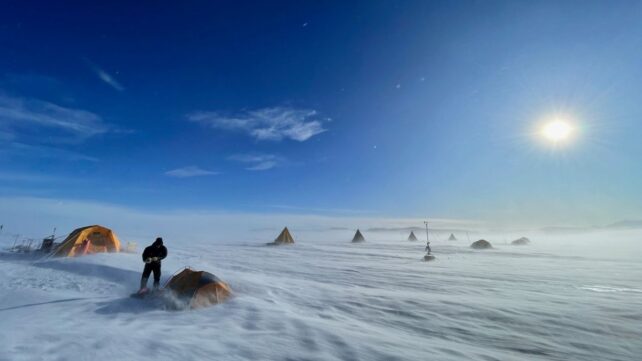
Two research teams analyzed ice cores extracted from the Allan Hills, a blue ice region of Antarctica. The Allan Hills cores are samples of some of the world's oldest ice, with some dating as far back as 6 million years ago.
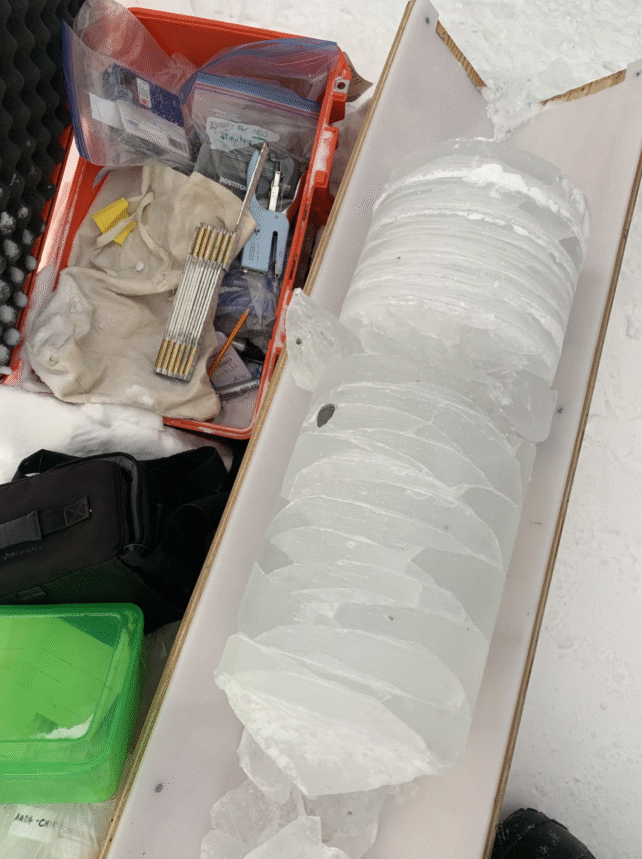
Blue ice areas like the Allan Hills make up only about 1 percent of the surface area of Antarctica's ice sheet, and they're named as such because strong winds blow away any new snow, keeping older, glacial ice exposed at the surface.
The Allan Hills region hasn't moved horizontally or vertically very much at all, making it a particularly unique site for taking cores of very, very old ice.
Ice cores are some of our best natural 'archives' of Earth's long-term climate.
They don't necessarily contain a complete, continuous record. The Allan Hills cores, for example, contain layers that are out of chronological order thanks to the way the ice was deposited across the millennia.
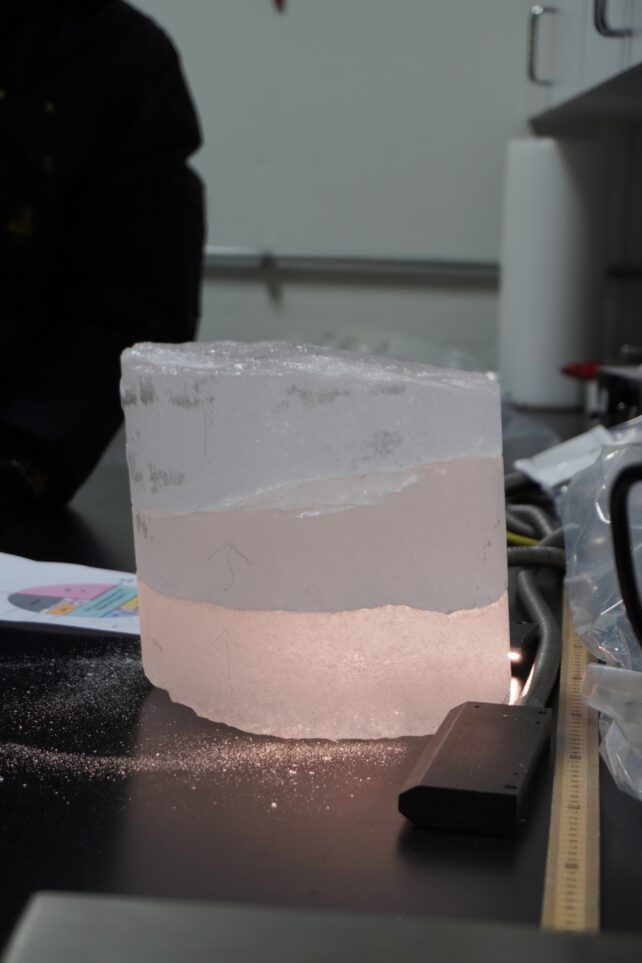
But each layer of ice contains a climate snapshot that can tell us a lot about what was going on at the time of freezing, and there are ways of decoding their secrets.
Certain isotopes in the ice hint at ocean temperature. Impurities like volcanic ash and other particles can indicate sources of air pollution.
And, perhaps most importantly to climate scientists, the ice can trap tiny bubbles of the air, revealing the historic gas composition of the atmosphere across millions of years.
Woods Hole Oceanographic Institute paleoclimatologist Sarah Shackleton led an international team of researchers in the study focused on global ocean temperatures across the past 3 million years.
Dissolved xenon and krypton, two noble gases that dissolve in seawater at different temperatures, provided them with a way of estimating the ocean's heat.
These proxy measurements suggest the ocean cooled drastically around 2.7 million years ago, roughly matching up with the Plio-Pleistocene Transition, when the Earth gradually shifted from a warmer to cooler climate that led to glacier formation across large parts of the Northern Hemisphere.
The ice core data also suggests that average ocean temperatures stayed relatively stable across the Mid-Pleistocene Transition, another shift in glacial cycles that occurred between 1.2 and 0.8 million years ago.
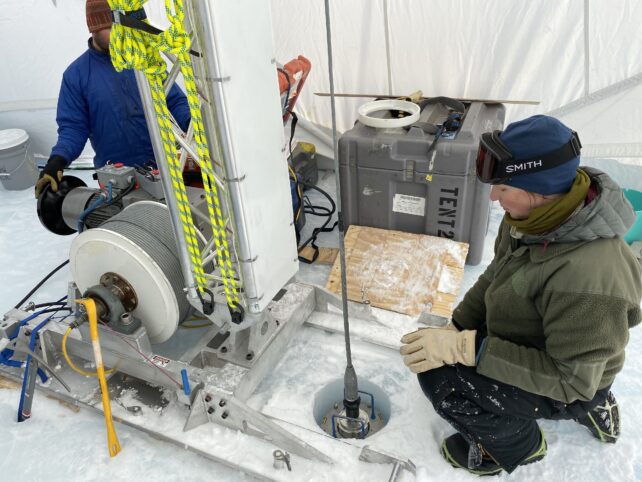
Meanwhile, from the same ice cores, a team led by Oregon State University geochemist Julia Marks-Peterson found atmospheric levels of carbon dioxide and methane were "broadly stable" across the past 3 million years.
"Although paleoclimate archives from Antarctic blue ice areas are complex, our records show that measurements of greenhouse gases in ice cores can be extended to the late Pliocene epoch, providing snapshots of Earth's climate system over a time of global cooling and falling sea level," Marks-Peterson and team write.
As Cambridge climatologist Eric Wolff writes in an accompanying commentary article, this suggests that either ice-sheet growth and survival was "exquisitely sensitive" to minuscule changes in carbon dioxide – or past changes in Earth's climate may have been driven by something else.
The work of Shackleton and colleagues could provide further clues to the puzzle. They found an apparent decoupling of changes in sea surface and mean ocean temperatures.

Understanding the way Earth's climate worked before we started meddling with it at a large scale is important if we want to figure out how to re-stabilize this planet we call home.
But there are limitations to interpreting these ice cores, as Shackleton recently explained in a Science Sessions podcast.
"These records are still quite new, and they're more complicated to interpret than the continuous ice cores that we're used to working with," she said.
"So, with how highly compressed the ice is, especially the oldest ice, we're also probably averaging over glacial and interglacial cycles, so we're currently unable to study how the climate evolved across glacial and interglacial periods.
"Exactly what these records capture in terms of exactly how smooth or exactly how much we're averaging over a glacial versus interglacial conditions is still an outstanding question."
Related: A Record-Breaking Drill Beneath Antarctic Ice Revealed a Big Surprise