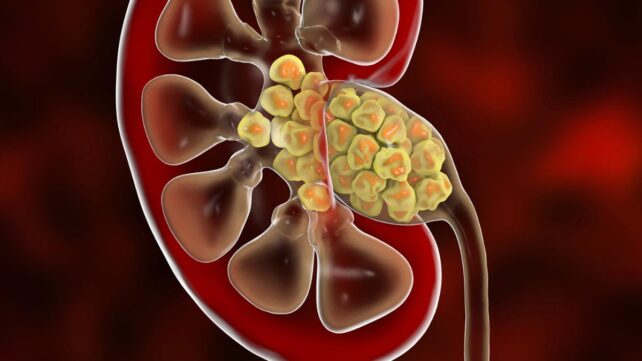
For the first time, scientists have discovered evidence of bacteria hiding in 'noninfectious' kidney stones.
These hardened clumps of small crystals are made from chemicals in urine and are thought to form due to a lack of fluid or a high concentration of minerals and chemicals.
Most kidney stones are considered noninfectious after they are passed. But that may not be true after all.
A study led by researchers at the University of California Los Angeles (UCLA) has now found that calcium oxalate kidney stones, the most common type, are enriched with bacteria.
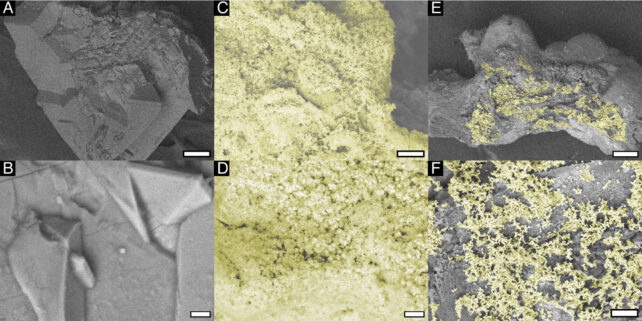
In fact, these stones contain sheets of bacteria as part of their intrinsic internal structure.
"This breakthrough challenges the long-held assumption that these stones develop solely through chemical and physical processes, and instead shows that bacteria can reside inside stones and may actively contribute to their formation," explains urologist Kymora Scotland from UCLA.
"By uncovering this novel mechanism, the study opens the door to new therapeutic strategies that target the microbial environment of kidney stones."

The findings suggest that in some cases where kidney stones keep coming back, there may be a bacterial infection in the kidney, ureter, or bladder contributing to recurrence.
If this infection is treated, then perhaps there may be fewer kidney stones going forward.
Using electron and fluorescence microscopy, the researchers found structural and chemical evidence of bacteria in calcium oxalate stones taken from human patients.
This was true even among participants without underlying urinary tract infections.
"We found a new mechanism of stone formation that may help to explain why these stones are so common," says Scotland.
"These results may also help to explain the connections between recurrent urinary tract infections and recurrent kidney stone formation, and provide insights on potential future treatment for these conditions."
Related: These 7 Common Daily Habits Could Be Damaging Your Kidneys
As many as one in 11 people will suffer from kidney stones in a lifetime, and more than 70 percent of cases are attributed to calcium oxalate stones.
If bacteria play a significant role in their formation, then treatments and guidance for kidney stones may need to be updated.
The study was published in PNAS.