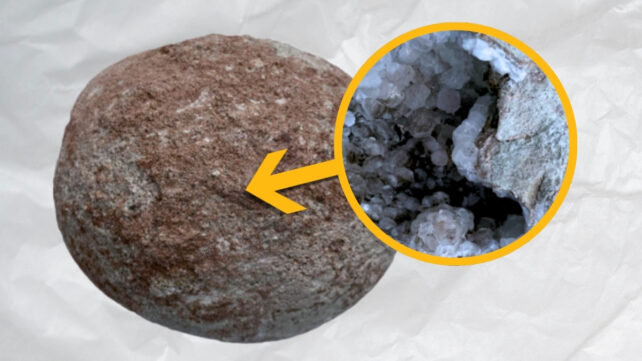
A grapefruit-sized dinosaur egg from a fossil bed in China gave paleontologists a huge surprise. Rather than a dinosaur embryo or sediment, it was filled with sparkling crystals of calcite lining the inner shell – a natural dinosaur geode.
This rare occurrence provides researchers with unique information on the structure of the shell – in this case, a never-before-seen oospecies (species of egg) named Shixingoolithus qianshanensis, identified in a 2022 paper led by paleontologist Qing He of Anhui University in China.
Not only that, it's among the first dinosaur eggs – or evidence of any dinosaurs, for that matter – found in the roughly 70-million-year-old Upper Cretaceous Chishan Formation of the Qianshan Basin, a region far better known for its Paleocene turtles, mammals, and birds.
Related: These Stunning Opals Have Turned Out to Be a Previously Unknown Species of Dinosaur
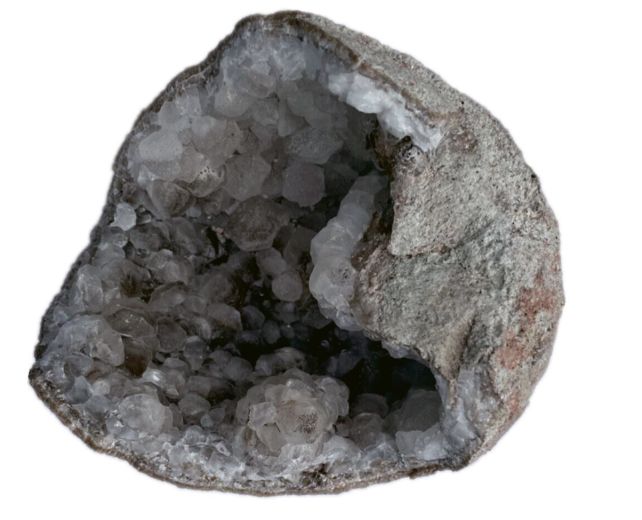
The egg was actually one of two discovered, both assigned to the same 'genus' of egg classification, or oogenus. Because neither egg contained an embryo, and no Shixingoolithus egg has been linked to a skeleton, we can't be sure what sort of dinosaur laid them.
We know they're dinosaur eggs because the microstructure of the shells matches other dinosaur eggs better than the eggs laid by other groups of animals, such as reptiles or birds. It was this microstructure that led He and colleagues to the conclusion that they were looking at a new egg species.
In addition, analysis of the shells – including the calcite crystallization – can provide scientists with valuable insights into the fossil's environmental conditions.

For mineral crystals to form inside a dinosaur egg, a few things need to happen. First, the embryo needs to rot away, leaving the egg empty. Then, groundwater slowly seeps into the empty shell through micropores and cracks. Minerals dissolved in the groundwater are deposited inside the shell, gradually building up to form crystals.
In a paper published earlier this year, a team of scientists used calcite crystals in another dinosaur egg to directly date the egg itself – a first for paleontology. Because those crystals precipitated from groundwater after the egg was buried, they can also retain information about the fluids that passed through the fossil bed and the geochemical environment of the original nest.
But also, they're just one of the really cool ways our planet can preserve the history of the life that inhabits it, from mineral-encrusted cave bones to bones slowly replaced by shimmering opal.