A compound produced by gut bacteria could play a vital role in managing and preventing type 2 diabetes, according to a study led by researchers from Imperial College London (ICL).
The small molecule, called trimethylamine (TMA), is a major type of bacterial metabolite – a class of chemicals produced naturally through processes of transforming nutrients into energy and building blocks.
Scientists have now found evidence in human cell models and lab mice that TMA could protect the body from some of the damage triggered by a high-fat diet. Specifically, it has the effect of dampening down inflammation and improving insulin response, both of which reduce the risk of type 2 diabetes.
Related: Oral Health And Diabetes Have a Crucial Link, Expert Reveals
Previous research had already connected some of the dots between TMA and insulin resistance, though the metabolite's exact role in the chemical conversation between gut microbes and their host wasn't clear.
Through a series of experiments designed to screen for individual metabolites and test TMA's ability to mitigate the impacts of high-fat diets on mice and human tissues, the researchers found the abundant microbial chemical may break some of the links in the chain between diabetes, obesity, and low-level inflammation.
"This flips the narrative," says ICL biochemist Marc-Emmanuel Dumas. "We've shown that a molecule from our gut microbes can actually protect against the harmful effects of a poor diet through a new mechanism."
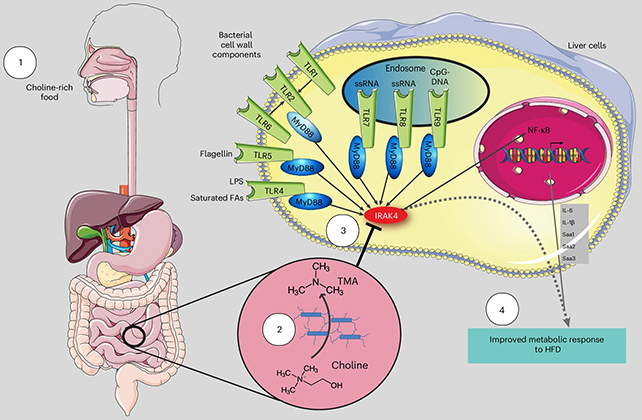
TMA is produced when microbes in the gut break down choline, an essential nutrient found in foods such as eggs and meat. The researchers demonstrated that increasing choline in high-fat diets blocked some of its worst consequences.
Further analysis revealed that TMA inhibits the IRAK4 protein, which usually triggers an inflammatory response when a high-fat diet is detected. In the future, a similar prevention might be replicated through drugs, reducing the degree of inflammation resulting from diets high in fat.
TMA has also been associated with cardiovascular disease in earlier studies, in part through the related compound trimethylamine N-oxide (TMAO) – so the twist that it can actually be beneficial to the body is an interesting one.
"In view of the growing threat of diabetes worldwide and its devastating complications for the whole patient, including the brain and heart, a new solution is direly needed," says cardiologist and professor of medicine Peter Liu, from the University of Ottawa in Canada.
"Our team's work connecting Western-style foods, TMA produced by the microbiome, and its effect on the immune switch IRAK4, may open entirely new ways to treat or prevent diabetes, a known risk factor for heart disease."

It's still early days for this research, and these findings will need to be replicated in human participants over a longer period of time. Ultimately, we may have a new way of managing insulin resistance that leads to type 2 diabetes.
Related: After 60 Years, Diabetes Drug Found to Unexpectedly Affect The Brain
The study also has wider implications that are significant. It shows that the bacteria in our guts, long known to be vital to our health, can release chemicals (like TMA) that interact with and control kinases (like IRAK4) – signaling switches that control a variety of biological pathways and processes.
"It's a new way of thinking about how the microbiome influences our health," says Dumas.
"Our work opens exciting possibilities with kinases as a new repertoire of targets accessible by microbiome-based therapeutic interventions in obesity and diabetes."
The research has been published in Nature Metabolism.