
Dogs have been 'man's best friend' for thousands of years, which is a long time to get to know each other. But a new study from Arizona State University's canine science lab suggests we may not always be reading our dogs' emotions as clearly as we might think.
Our interpretation of their feelings, it turns out, can be clouded by our own mood.
Animal behavior researchers Holly Molinaro and Clive Wynne published a study earlier this year showing that owners' perceptions of their dogs' emotions can be biased depending on the circumstances.
Related: Dog Dementia Is More Common Than You Think. Here's What to Look Out For.
You might be more likely to assume your dog is happier at the park, for instance, than when bath time comes around, regardless of what cues your furry friend is actually giving off.
"Even though people think they know what their dog is feeling, what we found is that people judge the dog's emotions based on the situation," Molinaro explained when the earlier study was published.
Molinaro and Wynne's new study explores another factor that could be influencing human perception of canine emotion: the person's own mood.
To test this, they recruited 300 university students to evaluate video clips of dogs displaying objectively positive, neutral, or negative emotional states. To ensure the dog's environment did not influence viewers' perceptions, the backgrounds were blacked out.
In a first experiment, the human participants were primed into positive, neutral, or negative moods using images unrelated to animals (landscapes and people, for instance), a method that several psychology studies have shown to be effective.
While this priming influenced participants' self-reported emotions, it didn't appear to affect their perception of dog emotional states in videos, which was unexpected.
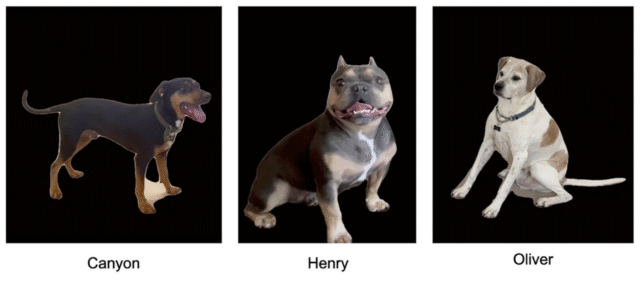
In a second experiment, Molinaro and Wynne created a set of species-specific priming materials for the humans to view: images exclusively of dogs selected from the Open Affective Standardized Image Set. This priming material was also effective in inducing positive, neutral, or negative moods in participants, but its impact on their ability to read dogs' emotions was puzzling.
The participants who were primed for positive emotions were more likely to rate dogs as sadder, while those in the negatively primed group tended to rate dogs as happier than they actually were.

These results suggest our biases in reading dog emotions are even more complex than Molinaro and Wynne first assumed. There's much more work to be done.
"In the United States alone, there are estimated to be 80 million dogs. And so we're working hard to try and help people and their dogs have the best lives together that they can," Wynne said.
We already know that taking the time to understand and meet your dog's needs improves your chances of raising a secure, resilient dog.
Research like this could help improve animal welfare and efforts to rehabilitate aggressive, anxious, or stressed pets.
The research is published in PeerJ.