
The use of dietary supplements has increased sharply in recent years.
Vitamins, minerals, and other nutritional products are often marketed as simple ways to boost energy, support immunity, protect brain health, or even promote longevity.
For many people, taking supplements can feel like a sensible, proactive health habit.
But this perception can be misleading. For people who already have adequate nutrition, many supplements offer little or no measurable benefit. Some are simply an unnecessary expense.
Others are not risk-free: high doses of certain vitamins and minerals can cause toxicity, interfere with medications, or produce unintended health effects.
For older adults, however, the picture is more complicated. The most useful question is not simply whether supplements are "good" or "bad", but whether someone is actually deficient, what might be causing that deficiency, and whether a supplement is the safest way to address it.
Nutritional deficiencies become more common with age. Appetite may decrease, oral health can worsen, chronic illnesses become more common, and many older people take medicines that affect how nutrients are absorbed, used, or cleared from the body.
Oral health problems, including tooth loss, gum disease, and poorly fitting dentures, can also make chewing difficult and reduce dietary variety.
Later life is often surrounded by unhelpful food messages: eat less, lose weight, avoid "heavy" meals, stick to soft foods. But these messages can collide with the body's continuing need for protein, vitamins, and minerals.
Over time, small meals, soups, toast, and tea can become a diet that fills the stomach without meeting nutritional needs.
This does not mean every older person needs supplements. It means supplementation should be targeted: based on confirmed deficiencies, clear risk factors, medication use, or evidence that someone is not getting enough from food.
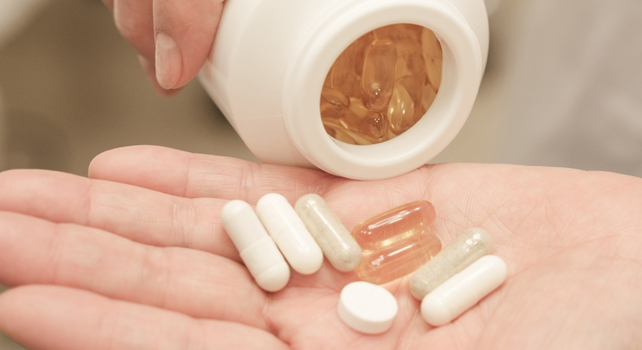
Vitamin B12 is one of the clearest examples. B12 deficiency becomes more common with age, partly because the stomach may produce less acid, which is needed to release B12 from food. Low B12 can cause anemia, fatigue, nerve problems, numbness or tingling, and sometimes memory problems or confusion.
Certain medicines, including metformin and proton pump inhibitors, can increase the risk further. High-dose oral B12 often works well, although some people need injections.
Folate is also important, especially for red blood cell formation and DNA production.
Low folate can raise homocysteine, a blood marker that has been associated with cardiovascular disease and cognitive decline, though this does not prove that folate supplements prevent either.
Folate or other B vitamins may help selected groups, such as people with low folate or B12 status, raised homocysteine, or mild cognitive impairment.
But B12 deficiency should be considered before folate is prescribed on its own, because folate can improve some blood signs of B12 deficiency while nerve damage continues.
Vitamin D is another common concern.
Deficiency is more likely in older adults with limited sun exposure, reduced mobility, darker skin, care-home residence, or diets low in vitamin D-rich foods. Supplementation may be appropriate when levels are low, sun exposure is limited, or someone has osteoporosis, recurrent falls, or high fracture risk.
But more is not automatically better.
A large trial found that vitamin D supplementation did not significantly reduce fracture risk in generally healthy midlife and older adults who were not selected for deficiency.
Calcium and magnesium matter for bone, muscle, and nerve function, but where possible, they should come from food. Supplements may be useful when dietary intake is insufficient or osteoporosis is present, but excessive intake should be avoided.
Magnesium is often promoted for sleep, but evidence for routine use as an insomnia treatment remains limited.
Multivitamins can be useful for older adults who eat very little or have poor dietary variety, but they should not be treated as nutritional insurance for everyone. In a large study of three US cohorts, daily multivitamin use was not associated with a lower risk of death.
Other research is exploring whether multivitamins may affect markers of biological aging, but it remains unclear whether this translates into better health, independence, or lifespan.
One of the most overlooked "supplements" in later life is not a vitamin at all, but protein. Many older adults eat too little protein or avoid protein-rich foods such as meat, fish, eggs, dairy, beans, or lentils.
Low intake can contribute to sarcopenia, the age-related loss of muscle mass and strength, increasing the risk of falls, frailty, and loss of independence. Expert groups commonly recommend around 1.0 to 1.2 grams of protein per kilogram of body weight per day for healthy older adults.
Higher intakes are sometimes needed during illness, frailty, or recovery, unless someone has been advised to restrict protein because of kidney disease or another condition.

Unsupervised or excessive supplementation can be harmful. High doses of vitamin D or vitamin A can cause toxicity. Iron should not be taken without a confirmed deficiency unless advised by a healthcare professional.
Some supplements interact with medicines. And evidence reviews have found that some high-dose antioxidant supplements, particularly beta-carotene and vitamin E, may increase mortality risk in some populations.
A sensible approach begins with food, not pills. That means looking at appetite, weight change, chewing or swallowing problems, dietary variety, medical conditions, medication use, and whether someone has enough support to shop, cook, and eat well. Blood tests may be needed, particularly for vitamin B12, folate, iron, and vitamin D.
Evidence does not support universal supplementation for all older adults. But targeted use of vitamin D, vitamin B12, folate, and, in some cases, a multivitamin or protein supplement can help when deficiencies or low intake are present.
Related: A Common Nutrient Could Give Your Workout a Surprising Boost
Supplements can have a role in healthy aging, but they are not a shortcut. The foundations are still balanced nutrition, strength exercise, adequate sleep, social connection, and access to good food.
The best supplement is the one that answers a real need, not the one with the loudest promise on the label.
Miguel G. Borda, Consultant in Geriatric Medicine, Department of Neurology, Universidad de Navarra and George E. Barreto, Associate Professor in Cell Biology and Immunology, Department of Biological Sciences, University of Limerick
This article is republished from The Conversation under a Creative Commons license. Read the original article.