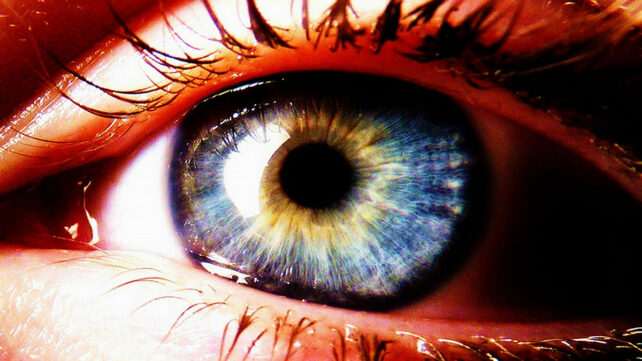
The eyes are a window into our deeper health.
As the only outward extension of the central nervous system, these sensory organs may reflect not only the state of our brain and blood vessels, but also our very bones.
Population studies in Singapore and the UK have now revealed that a person's risk of osteoporosis may be associated with how quickly their eyes are aging.
Osteoporosis is a 'silent' loss of bone mineral density that impacts nearly 20 percent of the world's population.
It's especially common among postmenopausal women and the elderly, and it leads to weakening bones that can increase the risk of fractures in a potentially deadly way.
There is no cure as of yet, and diagnosis with a bone density scan can sometimes happen too late for preventative actions to be taken, like increasing exercise or changing the diet.
Often, these scans are not recommended until someone over a certain age fractures a bone.
Perhaps taking photos of the retina is a simpler way to keep tabs on a person's skeleton as they age.
The eyes are one of the only places in the body where nerves, blood vessels, inflammatory markers, and metabolic clues can be observed without using invasive techniques.
With that in mind, a population study of nearly 2,000 adults in Singapore has revealed an important association: the older a retina looks, according to some markers, the lower that person's bone mineral density is likely to be.
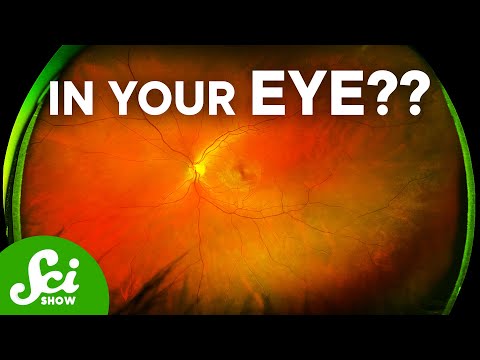
Turning to a UK Biobank study of nearly 44,000 participants, the same research team found a similar pattern, yet again. The older the retina looked, the higher the risk of developing osteoporosis over time, even after accounting for major risk factors.
"These findings suggest that retinal biological aging may reflect broader aging processes related to skeletal health," conclude the authors, led by researchers at the Singapore Eye Research Institute.
"Retinal imaging may therefore provide a simple, non-invasive, and accessible way to support opportunistic screening for osteoporosis risk."
In recent years, the innermost layer of the eye, known as the retina, has emerged as a potentially powerful predictor of underlying health.
Some studies suggest that signs deep inside your eyes could even reveal who is most at risk of cognitive decline or faster aging.
These ideas are still experimental, but evidence is mounting to suggest that the retina holds clues to our hidden state of being.
Figuring out how to 'read' these signs to reveal insights into the health of various organs, like the heart or brain, is a far greater challenge.
Artificial intelligence (AI) is helping us tease apart the various details by sifting through huge datasets.
Researchers led by ophthalmologist Qingsheng Peng at the Singapore National Eye Center trained a deep learning model to predict how quickly the retina is aging, using nearly 130,000 retinal images from more than 40,000 participants in a South Korean health study.
This AI model, called RetiAGE, was then applied to populations in Singapore and the UK to predict the 10-year probability of an osteoporosis diagnosis or fracture.
The model is not comprehensive and is only based on some markers of eye aging, but it suggests that the eyes are closely tied to bone health.
For every standard deviation increase in RetiAGE, the research team observed a 12 percent higher risk of osteoporosis in the UK dataset. This was true even when taking into account age, gender, BMI, physical activity, smoking status, and cardiovascular health.
While women are more likely to be diagnosed with osteoporosis, the association between bone health and eye health in the UK dataset seemed to be stronger among men. Each standard deviation increase in RetiAGE was associated with a 25 percent higher risk of osteoporosis among this subgroup.
The bones and the eyes are very different parts of the body, but they benefit from similar lifestyle choices, such as physical activity, diet, and exposure to sunlight. This means that if the eyes are aging well due to these factors, the bones are likely aging well, too.

There may also be shared genetic factors at play. A gene that regulates immune cells in the eye, for instance, is also responsible for producing important bone cells.
Plus, there are shared risks. Issues with inflammation or the vascular system can impact the bones and also the eyes. An optometrist exam, for instance, can help identify instances of high blood pressure.
Interestingly enough, hypertension and osteoporosis are closely linked, with common underlying features. Some studies even suggest that high blood pressure may lead to lower bone turnover.
No entity in the body exists in a vacuum. If the eyes are telling us something, that message could be applied to numerous other facets of human health, too.
In a 2018 population study in South Korea, for instance, scientists found osteoporosis was linked to age-related macular degeneration within the eye, but only among women.
Related: A Silent Bone Condition Affects 40% of Adults. It May Warn of Osteoporosis.
"RetiAGE scores, which can be easily extracted from standard retinal photos, offer a non-invasive, low-cost, repeatable measure," argue Peng and colleagues.
"Our study results highlight the potential of using retinal photos to screen for pre-clinical osteoporotic patients."
The study was published in PLOS Digital Health.