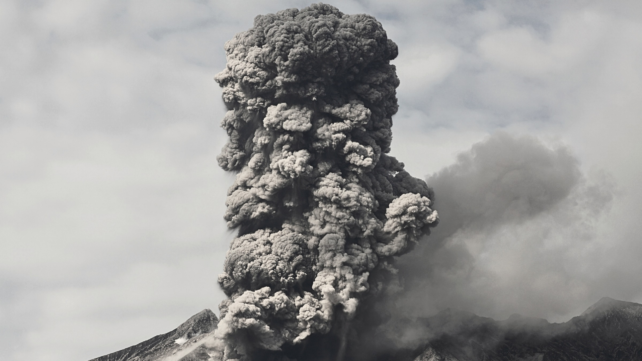
The Kikai-Akahoya volcanic eruption is one of the most destructive in history: Around 5250 BCE, almost 7,300 years ago, off the southwestern coast of Japan, it spewed massive amounts of magma and volcanic material from beneath the seabed in a series of blasts.
For the Jomon foraging communities of Japan at that time, it must've been a cataclysmic event of incomprehensible proportions. Scoring 7 out of 8 on the volcanic explosivity index, it's the sort of event that happens once every 500–1,000 years.
Since evidence for the eruption was first discovered in the 1970s, experts have debated what its impacts were.
Clearly, the damage done by the eruption would've been extensive – but it's not clear if and when surrounding societies were able to recover, and to what extent, in the years that followed.
In a new study published in Science Advances, an international team of researchers has taken a closer look at the consequences of the Kikai-Akahoya volcanic eruption, finding that in some areas at least, humans were more resourceful and adaptable than had previously been thought.
"This eruption must have been devastating, exploding out of the seabed with little warning," says archaeologist Peter Jordan, from Lund University in Sweden.
"It battered the Japanese islands with powerful earthquakes and enormous tsunamis, and then blanketed the landscape with meters of volcanic ash."
The researchers looked at 540 existing archaeological samples collected across Japan, dated from 8,000 to 6,500 years ago – several hundred years before and after the eruption.
By tracking how many radiocarbon-dated finds (such as charcoal or bones) came from before and after the eruption in each region, they were able to assess population activity.
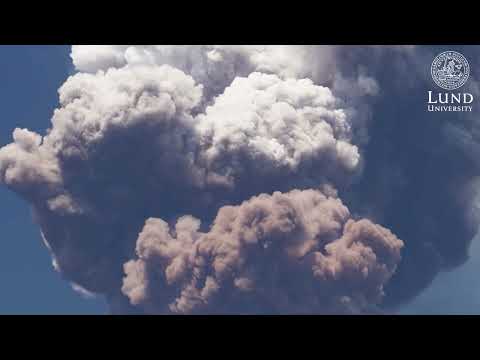
Some parts of the impact zone became uninhabitable for a very long time, the researchers found.
In other areas, there was evidence of people moving to new places, learning new skills, and adapting to a new way of life.
"The disaster caused major loss of life," says archaeologist Enrico Crema, from Cambridge University in the UK.
"However, survivors migrated, forged new social relations, innovated new kinds of economy, and appear to have found creative ways to exist and later thrive in the new post-disaster conditions."
The researchers found that traditional Jomon forager populations may already have been declining in southern Kyushu, closest to the eruption, even before it happened.
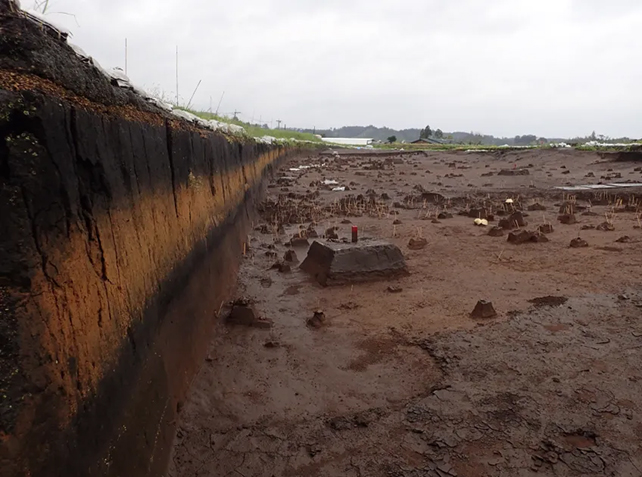
In contrast, the size and number of communities in the north of the island were on the rise before the eruption – and this trend continued afterward. This resilience may be evidence of affected groups moving away from the disaster area, the study suggests.
Marine life seems to have recovered the quickest, and the movement of Japan's prehistoric people followed. The researchers suggest inland survivors may have made their way to the coasts and adapted to a new way of living there.
"Even in the most impossible situations, survivors and communities have choices, however limited," says Jordan.
"They need to act and make decisions; they need to adjust, collaborate, and find new connections and social networks."
The researchers also found that some more distant areas of Japan, such as around Ise Bay, where population numbers had been increasing, saw this growth halt and even decline in certain areas.
The team thinks this may be due to short-term cooling triggered by the eruption or an as-yet-unidentified effect of climate change.
Or it may possibly be down to a loss of food sources: Grazing in ash-covered landscapes may have worn down the teeth of deer and boar, shortening their lives.
The findings give us a better idea of how humankind can respond to natural disasters and dig deep to survive – something which is becoming ever more relevant in a world that's seeing major shifts in climate and weather.
"This study helps in creating a deeper understanding of the contingent ways in which cultures and societies cope with sudden shocks and catastrophes," says Jordan.
The research has been published in Science Advances.
This article was fact-checked by Rebecca Dyer and edited by Rebecca Dyer. While we pride ourselves on our process, we are only human. If you spot a mistake, please let us know.