There may be two distinct subtypes of multiple sclerosis, according to a new study led by scientists at University College London (UCL). The finding, if validated, could help doctors provide more specialized care for patients.
The study used machine learning to analyze data drawn from blood tests and brain scans of 634 patients participating in two different clinical trials. Machine learning models are trained to pick up subtle patterns that humans might miss.
The blood tests were for detecting a protein called serum neurofilament light chain (sNfL), a known biomarker of diseases of the nervous system, including multiple sclerosis (MS).
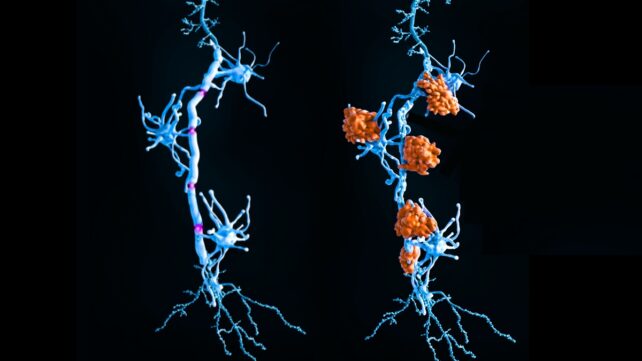
The MRI scans, meanwhile, surveyed damage and other changes in different parts of the brain. In MS, the body's immune system mistakenly attacks the protective sheath covering nerve cells, leaving lesions that interfere with nerve communication.
Related: Blood Signals May Predict Multiple Sclerosis 7 Years Before Symptoms
By comparing the blood test results and brain scans, the model was able to sort patients into separate subtypes.
Those classed as "early-sNfL" showed elevated levels of the protein earlier on, as well as damage to the corpus callosum, a structure that connects the left and right hemispheres of the brain. This subtype seemed to be more aggressive, with patients developing brain lesions faster than others.
The second subtype was named "late-sNfL", and it seemed to progress more slowly. For patients in this group, the first signs were shrinkage in the limbic cortex and the grey matter deep inside the brain. Levels of sNfL in their blood serum didn't start to rise until later.
"By using an AI model combined with a highly available blood marker with MRI, we have been able to show two clear biological patterns of MS for the first time," says Arman Eshaghi, a neuroscientist at UCL and co-founder of Queen Square Analytics, a spin-off company involved in the research.
"This will help clinicians understand where a person sits on the disease pathway and who may need closer monitoring or earlier, targeted treatment."
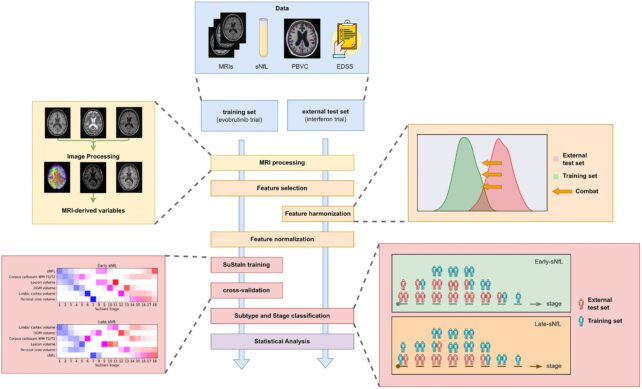
The machine learning model was trained on data from 189 patients with different types of MS (relapse-remitting or secondary progressive MS), then tested on a further 445 patients who had been recently diagnosed with the disease.
Neurofilaments are proteins that provide support for neurons throughout the central and peripheral nervous systems, and in healthy patients, they have a fairly slow turnover. But neurodegeneration sheds these proteins into bodily fluids at higher rates, making them a potential biomarker for nervous system diseases and disorders.

Unfortunately, the difference is fairly subtle in blood serum, which makes it hard to use for diagnosis. MRI scans can also resolve patterns in the spread of MS, but not the specifics of the disease.
The scientists behind the new study suggest that combining neurofilament levels with other data, such as MRI scans, makes those measures more useful.

"By adding sNfL, an established indicator of neuroaxonal injury, we have advanced beyond the structural snapshot provided by MRI alone," the researchers conclude.
Currently, MS is classified and treated based on symptoms and the progression of the disease, but this doesn't account for the underlying mechanisms. The researchers of the new study say that their combined technique could help doctors recommend more appropriate treatments if validated in further studies.
The research was published in the journal Brain.