This week in science: how eating meat could be associated with a longer life; a switch for fat cell production; how space travel could supercharge viruses to fight for us; and much more!
Study Finds Meat Eaters Are More Likely to Live to 100, But There's a Catch
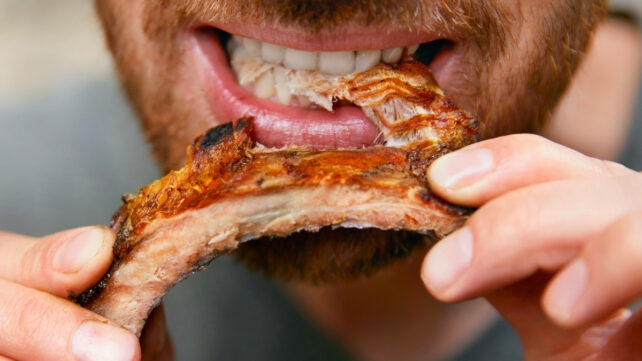
A study of over 5,000 people in China showed that meat eaters have a higher chance of living to 100 years of age – but there are a lot of caveats.
"The study's findings may reflect the nutritional challenges of advanced age, rather than any inherent problems with plant-based diets. Crucially, this doesn't diminish the well-established health benefits of these diets for younger and healthier adults," researchers write.
Read the full story here.
Boosting One Vitamin May Have a Surprising Effect on Your Poop Schedule

New research from Spain found vitamin B1 may be a regulator of "stool frequency" – in other words, it influences how often you poop.
"Gut motility problems sit at the heart of irritable bowel syndrome, constipation, and other common gut-motility disorders," says geneticist Mauro D'Amato from the Basque Research & Technology Alliance in Spain.
"But the underlying biology is very hard to pin down. These genetic results highlight specific pathways, especially vitamin B1, as testable leads for the next stage of research, including lab experiments and carefully designed clinical studies."
Read the full story here.
If an Asteroid Hits The Moon in 2032, The Aftermath Might Reach Earth

An asteroid that might hit the Moon in 2032 would put on a stunning show for us – but could also pose a threat to people and satellites.

At its peak right around Christmas of 2032, simulations expect up to 20 million meteors per hour to hit our atmosphere, and at least on the "leading edge" of the planet, most of them with naked-eye visibility. Those would include some 100-400 fireballs (i.e., larger pieces) per hour.
Read the full story here.
Scientists Identify an Epigenetic Switch That Can Slow Production of Fat Cells
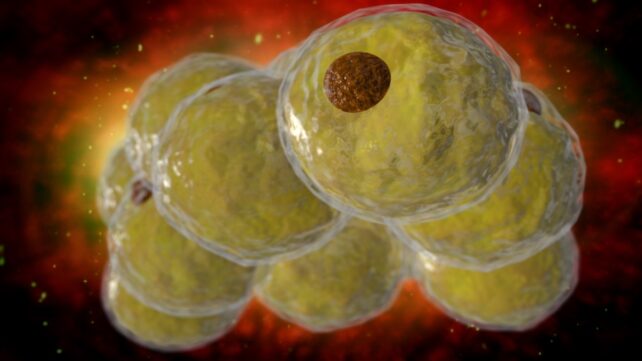
Scientists in South Korea identified a molecular switch that can slow or stop the production of fat cells – at least, in mice.
"[The study] has laid an important foundation for a more sophisticated understanding of the mechanisms behind adipocyte identity changes and, in the long term, for developing personalized treatment strategies for patients with metabolic diseases," says molecular biologist Dae-Sik Lim.
Read the full story here.
Microbes in Space Mutated And Developed a Remarkable Ability
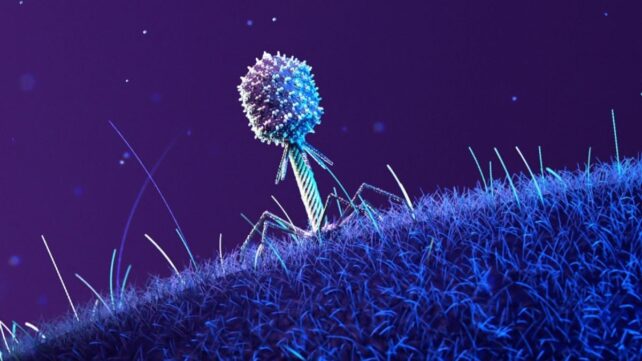
Bacteria-hunting viruses (phages) grown in space evolved differently, potentially providing new weapons against antibiotic-resistant infections.
The team found that certain space-specific phage mutations were especially effective at killing Earth-bound bacteria responsible for urinary tract infections (UTIs). More than 90 percent of the bacteria responsible for UTIs are antibiotic-resistant, making phage treatments a promising alternative.
Read the full story here.
Scientists Found an Early Signal of Dementia Hidden in Terry Pratchett's Novels

Researchers detected signs of dementia in Terry Pratchett's works up to a decade before his diagnosis, in the form of reduced word variety.
"This was not something a reader would necessarily notice, nor did it reflect a sudden deterioration in quality. Instead, it was a subtle, progressive change detectable only through detailed linguistic analysis," the researchers write.
Read the full story here.