Scientists have pushed the limits of mammal cloning until the whole house of cards has come tumbling down.
After two decades of continuous work, researchers in Japan have discovered a genetic 'dead end' to mammal cloning.
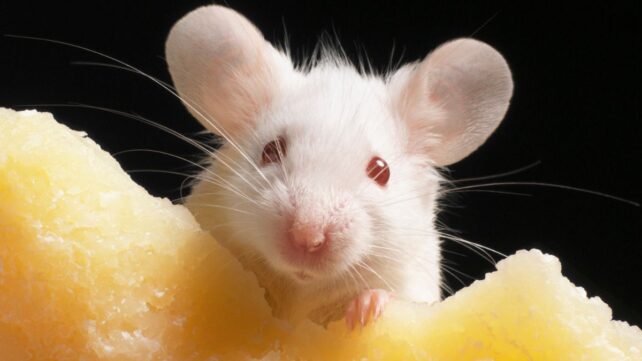
The study began in 2005, when researchers, led by scientists at the University of Yamanashi in Japan, cloned a single female mouse.
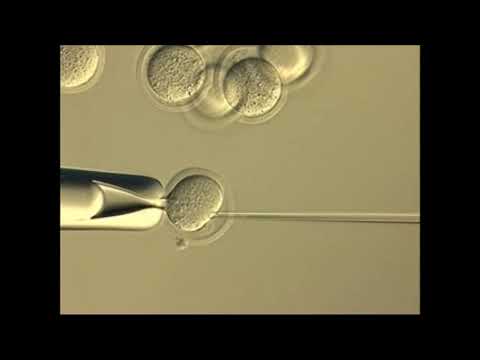
They then re-cloned that clone by transferring its nuclear DNA into an egg 'emptied' of nuclear DNA, and so on and so forth, for 57 more generations, producing more than 1,200 mice from that single original donor.
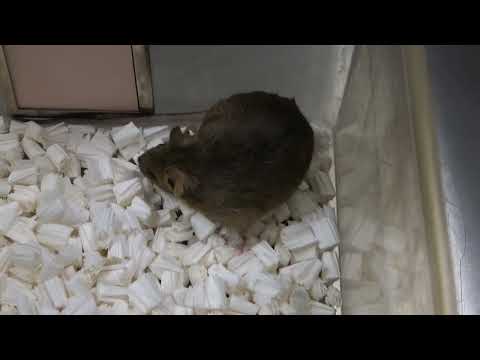
Two decades later, the team was on their 58th generation, and the re-cloned mice had accumulated so many genetic mutations that they died the day after they were born.
The study is the first peer-reviewed research to 'serially' clone a mammal to this end.
"It has long been unclear whether mammals, unlike plants and some lower animals, could sustain their species through clonal reproduction alone," write the research team, led by geneticist Sayaka Wakayama.
"[O]ur results align closely with Muller's ratchet theory," they add. "This model predicts that in asexual lineages, deleterious mutations inevitably accumulate, ultimately producing mutational meltdown and extinction."
Since the first mammal was cloned in the mid-1990s, famously called Dolly the Sheep, scientists have learned a great deal about the whole process, and how to recreate an animal using very few cells.
Some conservationists hope that the practice can one day help us bring back species from the brink of extinction, and a few celebrities have even started cloning their pets.
While this might work for a while, over time, as clones are re-cloned and then re-cloned again, dangerous mutations can accumulate in the genome. How long this takes to kill a creature is unknown, and scientists in Japan wanted to find out using mice.
For the team's first 25 cloning attempts, the re-cloned mice looked no different to the original genetic donor. In fact, success rates improved with each generation of clones, leading the authors to suspect "it may be possible to reclone animals indefinitely".
But then, something changed. The success rates of the cloned mice gradually declined before suddenly coming to an end.
It seemed that the mice had somehow lost their ability to efficiently eliminate chromosomal abnormalities and coding mutations.
Loss of the X chromosome became a prominent problem after the 25th generation of clones, and the frequency of deleterious mutations nearly doubled by the 57th generation.
Even those carrying mutations, however, lived normal lifespans – until generation 58, that is.
"Although serial cloning could not continue beyond the 58th generation (G58), the re-cloned mice remained healthy except G58, raising the possibility that subsequent generations could be produced via sexual reproduction," the authors suggest.
To test that idea, the team took female mice from the 20th, 50th, and 55th generations and mated them with normal male mice. The 20th-generation clones had similar litter sizes to control mice, but 50th- and 55th-generation clones had dramatically smaller litters.
Related: These Baby Ferrets Are The First to Be Born From a Clone
Still, when those offspring lineages produced grandchildren of the clones with normal mice, their litter sizes increased again to a healthy number.
The findings suggest that mammal species can be surprisingly tolerant of genetic mutations, remaining fit and able to reproduce even in the face of widespread genetic alterations.
The study, the authors say, reaffirms "the evolutionary inevitability that sexual reproduction is indispensable for the long-term survival of mammalian species".
The study was published in Nature Communications.