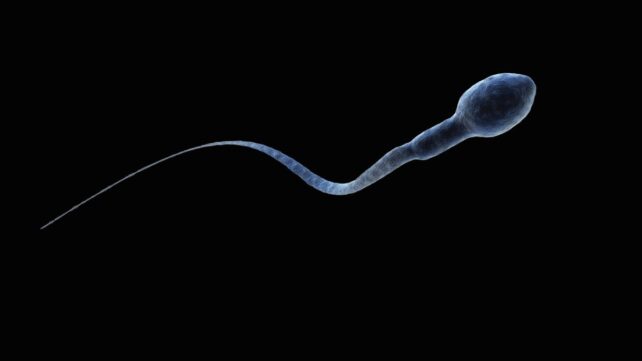
A trip to space could very well leave human male sperm stumbling about in the dark, chasing their tails.
Researchers at Adelaide University in Australia have shown that in the lab, a lack of gravity can work against our gametes – a possible risk of space travel for both us and the mammals we take with us.
The study simulated microgravity on Earth using a 3D clinostat machine, which rotates regularly so that biological samples don't have a sense of up or down. This tool tested how the sperm of humans, pigs, and rodents all navigated a channel without the usual pull of gravity to guide them.
In a way, the sperm were sort of 'blindfolded and spun around', then sent in search of an egg to pin their future to, like a tiny party game with much bigger implications.
The channel that the sperm had to navigate was designed to mimic the female reproductive tract of mammals. If sperm had a confused sense of up or down, forward or back, it was harder to navigate.
"We observed a significant reduction in the number of sperm that were able to successfully find their way through the chamber maze in microgravity conditions compared to normal gravity," explains biologist Nicole McPherson from Adelaide University.
"This was experienced right across all models, despite no changes to the way sperm physically move. This indicates that their loss of direction was not due to a change in motility but other elements."
The findings build on a 2024 study that found human sperm exposed to fluctuating gravity levels showed significant decreases in their movement and health.
Now, it seems, those changes can impact a sperm's navigation of a channel.
The researchers in the recent study, led by reproductive immunologist Hannah Lyons, are not sure why this is happening, but they theorize that without the sure pull of gravity, sperm cells are losing touch with the channel walls, which may dictate their path forward.
Still, gravity isn't the only force that sperm use to sense their way forward. Researchers were able to coax human sperm in microgravity to the end of the maze, as long as they laid a strong chemical trail using the hormone progesterone.
"These findings underscore the importance of chemotactic sperm responses under microgravity," the authors conclude.
"Interestingly, our results indicate that sperm may possess adaptive
processes that enable them to reach the site of fertilization even in the
absence of gravity."

But a lack of gravity may disrupt more than just navigation. Even if a sperm exposed to microgravity does find an egg, there may be downstream effects.
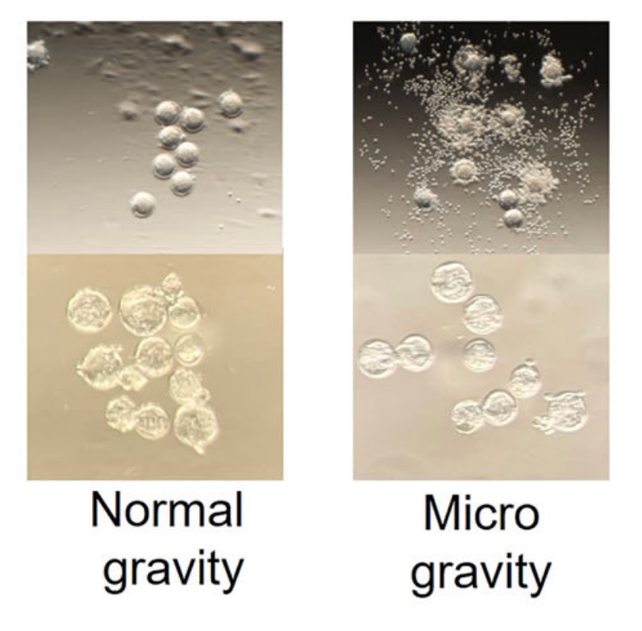
When the researchers put mouse sperm through the clinostat machine for four hours and then introduced them to eggs, fertilization rates were 30 percent less successful compared to typical sperm.
"We observed reduced fertilization rates during four-to-six hours of exposure to microgravity," says McPherson.
"Prolonged exposure appeared to be even more detrimental, resulting in development delays and, in some cases, reduced cells that go on to form the fetus in the earliest stages of embryo formation."
Whether the same holds true for humans is unclear, but in the clinostat machine, human sperm and mouse sperm behaved in a similar way.
As commercial spaceflight ramps up, some scientists have warned that we know far too little about how microgravity and other dangers of space, such as radiation, may affect human gonads and reproduction.
Related: Space Tourism Could Have a Sex Problem And We're Not Ready For It
"These insights… underscore the complexity of reproductive success in microgravity and the critical need for further research across all stages of early development," the researchers from Adelaide conclude.
"Understanding the molecular and mechanical sensitivity of gametes and embryos to altered gravity is essential for ensuring the long-term reproductive sustainability of humans and livestock in space."
The study is published in Communications Biology.