
Researchers have developed a novel compound that could transform the way we treat Alzheimer's disease, offering not just a new weapon but potentially a new strategy for battling the most common form of dementia worldwide.
While current drugs for Alzheimer's mostly focus on removing amyloid-beta plaques associated with the disease, the new compound takes a fundamentally different approach, instead targeting a specific enzyme to therapeutically reprogram the epigenome of neurons – a series of molecular marks that can be added to or removed from DNA, to change the way genes work.
Monoclonal antibody drugs such as lecanemab and donanemab, which target amyloid-beta proteins, help somewhat to slow the progression of the disease when treatment is started early, but there is still no proven way to reverse cognitive decline from Alzheimer's in humans.
Therapies targeting another protein called tau aren't proving very effective, either.
It's led researchers to suspect we might be thinking about Alzheimer's disease all wrong – focusing on proteins that are a sign of the disease, not the root cause of it.
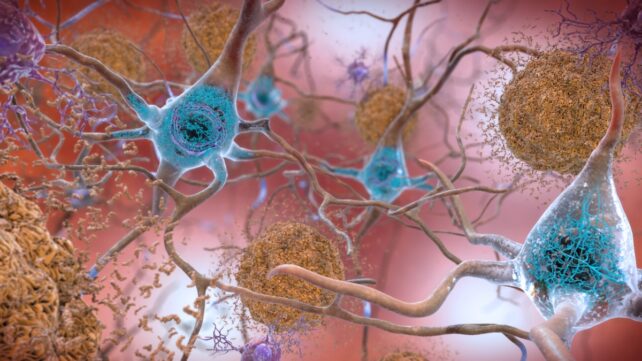
The new compound, called FLAV-27, seems to work in a broader way, zooming out to target upstream changes in gene expression that help fuel the disease's progression in multiple ways, not just via protein plaques.
This hints at a new epigenetic strategy for treating Alzheimer's disease, says first author Aina Bellver-Sanchis, a molecular biologist at the University of Barcelona Institute of Neurosciences in Spain.
"The compound FLAV-27 represents an innovative and promising approach to Alzheimer's disease," says Bellver-Sanchis, "with the potential to modify the disease process, as it acts not only on its symptoms or a single pathological biomarker, but directly on its underlying molecular mechanisms."
Bellver-Sanchis and her colleagues note that while monoclonal antibodies represent a genuine breakthrough in Alzheimer's treatment, lecanemab and donanemab only slow cognitive decline by around 30 percent and address only part of the condition's pathology.

FLAV-27 is the first inhibitor of its kind to target an enzyme called euchromatic histone-lysine N-methyltransferase 2 (EHMT2), also known as G9a.
G9a is involved in epigenetic regulation within the brain, and can silence genes important for key tasks such as brain cell development, synaptic plasticity, and memory processing.
FLAV-27 inhibits G9a by blocking a molecule known as S-adenosylmethionine, without which the enzyme loses its influence over genetic expression, the researchers explain.
Inhibiting G9a seems to help calm the epigenetic dysregulation seen in Alzheimer's disease, they report, and restores a more typical function to brain cells.
The new compound has not yet been tested in humans – and may not be for a while – but it has shown promising results in cell experiments as well as studies on nematodes and mice.
Beyond reducing amyloid-beta plaques and tangled tau in lab-grown mouse brain cells, FLAV-27 showed signs that it can help restore some of the damage wrought by Alzheimer's disease in another animal model, Caenorhabditis elegans.
In these nematode worms, the compound improved mobility, extended lifespan, and ramped up mitochondrial respiration, which helps fuel cells.
In mouse models of both early- and late-onset Alzheimer's, FLAV-27 also restored memory performance, social behavior, and the function of signalling hubs called synapses that connect brain cells.
Related: Promising New Drug Reverses Mental Decline in Mice With Advanced Alzheimer's
This reversal, the researchers suggest, hints that epigenetic dysregulation could be a central mechanism linking the various pathological markers of Alzheimer's, not just a side effect of the disease.
The new compound shows potential, just like other drug candidates, but still faces a long road before human trials can begin, the team notes, including toxicology studies in at least two animal species and other regulatory steps.
The study was published in Molecular Therapy.