A growing amount of research is investigating how psychedelics might be used to treat depression and other disorders, and now a new study highlights a "neural fingerprint" that's common across five well-known mind-altering drugs.
The effects of these drugs are typically only analyzed in small numbers of people, and in isolation from each other, so the international team of researchers behind this latest study wanted to try and get a bigger picture of their effects as a group.
Five different psychedelics were looked at: psilocybin, LSD (Lysergic Acid Diethylamide), mescaline, DMT (dimethyltryptamine), and ayahuasca.
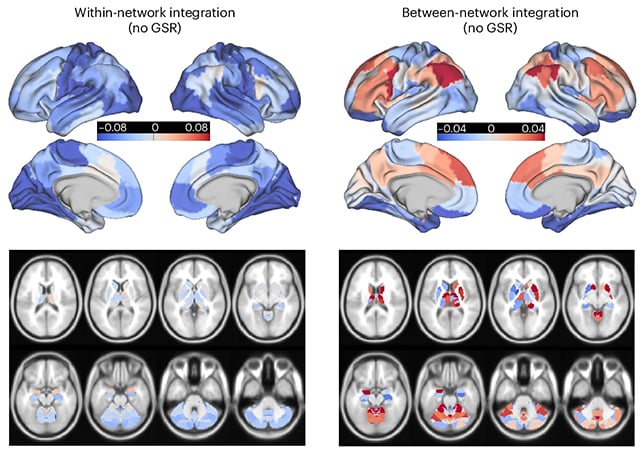
By pooling fMRI brain scans of people who had taken these substances, the team identified two shared patterns: stronger communication between distinct brain networks, and selective reductions in connections within some networks.
"This is a breakthrough in how we think about psychedelic drugs," says Danilo Bzdok from McGill University in Canada.
"For the first time, we show there's a common denominator among drugs that we currently consider completely separate."
These are the key numbers for the study: 11 separate datasets, covering 267 people across five countries, and 519 brain scans in total.

The boosted interconnectivity observed by the researchers covered the cortical brain networks that handle higher-level thinking, plus the brain regions associated with sight and touch – perhaps not surprising given the trips people experience on these drugs.
Altered connections were also seen in deeper brain regions, including the caudate, putamen, and cerebellum. These subcortical areas are linked to how we coordinate perception and action.
This increased cross-talk is a sign of the brain's normal hierarchy being flattened out, say the researchers, and knowing that this is common across several psychedelics can help in developing them as treatments, as well as understanding the biology of hallucinations.
Of the drugs tested, psilocybin and LSD looked the most similar in terms of neural patterns, which matches up with their similar chemical makeup and the subjective experiences they trigger in people.
"This approach gives us an X-ray view of the entire research community," says Bzdok.
The broader look means some big dots can be joined by researchers. This hasn't always been possible in the past, when drug studies were restricted over concerns about the drugs and their associations with criminalization and counterculture.
Nowadays, safe and controlled research projects are increasingly common. Some early research has linked psychedelics to immune system modulation and lasting improvements in mood.
Previous research also suggests psychedelics may be able to slow down the biological process of aging and even reduce crime rates.
We know that these substances are mind-altering. The question is whether or not they can be engineered and applied in a way that ensures those alterations are beneficial, such as treating depression or substance use disorders.
Being able to compare these drugs in a collected and collated way changes the perspective. The findings here challenge previous studies suggesting that these substances caused breakdowns in brain connectivity, instead pointing to selective within-network changes alongside stronger cross-network communication.
Next, the researchers want to see tests that are more standardized, carried out across larger groups of people, to look into these brain patterns more closely.
Related: Single Dose of DMT Rapidly Reduces Symptoms of Major Depression
It's worth bearing in mind that the existing datasets analyzed by the researchers all used different methods, doses, and timings as well as different drugs – those are variations that can be minimized in future research.
Nor did this study look specifically at how these drugs might be used as treatments – but that can come next.
"Many drug therapies for depression, for example, have changed little over the past decades," says Bzdok.
"Psychedelics may represent the most promising shift in mental health treatment since the 1980s."
The research has been published in Nature Medicine.